

USDA raises wheat and oilseed outlook as weather reshapes global crop production



The U.S. Department of Agriculture has raised its forecast for global wheat production in the 2026/27 marketing year as favorable weather improves prospects in Australia, Ukraine and Argentina. At the same time, the agency lowered its outlook for global coarse grains and rice, highlighting increasingly divergent crop conditions across major agricultural regions.
USDA now forecasts global wheat production at 822.4 million metric tons, up 3.1 million tons from its August estimate but 2.6% below the 2025/26 level. The increase was led by Australia, where wheat production is expected to reach 31.0 million tons, up 11% from the previous forecast, and Ukraine, where production was raised to 26.0 million tons, up 2% from August and 8% from last year. Argentina’s wheat crop was also raised to 21.5 million tons following favorable rainfall during planting and early crop development.
The changes come as weather conditions increasingly determine the balance between major agricultural commodities. USDA’s September assessment draws on official government statistics, reports from its overseas agricultural offices, economic data and satellite imagery, with estimates reviewed by the agency’s interagency commodity committee. The report reflects the September 11, 2026 World Agricultural Supply and Demand Estimates.
Australia emerges as a major source of additional wheat
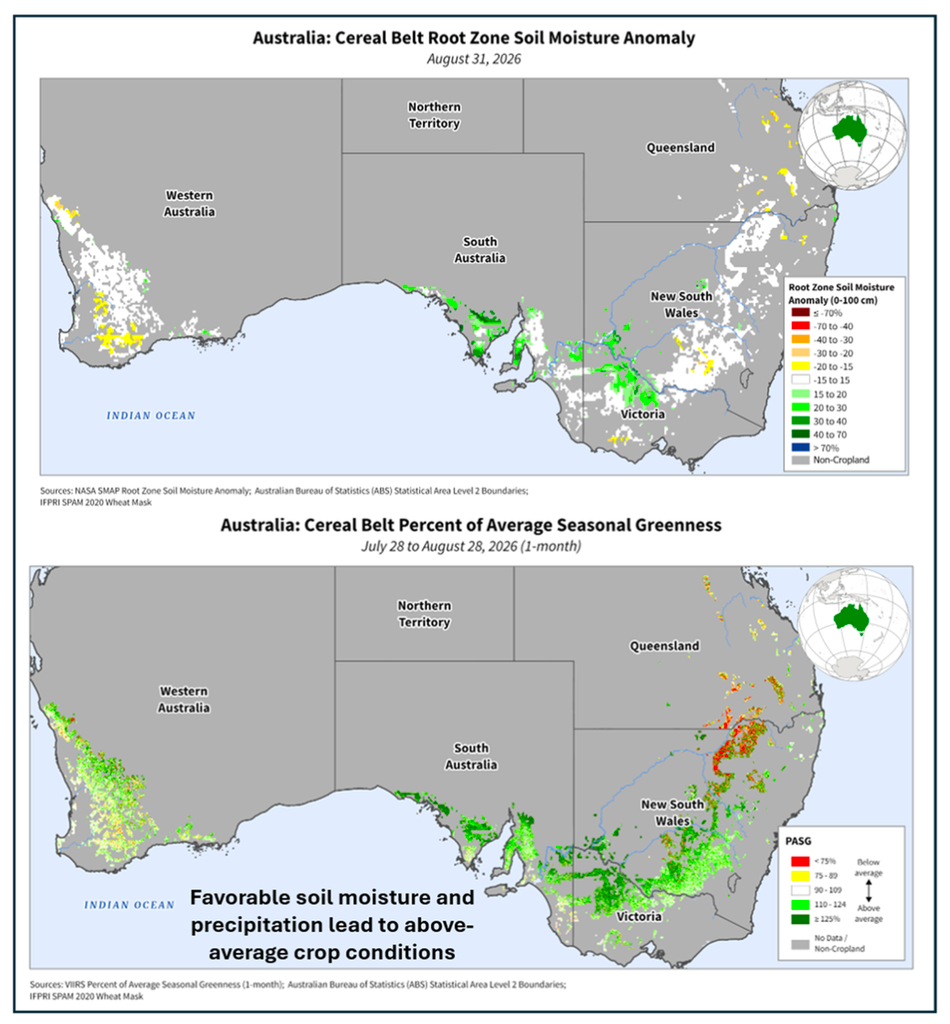
Australia accounts for one of the largest upward revisions in the September report. USDA forecasts the country’s 2026/27 wheat production at 31.0 million tons, compared with 28.0 million tons in August. The forecast remains 14% below last year’s production, but the improvement is significant because of stronger-than-expected yields.
Harvested area is forecast at 11.0 million hectares, unchanged from August and 11% below last year. Yield, however, has been raised 11% from the previous estimate to 2.82 tons per hectare.
The improvement reflects favorable conditions throughout much of Australia’s winter growing season. Early rainfall provided adequate soil moisture for crop emergence, while additional rainfall in July and August supported crop development. USDA field assessments in Victoria also found excellent crop conditions.
The outlook is less favorable in Queensland and northern New South Wales, where drier conditions have persisted. Further rainfall through September would support crop maturation ahead of the October harvest.
The stronger Australian outlook is particularly relevant for global wheat markets because importers in Asia have recently been turning toward Australian and Argentine supplies amid disruptions affecting Black Sea shipments. Reuters reported earlier in September that Asian buyers had purchased at least 500,000 tons from Australia and Argentina to replace delayed Russian and Ukrainian cargoes.
Ukraine posts record wheat yield
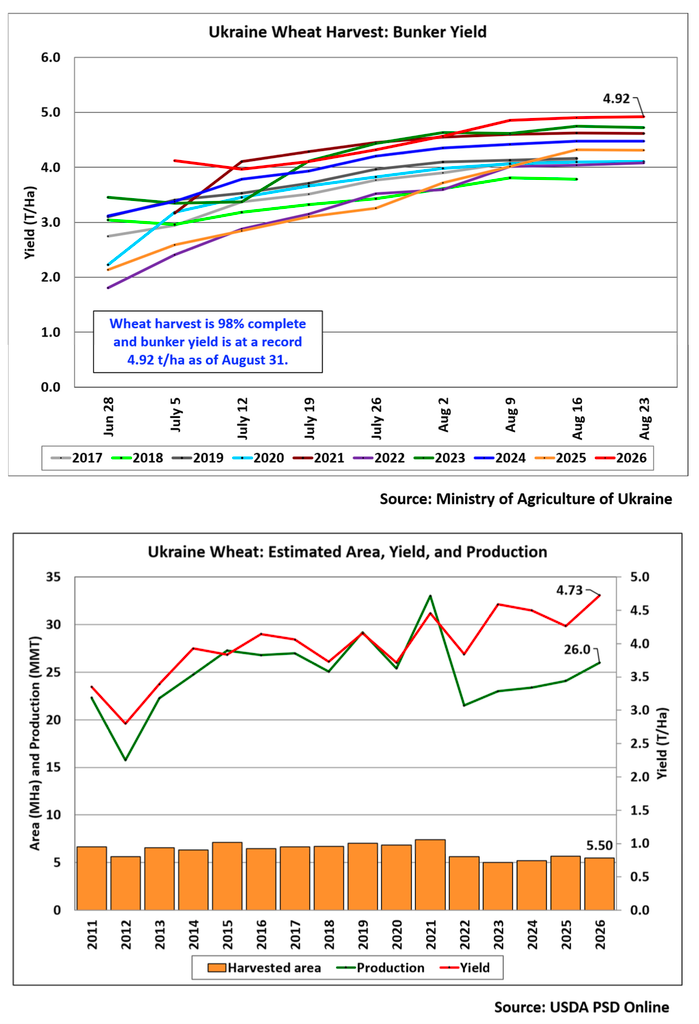
USDA raised Ukraine’s 2026/27 wheat production forecast to 26.0 million tons, up 2% from August and 8% from the previous year.
The increase is almost entirely a yield story. Harvested area remains at 5.5 million hectares, while total yield has been raised to a record 4.73 tons per hectare.
Ukraine’s Ministry of Agriculture reported that 98% of the country’s wheat area had been harvested by August 31. Operational data indicated a bunker yield of 4.92 tons per hectare. Using USDA’s assumed 98% net-to-bunker ratio, the agency estimated a net yield of approximately 4.85 tons per hectare excluding Crimea and 4.76 tons including Crimea.
USDA said the exceptional yield means Ukraine’s wheat production is projected to be the country’s highest since the start of the war. Winter wheat accounts for about 97% of Ukrainian wheat production.
The estimate comes despite continued uncertainty over agricultural conditions in areas affected by the war. USDA noted that official Ukrainian data do not provide reliable information on agricultural activity in conflict zones. Its production estimate includes output from Crimea, using agricultural data from Russia’s statistical agency for the peninsula.
Argentina’s wheat crop benefits from early rainfall
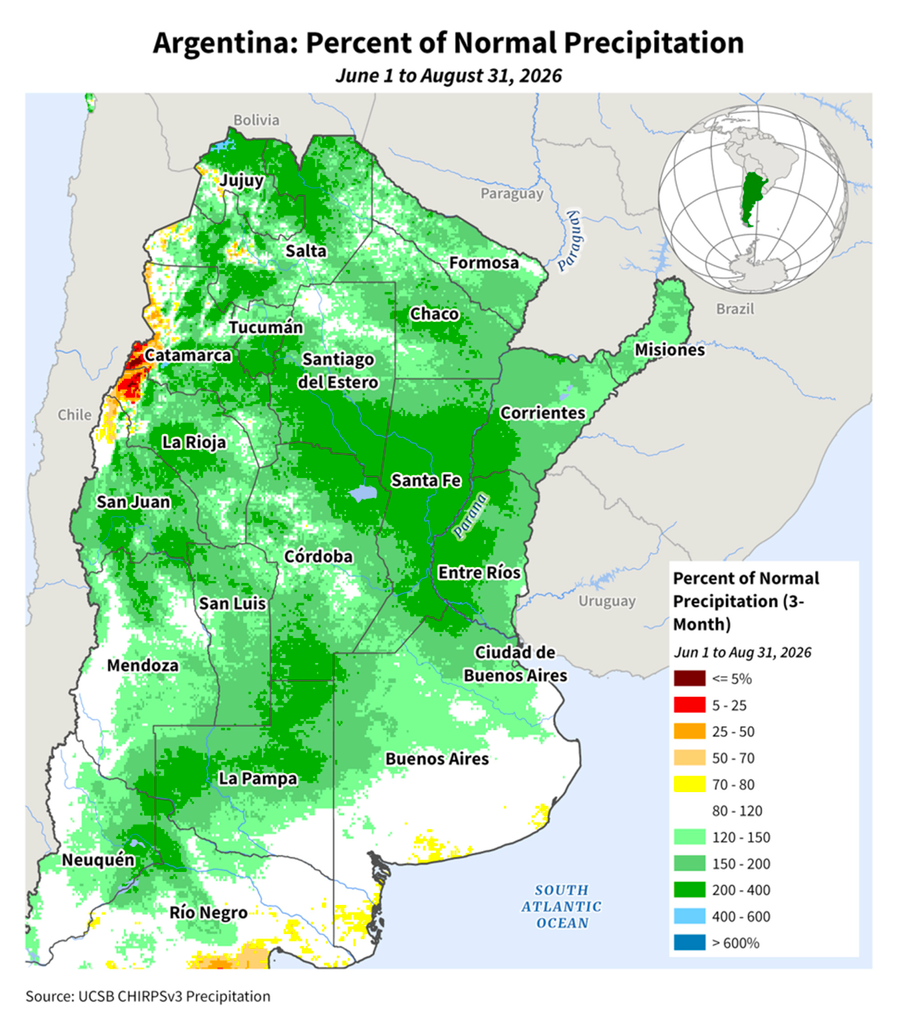
USDA raised Argentina’s 2026/27 wheat production forecast by 2% to 21.5 million tons. The estimate remains 23% below last year’s crop because harvested area is down 6% and the projected yield is 18% below last year’s level.
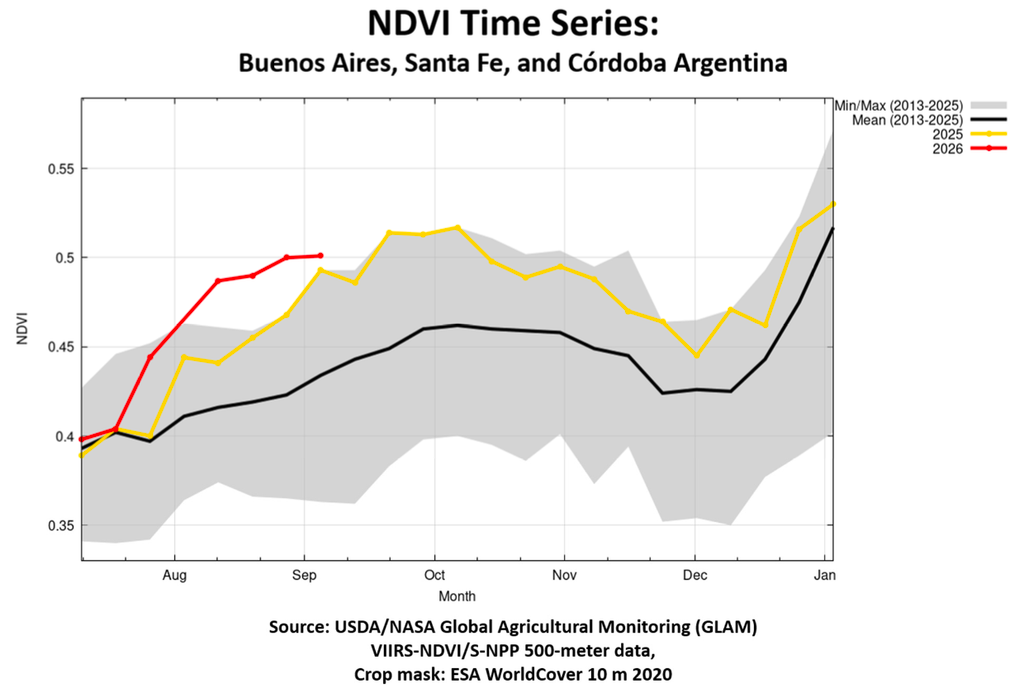
Still, early-season conditions have improved. Planting was completed by mid-August, while rainfall during field preparation, planting and early establishment was above average.
Satellite-derived vegetation data show crop conditions significantly above average in Buenos Aires, Santa Fe and Córdoba, the country’s major wheat-producing provinces. September and October will remain critical for yield development before harvesting begins in early November.
Global coarse-grain production moves lower
The picture is less favorable for coarse grains. USDA cut its 2026/27 global production forecast by 5.2 million tons from August to 1.588 billion tons, 2.5% below the 2025/26 level.
Global corn production was lowered by 7.9 million tons to 1.291 billion tons. The United States accounts for most of the decline, with USDA reducing its U.S. corn production estimate by 5.4 million tons. Foreign production was also lowered by 2.5 million tons.
India’s corn outlook was cut to 50.0 million tons, down 4% from August and 9% from last year. The reduction reflects a delayed and erratic southwest monsoon. USDA estimates India’s harvested area at 14.0 million hectares and yield at 3.57 tons per hectare, both below the previous outlook.
The agency’s satellite analysis indicates weaker crop vigor than last year and the long-term average, particularly in central India. Corn harvesting for the kharif crop began in September, while planting of the winter rabi crop is scheduled to begin in October.
Kenya faces an even sharper deterioration. USDA cut 2026/27 corn production to 2.2 million tons, down 27% from the previous forecast, 35% from last year and 39% below the five-year average.
The decline follows an El Niño-related drought that affected Kenya’s main corn-growing areas from June through August. USDA said the country recorded its lowest three-month seasonal rainfall for the June-August period since 1981 in its highest-producing region.
By contrast, Canada is expected to produce a record 16.8 million tons of corn. Record planted area and improved moisture conditions compared with last year’s drought helped lift the country’s production outlook.
Rice outlook diverges across South Asia
USDA lowered global milled rice production for 2026/27 to 533.9 million tons, down 3.4 million tons from August and 2.2% below the 2025/26 level.
Bangladesh production was lowered to 36.9 million tons as farmers faced problems across two of the country’s three rice seasons. Fertilizer shortages in late 2025 and flooding in the Haor Basin reduced yields of the boro crop, while aus planting declined by 100,000 hectares as farmers shifted to other crops. Early flooding also delayed aman planting.
Sri Lanka provides a contrasting example. USDA raised its 2025/26 rice production estimate to a record 3.7 million tons, up 12% from the previous month and 15% from the previous year.
The increase followed official revisions to harvested area and yields for both the yala and maha crops. USDA also linked the improvement in yields to a sharp increase in fertilizer imports after Sri Lanka reversed its 2021 chemical fertilizer ban. Fertilizer imports reportedly increased by more than 60% in 2025 from the previous year.
The Sri Lankan case underscores the role of fertilizer availability in determining crop output, particularly after several seasons of declining yields following the earlier restriction on chemical fertilizer use.
Australia and Russia expand rapeseed production
Oilseeds are another area where USDA sees stronger global production. Global oilseed output for 2026/27 was raised to 723.5 million tons, up 2.5 million tons from August and 3.2% above the previous year’s level.
Australia’s rapeseed production is forecast at 7.8 million tons, up 15% from August and 2% from last year. Harvested area is expected to reach 3.8 million hectares, while yield has been raised 12% to 2.05 tons per hectare.
Above-average rainfall in Victoria and South Australia has supported crop development. Satellite imagery shows normal-to-above-normal vegetation conditions across most rapeseed-growing areas, although additional September rainfall would be beneficial, particularly in Western Australia.
Russia is expected to produce a record 7.0 million tons of rapeseed, up 9% from August, 27% from last year and 63% above the five-year average.
The increase is primarily the result of expanded planted area. Final data from Russia’s statistical agency showed rapeseed plantings rising 26% year over year to 3.07 million hectares. USDA said wet conditions during the spring planting campaign delayed spring grains and reduced spring wheat area, ultimately encouraging farmers to expand oilseed plantings.
Rapeseed area increased particularly sharply in Siberia, which accounted for 60% of Russia’s spring rapeseed plantings. While dry and hot conditions affected some Siberian fields, favorable conditions elsewhere supported normal yields.
Cotton reflects changing farm economics
Global cotton production was lowered slightly to 117.3 million 480-pound bales. Pakistan’s 2026/27 crop was reduced to 5.0 million bales, down 2% from August and 6% from last year.
The reduction was driven by lower planted area rather than poor growing conditions. Cotton planting in Punjab and Sindh, the country’s main producing provinces, fell below government targets as farmers faced weaker returns compared with competing crops such as sugarcane.
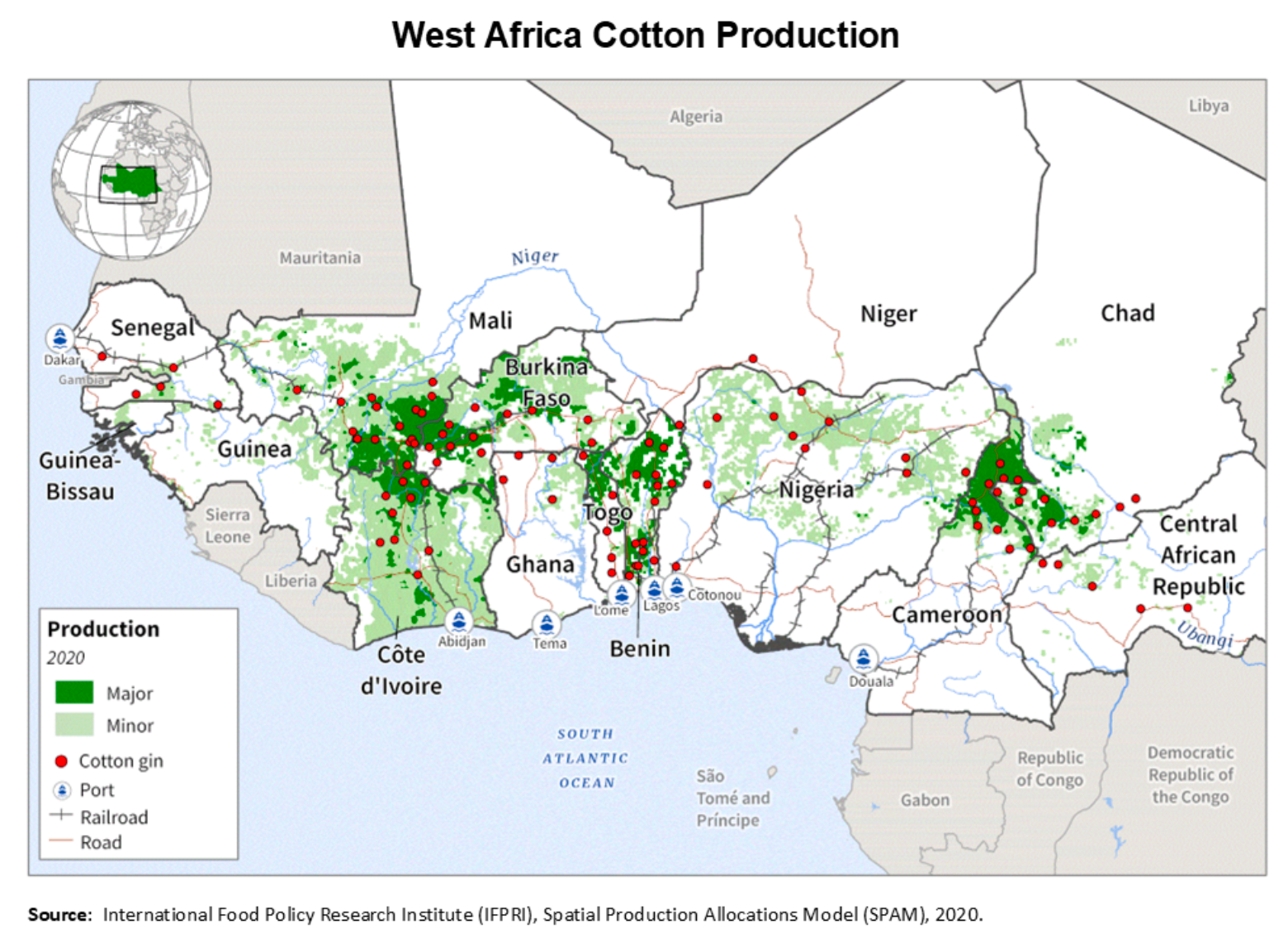
Argentina’s cotton sector illustrates a similar shift in farmer economics. USDA estimates 2025/26 cotton production at 975,000 bales, down 32% from the previous year, with harvested area falling 40%.
Farmers in northern provinces replaced cotton with sunflowerseed because of more favorable prices and lower fertilizer requirements. Heavy rainfall later in the season also damaged boll development and reduced fiber quality.
Weather and input economics increasingly shape the crop map
USDA’s September production report points to a global agricultural market increasingly shaped by the interaction of weather, crop prices and input costs.
In some regions, favorable rainfall is lifting yields sharply even when planted area has declined, as seen in Australian wheat. Elsewhere, extreme weather is overwhelming production potential, as in Kenya’s corn belt and India’s monsoon-dependent corn regions. In Russia, weather during the planting campaign helped redirect acreage from grains toward oilseeds, while in Argentina, relative fertilizer requirements are influencing farmers’ crop choices.
The report also highlights the continuing importance of fertilizer availability. Sri Lanka’s record rice production following the restoration of fertilizer imports contrasts with crop-area shifts in Argentina and Pakistan, where farmers are responding to the economics of input-intensive crops.
Taken together, the September estimates show a global crop market with no single production trend. Wheat prospects have improved, particularly in several Southern Hemisphere and Black Sea producers, while corn and rice face significant regional weather-related constraints. At the same time, oilseed production is expanding as farmers in several countries allocate more land to crops that offer stronger returns or more favorable production economics.

Enjoyed this story?
Every Monday, our subscribers get their hands on a digest of the most trending agriculture news. You can join them too!







Discussion0 comments