
7 secrets to getting a plentiful pumpkin harvest

Contents:
- Why you need to fertilize pumpkins
- Essential nutrients for pumpkin growth
- Fertilizing schedule
- Fertilizing methods
- Types of fertilizers for pumpkin
- Fertilizer application order
- Recommendations from professional gardeners
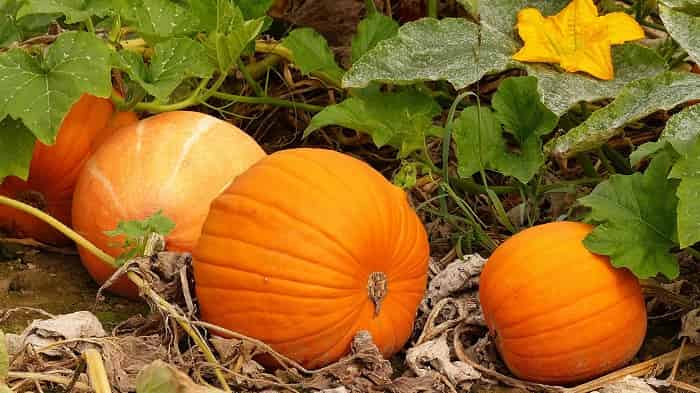
Pumpkin is one of the most popular melon crops among gardeners. It is unpretentious and undemanding to care for. The taste and volume of the harvest largely depend on the quality of the soil. Proper pumpkin fertilizing during flowering and fruiting is needed to grow large, tasty fruits. Follow these useful tips on growing pumpkins to have an abundant harvest.
Why you need to fertilize pumpkins
Pumpkins need an ample supply of nutrients to grow and bear fruit, so it is advisable to grow them on fertile soil. The soil should be fertilized before planting, continuing to apply fertilizer throughout the growing season.
When choosing what to feed pumpkins in open ground, you need to take into account the preferences of the crop. Initially, pumpkins were grown in the countries of South and Central America, which is why the crop loves sunlight and warmth so much. In order to grow well, its powerful root system requires adequate nutrition. Carrots, legumes, cabbage, and onions can be predecessors of pumpkin. Areas where squash, cucumbers and other crops of the same family grew are not suitable.
Essential nutrients for pumpkin growth
For pumpkins to grow well and produce a bountiful harvest, the soil must contain enough nitrogen, phosphorus, potassium, and calcium. Pumpkin roots can go into the soil for 2 meters (79 in), the ripening period of the berry is up to 140 days, so the plant significantly depletes the soil, literally sucking out all the juices from it. Therefore, the beds where pumpkin grows need to be regularly fertilized.
Fertilizing schedule
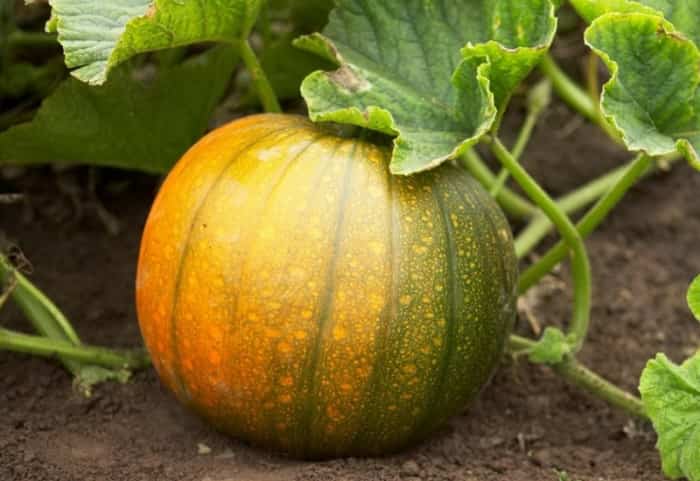
Pumpkin is fed at certain times. If the soil is fertile, it is enough to use fertilizers only three times per season. Depleted soils will have to be fed once every 2 weeks.
Some signs indicate that extra feeding is required for pumpkins:
- seedlings are growing poorly since transplantation;
- leaves curl, turn yellow, and fall off;
- the back of the leaves turns purple;
- the fruits do not set well;
- flowering slows down.
The first fertilizer is applied when 4—5 leaves are formed. The second time, additional feeding will be needed at the stage of growth of the vines. Fertilizing of seedlings is carried out according to the following scheme:
- 10 days after the sprouts hatch.
- 5 days before planting in an open area.
- 14 days after planting in the ground.
- When the first lashes appear.
The specified timeframes may vary depending on growing conditions and the condition of the seedlings. Pumpkin fertilizer is last applied at the end of summer, before harvesting.
Fertilizing methods
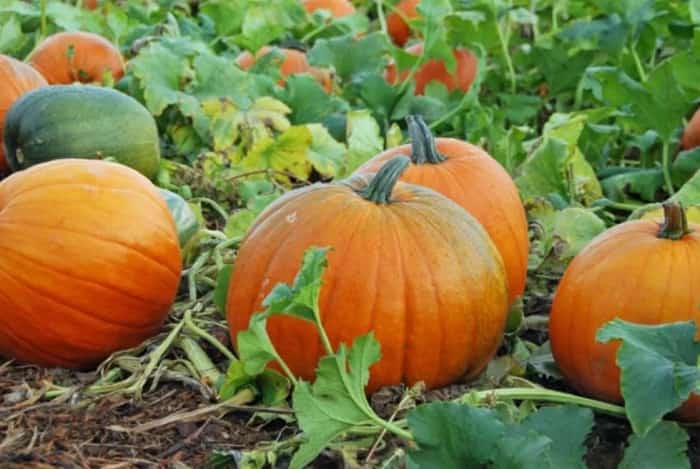
Similar to other crops, pumpkin is fertilized by root and foliar methods. Each type of feeding has its own purpose and features.
Root
The fertilizer is diluted in water according to the instructions. The prepared solution is poured under the roots. Before this, the beds are watered generously to avoid burning the roots. Another option for root-feeding pumpkins is to make furrows 8 cm (3.15 in) deep at a distance of 20 cm (8 in) from the plants, pour the dry preparation into them, and cover them with soil and water generously.
Foliar
We are talking about irrigation (spraying) of leaves. The dosage of fertilizers is reduced from the norms specified for irrigation by 2 times, so as not to burn the green part of the plant. Foliar feeding for pumpkins on open ground is advisable during the flowering and fruiting period. Spraying is carried out in cloudy weather or in the evening so that moisture does not cause sunburn or greenery.
Types of fertilizers for pumpkin
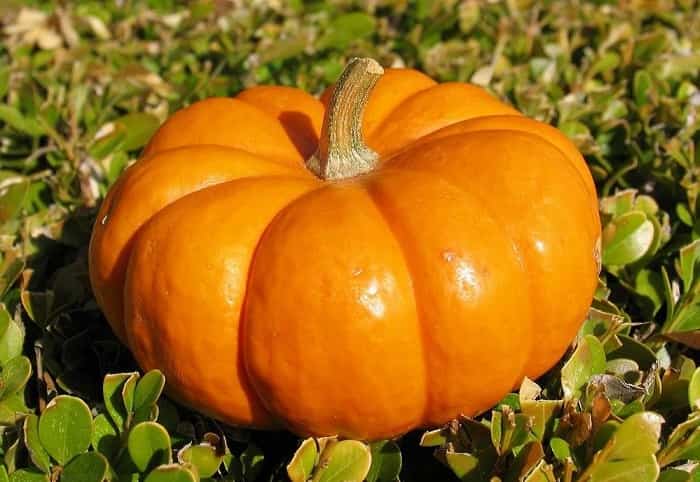
Organic or mineral fertilizers and traditional methods are used to support pumpkin growth and development. The crop needs nitrogen, potassium, and phosphorus. The first is added at the beginning of the growing season, and the second and third are added when flowers are set and fruits are formed.
Mineral fertilizers
Below are listed mineral fertilizers that can be used to feed pumpkins in the open-ground care scheme:
- 10 g (0.4 oz) of urea per 1 bucket of water;
- a mixture of 20 g (0.7 oz) superphosphates, 15 g (0.5 oz) potassium sulfate, and 20 g (0.7 oz) NPK-fertilizer in a bucket of water.
- a solution of 15 g (0.5 oz) superphosphate and 10 g (0.4 oz) potassium sulfate in 12 liter (3.2 gal) water.
The most popular among industrial fertilizers are the preparations “Juno”, “Kemira”, “Universal”. They are a ready-made mixture of nitrogen, phosphorus, and potassium fertilizers in the required dosage.
Organic fertilizers
Before planting in the ground, the soil is fertilized with wood ash. It will give the plant strength to grow and protect it from pests. Take 1 tbsp of powder for each hole. In the second half of the growing season, a solution of 200 g (7 oz) of ash and a bucket of water is used as fertilizer. The liquid is infused for three days, and then the beds are watered with it.
You can also use other available organic fertilizers:
- liquid manure diluted with water in a ratio of 1:10;
- chicken manure, pre-diluted with water in a ratio of 1:20.
Each bush will need 2 liters (0.5 gal) of one or the other solution, and during the ripening of the fruits — 3 liters (0.8 gal).
You can also make a nettle infusion. To do this, you need:
- Fill a 200-liter (53 gal) barrel 1/3 full with crushed nettle leaves and stems.
- Fill to the top with water.
- Cover and leave to ferment for 7 days, stirring daily.
Complex fertilizers
The mixture of nutrients is balanced in composition. It only requires calculating the dosage for a certain area. The most popular compositions:
- NPK-fertilizer. Consumption: 10 g (0.4 oz) per 1 plant. Applied dry, followed by watering.
- Nitrogen-Phosphorous fertilizer. The dosage of the dry preparation is 30 g (1.06 oz) per bucket of water. This volume is used to water 1 m2 of soil.
- Kemira Universal. Dosage: 20 g (0.7 oz) per bucket of water (for watering) and 10 g (0.4 oz) per 10 liters (2.6 gal) of water (for spraying). Repeat the treatment every 2 weeks during the flowering and fruiting stage.
Traditional methods
To increase the yield, you can use natural remedies. They act more gently if the dosage is observed. There are two effective means of fertilizing pumpkin:
- Mix 50 ml (1.7 fluid ounces) of ammonia in 5 liters (1.3 gal) of water. Use the resulting solution for root watering, without touching the leaves and stems. It is recommended to use such fertilizer in June (in the first half of the growing season).
- Add 100 g (3.5 oz) of raw yeast and 10 tbsp of sugar to a bucket of water. Close the container with a lid and leave to infuse for 7 days. When the solution has fermented, add 500 ml (17 fluid ounces) of wood ash infusion. The next day, the natural fertilizer is ready. Up to 2 liters (0.5 gal) of yeast solution are used for each bush.
If the plant is attacked by insect pests, a nettle infusion prepared according to the recipe indicated above will help.
It is necessary to feed the pumpkin in July, August and other months. The crop actively absorbs nutrients from the soil, and if there is a deficiency, it grows more slowly and bears fruit poorly. Experienced farmers recommend alternating organic fertilizers with minerals. Before applying any fertilizers, the soil is loosened, and after – watered abundantly.
Fertilizer application order
At each stage of growth and development, pumpkin requires a certain fertilizing. When soaking seeds, biostimulants are required. They activate growth and improve germination. Most often, succinic acid or sodium humate are used for soaking. Heteroauxin is used to root seedlings.
Let’s consider pumpkin fertilizing during the growing season according to the type of necessary substances.
- Urea is a source of nitrogen. It is added during the growth of the vines, before the formation of buds. Before fertilizing the pumpkin, urea is dissolved in warm water. For 10 liters (2.6 gal), 2 tablespoons of the preparation are enough.
- Potassium sulfate is applied during flowering and fruiting.
- Nitrophoska is used during the period of emergence of shoots. The fertilizer is scattered in dry form on the beds (2 teaspoons for each plant), then mixed with the soil and watered abundantly.
- Azofoska is a fertilizer with a high content of nitrogen, phosphorus and potassium. It is used during the period of budding, flowering and fruit setting.
In addition to industrial fertilizers, the following are used: manure, bird droppings, ash (contains phosphorus and potassium), nettle infusions, yeast, ammonia solution (a source of nitrogen).
The amount of nutrients in the soil may vary. This should be taken into account before feeding the pumpkin. If the soil is very depleted, complex, mixed fertilizers are chosen for the versatile nutrition of the plant. If the soil lacks a specific component, simple fertilizers containing a specific element (for example, nitrogen) are chosen. Sandy soils, as a rule, lack magnesium, while black soil often has a deficiency of molybdenum and manganese. Complex fertilizers such as “Rastvorin” and “Kemira” are suitable for poor soils.
Advice! An economical option is to plant pumpkins on compost. The piles are prepared in the fall, but are not formed in a shady place, as usual, but in the sun. With this method of growing, the plants will only need phosphorus-potassium fertilizers, since nitrogen compounds are formed during the process of rotting grass and food waste in the compost.
Recommendations from professional gardeners
- Exceeding the recommended dosages of nitrogen-containing fertilizers is fraught with the accumulation of nitrates in the pumpkin and the development of powdery mildew. The norm is up to 25 mg of ammonium nitrate per 1 m2.
- Before using several store-bought products at once, it is necessary to study their composition and calculate the norms of each component. It is more convenient to use a complex supplement.
- Adding dry agrochemicals to the soil without prior watering can cause root burns.
- The last treatment of pumpkin is carried out 45 days before the planned harvest.
Proper care for pumpkins provides the crop with the elements necessary for development and improves the composition of the soil. Your efforts will result in a rich harvest of large and tasty fruits.

Discussion0 comments