Skip to content
  • Professionals
  • Gardeners
 
Search
Log in
EN
RU
  • Markets
  • Business
  • Politics
  • Technologies
  • Interviews
  • Rankings
  • Environment
  • Events
  • Stock Quotes
  • Business Directory
Trending topic:
Featured company:
 
RU
  • Professionals
  • Gardeners
Sections
    Events
    Stock Quotes
    Business Directory
    Trending topic:
    Featured company:
    Follow us...
    Helpful information
    • About
    • Team
    • Advertise
    • Contacts
    • Submit a Tip
    • Privacy Policy
    • Terms of Service
    Sections
      Seasonal tips
      • Spring
      • Summer
      • Autumn
      • Winter
      Trending topics
      • compost
        23
      • garlic
        2
      • lemon
        1
      • potato
        12
      Follow us...
      Helpful information
      • About
      • Team
      • Advertise
      • Contacts
      • Submit a Tip
      • Privacy Policy
      • Terms of Service
      Copyright © 2014-2026 DigitalTree LLC. All rights reserved.
      We deliver content lightning-fast thanks to the managed cloud WordPress hosting with CDN.
      16+

      Home / Technologies

      Solar-powered solution: turning wastewater into fertilizer

      Elena Shalashnik avatar Elena Shalashnik
      August 6, 2024, 12:00 pm
      August 6, 2024, 12:00 pm
      [esi post-views ttl=0]
      Technologies
      Solar-powered solution: turning wastewater into fertilizer
      #image_title
      Save for later
      Share

      In a groundbreaking development, researchers at the University of New South Wales (UNSW), Sydney, Australia, have created an ‘artificial leaf’ that uses sunlight to convert nitrate wastewater into ammonium nitrate. This innovative approach has the potential to revolutionize fertilizer production by eliminating greenhouse gas emissions typically associated with the process.

      Ammonia is essential for producing fertilizers, but traditional methods require high temperatures, high pressure, and hydrogen derived from fossil fuels. This conventional process contributes to about 5% of global greenhouse gas emissions. However, the new technology developed by UNSW engineers offers a greener alternative.

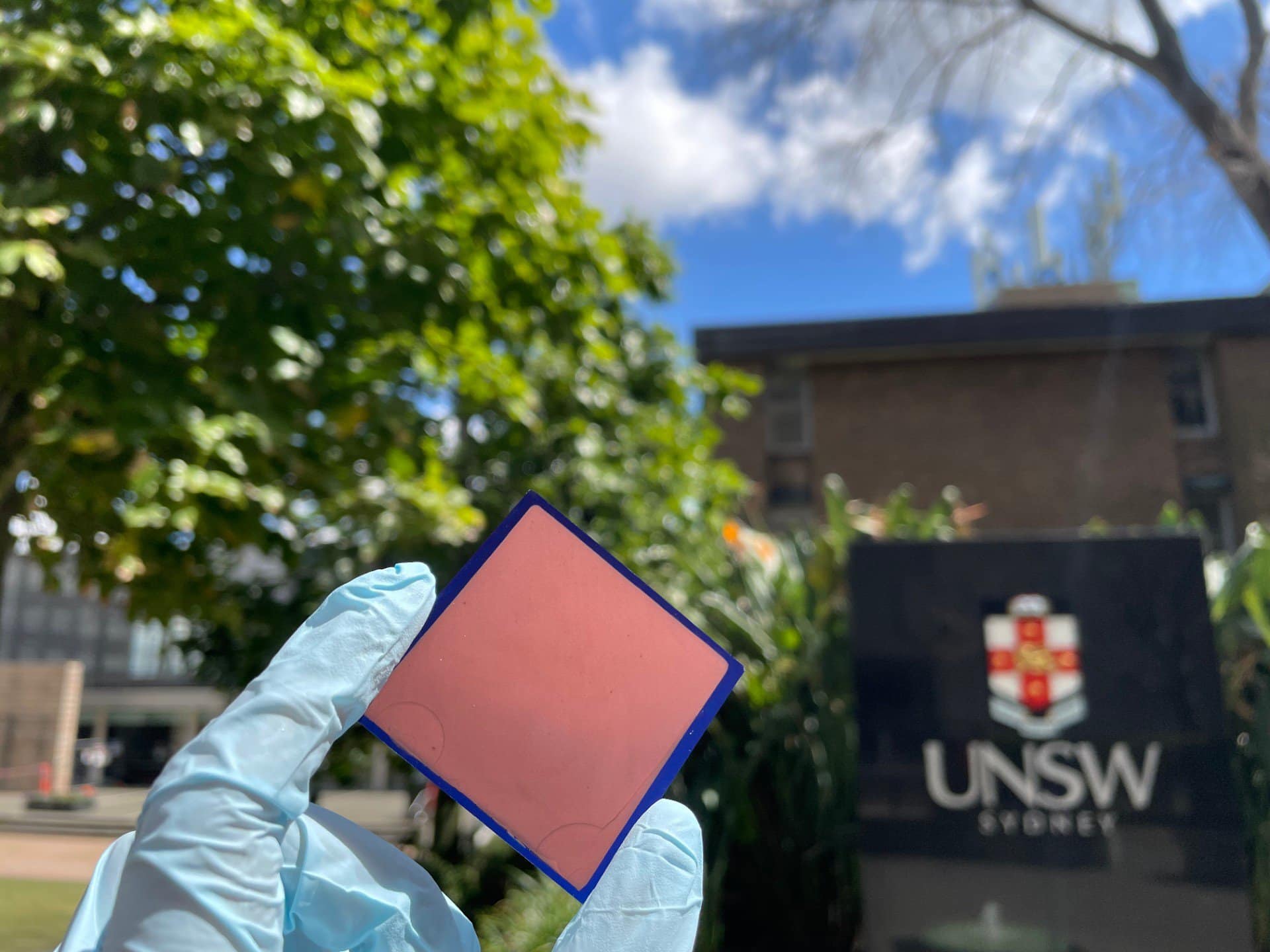
      Led by Scientia Professor Rose Amal and Professor Xiaojing Hao, the research team has transformed a standard silicon solar panel into a device that mimics the natural process of photosynthesis. Just as leaves use sunlight to create energy, this artificial leaf uses sunlight to convert nitrate wastewater into ammonium nitrate. The key to this process is a nano-structured thin layer of copper and cobalt hydroxide on the panel, which acts as a catalyst.
      ADVERTISEMENT

      The team demonstrated the effectiveness of this process, known as photoelectrocatalytics (PEC), with a 40 cm² artificial leaf system installed on the roof of UNSW’s Tyree Energy Technologies building. This system produced enough ammonium ions to fertilize approximately 1.49 m² of agricultural land. The researchers are now focused on scaling up the system to produce larger quantities of ammonia, providing a sustainable and decentralized solution for agricultural fertilization.

      “We’re combining the expertise from UNSW’s School of Photovoltaics & Renewable Energy Engineering with our knowledge in chemical engineering to transform nitrate waste into valuable ammonia,” said Chen Han, the lead author of the study. “Our findings offer a clean, efficient, and cost-effective way to harness solar energy and repurpose chemical wastes to produce ammonia and other valuable products.”

      This technology promises to reduce CO2 emissions not only from the ammonia production process but also from the transportation of fertilizers. By enabling onsite production of ammonia in agricultural areas, the system can decentralize the production process and minimize environmental impact.

      The researchers are hopeful that once the nitrate wastewater is converted into ammonium nitrate, the processed water can be used for irrigation, promoting a circular economy. However, the wastewater must first be treated to remove organic matter and particulates before it can be utilized in the system.

      Professor Amal highlighted the importance of collaborating with industry partners to scale up the device and develop a commercially viable system. “Achieving our emissions targets for 2030 and 2040, and ultimately reaching Net Zero by 2050, depends on innovations like this,” she said.

      ammonia production
      ammonium nitrate
      Australia
      fertilizer production
      net zero emissions
      UNSW
      wastewater

      Enjoyed this story?

      Every Monday, our subscribers get their hands on a digest of the most trending agriculture news. You can join them too!

      Sign me up
      Check the example

      Discussion0 comments

      Спасибо за комментарий, он будет опубликован на сайте после проверки модератором. Хотите, чтобы ваши комментарии появлялись на сайте мгновенно? Достаточно пройти регистрацию.
      Congratulations, you can be the first to start the conversation.
      Do you have a question or suggestion? Please leave your comment to ignite conversation.
      What’s on your mind?
      Cancel Log in and comment
      Or continue without registration
      Get notified about new comments by email.
      Advertisement
      In focus
      How to get here?
      Stock quotes
      Bayer
      11.52
      4.82
      Bayer Crop Science
      40.21
      0.3
      CF Industries
      123.29
      0.78
      Corteva Agriscience
      80.05
      1.28
      ICL Group
      5.38
      0.94
      Intrepid Potash
      41.94
      0.79
      Mosaic
      28.83
      4.19
      Nutrien
      79.55
      2.26
      Yara International
      28.45
      2.1
      See all
      Most read
      Agromin composts 1.25 million tons of organic waste in 2025
      Agromin composts 1.25 million tons of organic waste in 2025
      U.S. Justice Department opens antitrust probe into fertilizer producers amid price concerns
      U.S. Justice Department opens antitrust probe into fertilizer producers amid price concerns
      Middle East conflict threatens fertilizer supply ahead of U.S. planting season
      Middle East conflict threatens fertilizer supply ahead of U.S. planting season
      DeKalb may launch 30 new corn hybrids for 2026 season
      DeKalb may launch 30 new corn hybrids for 2026 season
      FMC secures first dual-mode herbicide classification for rimisoxafen
      FMC secures first dual-mode herbicide classification for rimisoxafen
      Events
      World Agri-Tech Innovation Summit
      San Francisco (CA), USA
      Mar 17 — 18, 2026
      FSHOW
      Shanghai, China
      Mar 17 — 19, 2026
      Argus Fertilizer Asia
      Bali, Indonesia
      Mar 31 — Apr 2, 2026
      CRU Phosphates
      Paris, France
      Apr 13 — 15, 2026
      CFEX
      Antalya, Turkey
      Apr 15 — 17, 2026
      See all
      Live
      Isabelita Barreiro
      December 11, 2025, 01:54 am
      Excellent management of water resources and effective use of water-soluble fertilizers!
      Argentine nano-fertilizer firm AKO Agro expands to Brazil
      Meripa Corson
      August 4, 2025, 01:18 pm
      Where does the money actually go? As a timber land owner, how do I benefit from the legislation?
      USDA commits $80 million to expand timber markets and improve forest resilience
      Patonkas Luksompulus
      January 21, 2025, 12:36 pm
      Greece meeds biological fertilizers! Great news about De sangosse.
      DE SANGOSSE expands operations with Greek subsidiary
      Pedro Diaz
      November 20, 2024, 08:42 pm
      Is it a Roundup lawsuit or more about bad financials? I think the market reacted only to announced financial results.
      Bayer’s shares are pressed down by ongoing Roundup cancer lawsuit
      Johan Fredin
      August 22, 2024, 07:57 pm
      Europe is falling behind in this field. The concerns 30 years ago was reasonable. Now not so much. We need crops that can survive in a more extreme future climate. Handle droughts and hot weather better. Crops that are less tasty to pests like hogs and deere.
      Gene-edited crops set for groundbreaking European trials
      About
      Sections
      Markets  ·  Business  ·  Politics  ·  Technologies  ·  Interviews  ·  Rankings  ·  Environment
      Support
      About  ·  Team  ·  Advertise  ·  Contacts  ·  Submit a Tip  ·  Privacy Policy  ·  Terms of Service
      Copyright © 2014-2026 DigitalTree LLC. All rights reserved.
      We deliver content lightning-fast thanks to the managed cloud WordPress hosting with CDN.
      16+
      More to read
      Revolutionizing fertilizer production: Green Ammonia’s rise
      Revolutionizing fertilizer production: Green Ammonia’s rise
      UNSW researchers aim to turn industrial waste into low-emissions urea fertilizer
      UNSW researchers aim to turn industrial waste into low-emissions urea fertilizer
      Ammobia claims breakthrough in ammonia production by reworking Haber-Bosch process
      Ammobia claims breakthrough in ammonia production by reworking Haber-Bosch process
      Advertising that helps us do quality reporting