Skip to content
  • Professionals
  • Gardeners
 
Search
Log in
EN
RU
  • Markets
  • Business
  • Politics
  • Technologies
  • Interviews
  • Rankings
  • Environment
  • Events
  • Stock Quotes
  • Business Directory
Trending topic:
Featured company:
 
RU
  • Professionals
  • Gardeners
Sections
Events
Stock Quotes
Business Directory
Trending topic:
Featured company:
Follow us...
Helpful information
  • About
  • Team
  • Advertise
  • Contacts
  • Submit a Tip
  • Privacy Policy
  • Terms of Service
Sections
Seasonal tips
  • Spring
  • Summer
  • Autumn
  • Winter
Trending topics
  • compost
    22
  • garlic
    2
  • lemon
    1
  • potato
    12
Follow us...
Helpful information
  • About
  • Team
  • Advertise
  • Contacts
  • Submit a Tip
  • Privacy Policy
  • Terms of Service
Copyright © 2014-2025 DigitalTree LLC. All rights reserved.
We deliver content lightning-fast thanks to the managed cloud WordPress hosting with CDN.
16+

Home / Markets

Friday’s Insider: Urea market — is an oligopoly possible?

Ilya Motorygin avatar Ilya Motorygin
September 6, 2024, 10:00 am
343
Markets
Friday’s Insider: Urea market — is an oligopoly possible?
Save for later
Share

In 2023, global urea production reached approximately 185 million metric tons, marking a significant milestone for the fertilizer industry. Without a doubt, urea is the king of fertilizers. It is often said that it is unlikely for urea to be strong while the rest of the fertilizer market is weak, and vice versa. Though there may be divergence, it is seldom sustained. Urea production continues to grow, driven by increasing agricultural demands, particularly in regions with high population growth and food security concerns.

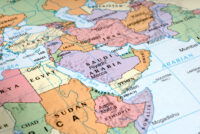
The urea market is characterized by a few large producer countries that dominate global production. Key players include China, Middle Eastern and North African countries, Russia, and the US. These countries possess significant natural gas reserves, the primary feedstock for urea production, giving them a substantial cost advantage.

China, for instance, is not only the largest producer but also a significant exporter, usually supplying between 5-5.5 million metric tons annually. Similarly, countries in the Middle East leverage their abundant and cheap natural gas to produce urea at a lower cost, making them significant players in the global market. The concentration of production within a few regions and companies suggests that these producers have the potential to influence market prices.

An oligopoly is a market structure in which a small number of firms hold significant market power, enabling them to influence prices. Given the market’s concentration, this possibility exists for urea producers. The actions of major producers, particularly in times of market stress, can significantly affect global prices.

ADVERTISEMENT

For example, China’s recent reduction in urea exports during the first half of 2024, where it only exported 220,000 metric tons compared to its usual 5-5.5 million metric tons, indicates a strategic manipulation of supply. This sharp reduction could be seen as an attempt to influence global prices, especially if done in coordination with other large producers. However, in this particular case, it has had the opposite effect, controlling price increases domestically rather than internationally.

If key producers like China, the Middle East, and Russia were to coordinate their production levels, they could theoretically control supply and, by extension, the market price. Such coordination could involve reducing output during times of excess supply or increasing it to capitalize on high-demand periods, thereby stabilizing or even raising prices to their benefit.

However, the formation of an effective oligopoly in the urea market faces several challenges. First, the market’s global nature means that any collusion would require cooperation among countries with different economic goals and domestic needs. For instance, while China might reduce exports to influence international prices, it must also ensure domestic supply to avoid inflation and food security issues at home.

Second, the entry of new producers and the expansion of production capacities in other regions could dilute the power of established players. For example, Africa has been increasing its production capacity, with countries like Nigeria emerging as significant producers. This diversification of supply sources can reduce the effectiveness of any coordinated effort by traditional producers.

Third, regulatory scrutiny, especially from importing countries, could pose a significant barrier. Countries reliant on urea imports might impose trade restrictions or seek alternative suppliers if they suspect price manipulation. Moreover, international trade organizations might view such collusion as anti-competitive behavior, leading to sanctions or tariffs that could hurt the producers involved.

While the concentrated nature of urea production suggests the potential for oligopolistic behavior, several factors limit the feasibility of such an arrangement. The need for domestic stability, the emergence of new producers, and the threat of regulatory intervention make it difficult for urea producers to form a lasting and effective oligopoly.

————

About the Author of “Friday’s Insider”: Ilya Motorygin is the co-founder of GG-Trading and brings 30 years of experience to the fertilizer industry. Renowned for his comprehensive problem-solving skills, Ilya expertly manages deals from inception to completion, overseeing aspects such as financing, supply chains, and logistics.

fertilizer prices
fertilizer trading
Friday's Insider
prices
urea

Enjoyed this story?

Every Monday, our subscribers get their hands on a digest of the most trending agriculture news. You can join them too!

Sign me up
Check the example

Discussion0 comments

Спасибо за комментарий, он будет опубликован на сайте после проверки модератором. Хотите, чтобы ваши комментарии появлялись на сайте мгновенно? Достаточно пройти регистрацию.
Congratulations, you can be the first to start the conversation.
Do you have a question or suggestion? Please leave your comment to ignite conversation.
What’s on your mind?
Cancel Log in and comment
Or continue without registration
Get notified about new comments by email.
Advertisement
In focus
How to get here?
Stock quotes
Bayer
9.67
1.02
Bayer Crop Science
33.31
0.8
CF Industries
77.88
2.93
Corteva Agriscience
66
0.44
ICL Group
5.18
1.33
Intrepid Potash
25.31
1.36
Mosaic
23.61
2.03
Nutrien
60.34
0.48
Yara International
19.2
1.05
See all
Most read
Bowery Farming’s $70M Georgia vertical farm heads to liquidation as startup’s collapse triggers nationwide sell-offs
Michigan tightens manure-spreading rules for large animal farms
Monarch Tractor may lay off 100 employees or shut down as it struggles to pivot away from manufacturing toward pure software model
Russia imposed temporary ban on sulfur exports until the end of 2025
Tyson shutters high-volume beef plant in Nebraska as the industry faces a downturn
Events
Argus Clean Ammonia Europe
Rotterdam, Netherlands
Dec 2 — 4, 2025
Organic Grower Summit
Monterey (CA), USA
Dec 3 — 4, 2025
IFS Conference
Cambridge, UK
Dec 10 — 12, 2025
Fertilizer Latino Americano
Miami (FL), USA
Jan 26 — 28, 2026
Argus Fertilizer Africa
Dar es Salaam, Tanzania
Feb 10 — 11, 2026
See all
Live
Meripa Corson
August 4, 01:18 pm
Where does the money actually go? As a timber land owner, how do I benefit from the legislation?
USDA commits $80 million to expand timber markets and improve forest resilience
Patonkas Luksompulus
January 21, 12:36 pm
Greece meeds biological fertilizers! Great news about De sangosse.
DE SANGOSSE expands operations with Greek subsidiary
Pedro Diaz
November 20, 2024, 08:42 pm
Is it a Roundup lawsuit or more about bad financials? I think the market reacted only to announced financial results.
Bayer’s shares are pressed down by ongoing Roundup cancer lawsuit
Johan Fredin
August 22, 2024, 07:57 pm
Europe is falling behind in this field. The concerns 30 years ago was reasonable. Now not so much. We need crops that can survive in a more extreme future climate. Handle droughts and hot weather better. Crops that are less tasty to pests like hogs and deere.
Gene-edited crops set for groundbreaking European trials
Timothy Kirkwood
July 23, 2024, 01:39 pm

Your article about Sargassum shows Kelp, not Sargassum.

Sargassum in the Caribbean: turning seaweed crisis into economic opportunity?
About
Sections
Markets  ·  Business  ·  Politics  ·  Technologies  ·  Interviews  ·  Rankings  ·  Environment
Support
About  ·  Team  ·  Advertise  ·  Contacts  ·  Submit a Tip  ·  Privacy Policy  ·  Terms of Service
Copyright © 2014-2025 DigitalTree LLC. All rights reserved.
We deliver content lightning-fast thanks to the managed cloud WordPress hosting with CDN.
16+
More to read
Friday’s Insider: Why the market should stop waiting for urea import tenders
Friday’s Insider: Why does China export less urea
Friday’s Insider: Granular Urea vs. Prilled Urea
Advertising that helps us do quality reporting