Skip to content
  • Professionals
  • Gardeners
 
Search
Log in
EN
RU
  • Markets
  • Business
  • Politics
  • Technologies
  • Interviews
  • Rankings
  • Environment
  • Events
  • Stock Quotes
  • Business Directory
Trending topic:
Featured company:
 
RU
  • Professionals
  • Gardeners
Sections
Events
Stock Quotes
Business Directory
Trending topic:
Featured company:
Follow us...
Helpful information
  • About
  • Team
  • Advertise
  • Contacts
  • Submit a Tip
  • Privacy Policy
  • Terms of Service
Sections
Seasonal tips
  • Spring
  • Summer
  • Autumn
  • Winter
Trending topics
  • compost
    22
  • garlic
    2
  • lemon
    1
  • potato
    12
Follow us...
Helpful information
  • About
  • Team
  • Advertise
  • Contacts
  • Submit a Tip
  • Privacy Policy
  • Terms of Service
Copyright © 2014-2025 DigitalTree LLC. All rights reserved.
We deliver content lightning-fast thanks to the managed cloud WordPress hosting with CDN.
16+

Home / Markets

Friday’s Insider: Impact of the Israeli-Iranian conflict on the global fertilizer market

Ilya Motorygin avatar Ilya Motorygin
October 4, 2024, 8:20 pm
228
Markets
Friday’s Insider: Impact of the Israeli-Iranian conflict on the global fertilizer market
Save for later
Share

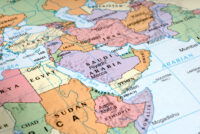
The current Israeli-Iranian conflict has the potential to send ripples through the global market, including the crucial supply chains of mineral fertilizers. Iran has launched over 100 ballistic missiles at Israel, raising questions about how Israel might respond and what the broader consequences could be, particularly for global fertilizer supplies.

Analyzing the situation

At present, Iran’s missile strikes on Israel have grabbed the attention of not only political and military analysts but also global market watchers. The most likely scenario involves Israel retaliating against Iran, potentially targeting critical infrastructure such as oil production facilities, chemical plants, and ports. If such infrastructure is disrupted, it could have a profound impact on the Arab (Persian) Gulf region, which is a key player in the global supply of fertilizers, particularly urea, sulfur, and phosphate-based products.

The disruption of key export routes, especially through the Gulf, would likely cause a significant reduction in supply, tightening the market. This could drive prices upward in the short term, creating a ripple effect that would be felt across industries dependent on fertilizers, including agriculture. However, despite the current volatility, such extreme retaliation from Israel seems unlikely to me.

Retaliation and sanctions: a broader impact?

If Israel were to strike back, the resulting regional instability could prompt disruptions not only in fertilizer exports but also in oil prices, further complicating global supply chains. Moreover, the conflict may trigger additional international sanctions against Iran. While it’s hard to imagine what further sanctions could be imposed, it’s possible that trading operations involving fertilizers of “suspicious” origins or those transiting through Iran could be scrutinized more closely, further straining supply chains.

ADVERTISEMENT

Freight markets are already reflecting increased uncertainty, with bunker prices rising by around 4% following the attacks. Shipping companies, vital for moving fertilizers globally, are likely to keep a close watch on developments. Any further escalation would almost certainly lead to higher freight rates and delays in shipments, adding to the overall cost of fertilizers.

Short-term volatility or long-term shift?

Despite the initial shockwave, my personal view is that the market may correct itself once the immediate geopolitical risks are contained. While this current conflict has led to a bullish spike in fertilizer prices, it’s important to ask whether this surge is sustainable. Historically, short-term price jumps caused by geopolitical events tend to be fleeting, as the market stabilizes after the initial shock.

For a lasting impact on the fertilizer market, we would need to see more profound, structural shifts. These could include long-term disruptions in production capacity, significant changes in export markets, or enduring supply chain breakdowns. In the absence of such factors, prices are likely to stabilize in the medium term.

The Israeli-Iranian conflict has certainly introduced new uncertainty into the global fertilizer market. While short-term price volatility is expected due to disruptions in supply routes and rising freight costs, the long-term impact will depend on whether the conflict leads to significant structural changes in the market. As things stand, I believe the current bullish trend may prove temporary, and prices may settle down once the immediate risks subside.

In any case, the situation warrants close attention as it evolves, and its ultimate impact on the fertilizer market remains uncertain. Hopefully, cooler heads will prevail, and the conflict will not escalate further, minimizing its effect on global supply chains.

————

About the Author of “Friday’s Insider”: Ilya Motorygin is the co-founder of GG-Trading and brings 30 years of experience to the fertilizer industry. Renowned for his comprehensive problem-solving skills, Ilya expertly manages deals from inception to completion, overseeing aspects such as financing, supply chains, and logistics.

fertilizer prices
Friday's Insider
Iran
Israel

Enjoyed this story?

Every Monday, our subscribers get their hands on a digest of the most trending agriculture news. You can join them too!

Sign me up
Check the example

Discussion0 comments

Спасибо за комментарий, он будет опубликован на сайте после проверки модератором. Хотите, чтобы ваши комментарии появлялись на сайте мгновенно? Достаточно пройти регистрацию.
Congratulations, you can be the first to start the conversation.
Do you have a question or suggestion? Please leave your comment to ignite conversation.
What’s on your mind?
Cancel Log in and comment
Or continue without registration
Get notified about new comments by email.
Advertisement
In focus
How to get here?
Stock quotes
Bayer
9.67
1.02
Bayer Crop Science
33.31
0.8
CF Industries
77.88
2.93
Corteva Agriscience
66
0.44
ICL Group
5.18
1.33
Intrepid Potash
25.31
1.36
Mosaic
23.61
2.03
Nutrien
60.34
0.48
Yara International
19.2
1.05
See all
Most read
Bowery Farming’s $70M Georgia vertical farm heads to liquidation as startup’s collapse triggers nationwide sell-offs
Michigan tightens manure-spreading rules for large animal farms
Monarch Tractor may lay off 100 employees or shut down as it struggles to pivot away from manufacturing toward pure software model
Russia imposed temporary ban on sulfur exports until the end of 2025
Tyson shutters high-volume beef plant in Nebraska as the industry faces a downturn
Events
Argus Clean Ammonia Europe
Rotterdam, Netherlands
Dec 2 — 4, 2025
Organic Grower Summit
Monterey (CA), USA
Dec 3 — 4, 2025
IFS Conference
Cambridge, UK
Dec 10 — 12, 2025
Fertilizer Latino Americano
Miami (FL), USA
Jan 26 — 28, 2026
Argus Fertilizer Africa
Dar es Salaam, Tanzania
Feb 10 — 11, 2026
See all
Live
Meripa Corson
August 4, 01:18 pm
Where does the money actually go? As a timber land owner, how do I benefit from the legislation?
USDA commits $80 million to expand timber markets and improve forest resilience
Patonkas Luksompulus
January 21, 12:36 pm
Greece meeds biological fertilizers! Great news about De sangosse.
DE SANGOSSE expands operations with Greek subsidiary
Pedro Diaz
November 20, 2024, 08:42 pm
Is it a Roundup lawsuit or more about bad financials? I think the market reacted only to announced financial results.
Bayer’s shares are pressed down by ongoing Roundup cancer lawsuit
Johan Fredin
August 22, 2024, 07:57 pm
Europe is falling behind in this field. The concerns 30 years ago was reasonable. Now not so much. We need crops that can survive in a more extreme future climate. Handle droughts and hot weather better. Crops that are less tasty to pests like hogs and deere.
Gene-edited crops set for groundbreaking European trials
Timothy Kirkwood
July 23, 2024, 01:39 pm

Your article about Sargassum shows Kelp, not Sargassum.

Sargassum in the Caribbean: turning seaweed crisis into economic opportunity?
About
Sections
Markets  ·  Business  ·  Politics  ·  Technologies  ·  Interviews  ·  Rankings  ·  Environment
Support
About  ·  Team  ·  Advertise  ·  Contacts  ·  Submit a Tip  ·  Privacy Policy  ·  Terms of Service
Copyright © 2014-2025 DigitalTree LLC. All rights reserved.
We deliver content lightning-fast thanks to the managed cloud WordPress hosting with CDN.
16+
More to read
Sergey Belskiy: “After the pandemic, both logistics and the market will change”
Friday’s Insider: Exploring the correlation between fertilizer prices and agricultural commodities
Friday’s Insider: What markets should a fertilizer trader analyze?
Advertising that helps us do quality reporting