
How to care for pumpkins in the open ground

Contents:
- Pumpkin varieties suitable for long—term storage
- Growing conditions
- What to grow before planting pumpkins
- Soil preparation
- Growing pumpkins using seedlings
- Growing pumpkin without seedlings
- Caring for pumpkins
- Harvesting and storing pumpkins
- Diseases and pests
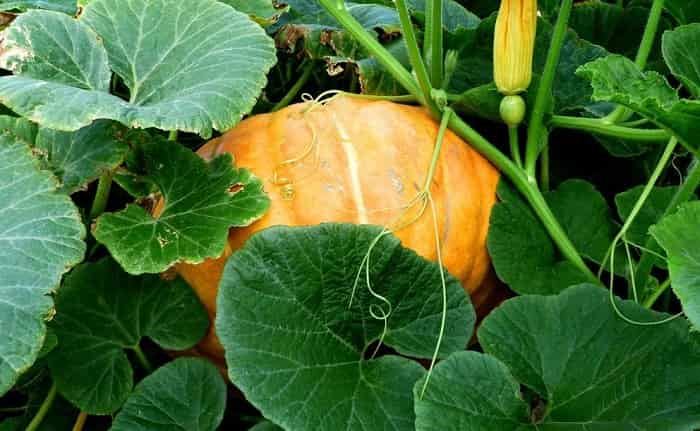
This article answers the question of how to grow pumpkins, creating favorable conditions for the growth and development of this crop in the garden. We will share some tips on how to grow pumpkins in open ground, harvest and store them, choose and time the use of fertilizers, and also the primary diseases and pests you should be cautious about. We will start by explaining what varieties of this tasty and healthy vegetable exist and how they differ from each other.
Which varieties are suitable for long-term storage and which are not?
There are many varieties of this vegetable, but here we will list the most popular ones.
- Common, large-fruited. Unpretentious in cultivation, with oval-shaped fruits. The pulp is juicy and sweet. It is stored for a long time after harvesting.
- Amazon. It is small in size and flattened in shape. Sweet, aromatic, brightly colored flesh. Loves a moderate climate. Gives a good harvest, but is stored for no more than 2 months.
- Aport. A large, round pumpkin with sugary, juicy pulp. The weight of one fruit reaches 7 kg (16 lb). The longer it is stored, the sweeter it becomes.
- Freckle. Early ripening variety. The rind is greenish with spots. The weight of one fruit is 1—3 kg (2—7 lb). It has a sweet taste, pear aroma and juicy pulp. Not suitable for long—term storage.
- Golosemyanka. Unpretentious variety, grows in any region. Fruits are oval—round with a dark green rind. Pumpkin weight is 6 kg (13 lb). On average, it is stored for about 60 days.
- Honey Princess. Leader in softness and sweetness. Produces large fruits weighing up to 4 kg (9 lb). Produces a harvest in 3 months. Stores for 5—7 months.
- Medicinal. Dietary variety. Sweet and juicy pulp, good shelf life, and high yields are the main advantages of the variety.
Growing conditions
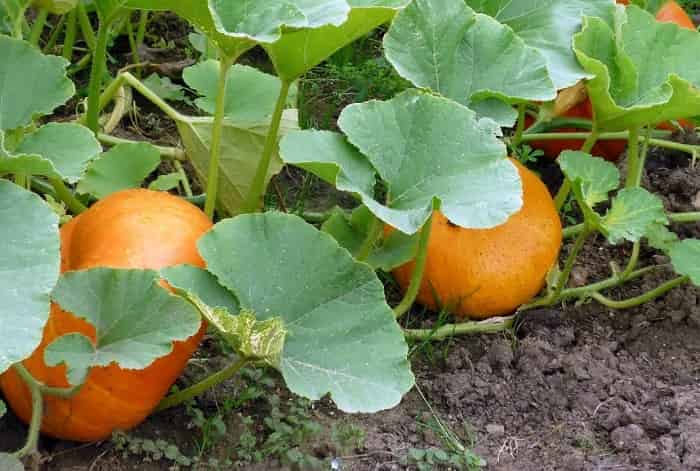
It is not difficult to grow a vegetable in the open ground at your dacha — the plant is heat-loving, but undemanding, and responds well to moist soil during the flowering period. If there is not enough moisture, the ovaries fall off.
According to the cultivation technology, pumpkin needs a lot of light and heat, so it is important to protect it from cold and wind. The crop easily tolerates exposure to direct sunlight. The optimal air temperature is +25°C degrees (77°F). At lower rates, the seeds will not germinate or will develop slowly.
In agricultural technology, much attention is paid to the choice of planting site. The soil should be saturated with humus so that the harvest is abundant, and the fruits are aromatic and tasty. It is recommended to use compost as a fertilizer and drain the soil well. Onions, beans and garlic can be planted before pumpkin. The plant should not be planted after cabbage, carrots and tomatoes. Neutral predecessors are beets, radishes, beans and corn.
What to grow before planting pumpkins
The choice of a predecessor for pumpkin should be approached very carefully. It is best to plant it after potatoes, beets, onions, cabbage and legumes. It is strongly not recommended to plant pumpkin in places where cucumbers, zucchini and eggplants used to grow, as they are affected by the same pathogenic bacteria and insect pests.
Soil preparation
To grow fruits from seeds in open ground, soil preparation work begins in the fall. The selected place is cleared of weeds and fertilized with a mixture of 10 kg (22 lb) of humus (or 14 kg (31 lb) of manure), 30 g (1 oz) of potassium chloride and 60 g (2 oz) of superphosphate. This amount is enough for 2 m2 of beds. Fertilizer is added under plowing. To loosen the soil, peat or coarse sand is added. If the soil is slightly acidic, ash is used. In the spring, it is enough to remove weeds with a rake and level the soil.
There is no single answer to the question of how to properly grow pumpkins in open ground. You can choose one of the methods described below, and in any case, get a good harvest if you properly care for the crop.
Growing by seedling method
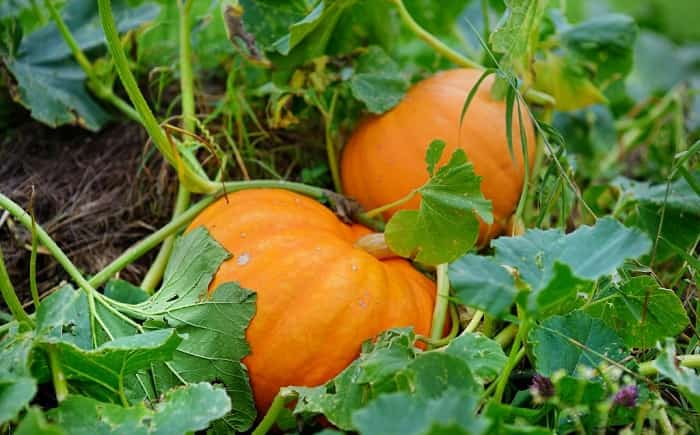
The seedling method of growing pumpkin is widespread in northern regions with long winters and late springs. Let’s consider further how to grow seedlings on a windowsill and transplant them into open ground.
Checking and preparing seeds
Before sprouting, pumpkin seeds need to be checked, and all empty or damaged elements should be thrown away. If you are careful and have time, you can soak the seed in water and select only those seeds that have drowned. They need to be placed in a thermos with warm water (40-45°C degrees (104-113°F) and left for 4 hours, so they will sprout faster. After this time, the seeds are laid out on damp gauze and left to sprout in a warm room.
Important: the fabric should not dry out, regularly spray it with water at room temperature 1-2 times a day.
Planting rules
Sprouted pumpkin seeds are planted in peat cups (10×10 cm (4×4 in). It is not recommended to use containers made of other materials, as the plant does not tolerate transplantation very well. It is best to place the pumpkin in open ground in a biodegradable cup.
The soil for growing pumpkin seedlings should consist of peat and sand. The main condition: good water and air permeability. This is required for the normal development of the root system.
Instructions for planting sprouted seeds in cups with peat:
- Fill the growing container with soil, leaving 3 cm (1.2 in) from the edge.
- Water well.
- Place a pumpkin seed on top.
- Fill to the brim with soil and water again.
The seedlings feel best at a temperature of about 20-25°C (68-77°F) Celsius during the first week of growth. Then the temperature is gradually reduced to 15°C (59°F) so that the plants begin to adapt to the cold.
Advice! Put 2 seeds in 1 cup. Pinch the smallest one at the root when it sprouts.
Two weeks after the seeds have sprouted, nitrogen-containing fertilizers should be added. An infusion of mullein or a complex mineral fertilizer for vegetables will do.
Important! At the initial stages of development, plants need constant liquid in the soil. Make sure that the soil in the pots does not dry out.
Planting in open ground
Planting of seedlings in the ground occurs at the age of 3 weeks. By this time, 3 true leaves of a deep green color should have formed on the pumpkin seedlings.
The planting scheme for growing pumpkins is as follows:
- Hole depth: 30—35 cm (12—14 in).
- Distance between rows: 40 cm (16 in).
- Distance between plants: 30—40 cm (12—16 in).
Instructions for planting seedlings:
- Place a complex fertilizer based on potassium sulfate and superphosphate into the prepared holes, add peat and wood ash.
- Fill the hole halfway with regular soil, water generously and place a slightly cut cup with a seedling in it.
- Fill the hole to the brim with soil and moisten the soil again.
Important! In the northern regions, when it is time to plant seedlings, night frosts are still frequent. Therefore, for more effective cultivation of pumpkin from seedlings in open ground, experienced gardeners recommend covering the seedlings with mini-greenhouses; such shelters are easy to make from improvised materials, for example, from plastic bottles.
Growing without seedlings
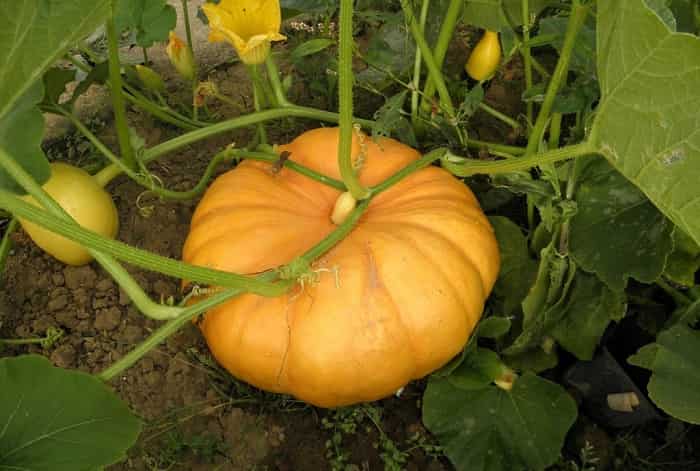
There is another way: the seeds are planted directly in the place where the crop will grow. When the soil warms up to +15°C (59°F) at a depth of 12 cm (5 in), it is cleared of weeds and loosened. Dig holes up to 10 cm (4 in) deep, add fertilizer, water. Put 3-4 seeds in each hole and sprinkle with soil. After a week, the first sprouts will appear, which are thinned out, leaving the strongest. Then proceed according to the standard scheme.
Caring for pumpkins
Above we talked about how to grow good fruits in a garden plot using seedlings and non-seedling methods, and now we will talk a little about caring for the crop in open ground.
The roots of the plant are extensive and draw nutrients from the soil throughout the growing season, so it is important to fertilize the soil regularly. Fertilizers are introduced in stages. The first time when the seedling has 3 leaves, the second time — when the vines are formed. Nitrophoska is used at the rate of 10 g (0.4 oz) per bush. The soil is loosened regularly.
Plants are watered at the roots, moderately during the ripening period, so as not to reduce the sugar content of the fruit.
An important condition for how to grow a vegetable is the formation of bushes. Pumpkin grows quickly, gaining green mass, which is detrimental to the yield. Therefore, when the loops bloom, but the inflorescences have not yet appeared, the bud at the top of the shoot is pinched. Additionally, shoots growing sideways are removed.
Harvesting and storing pumpkins
In addition to the rules for growing and caring for pumpkins, you need to follow the recommendations for harvesting times and storage conditions. The harvest time depends on the variety and local climate. Thus, in Siberia, pumpkins are harvested at the end of August, in the middle zone – in mid-September, and in the Krasnodar Territory until the beginning of October.
After harvesting, the pumpkins are sorted by size, leaving only large and medium ones for storage. The room chosen for this is dry and cool.
Diseases and pests
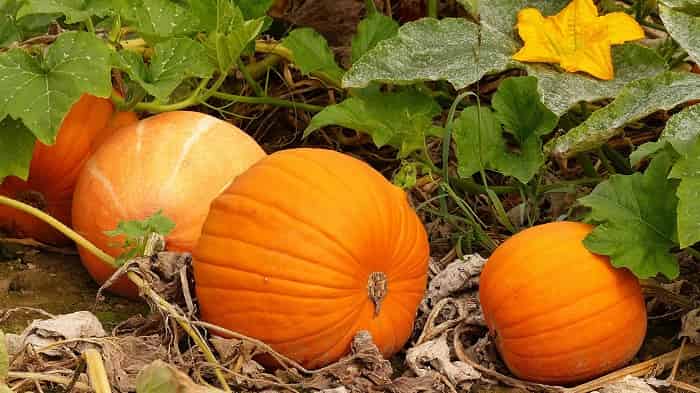
Diseases affecting pumpkins are bacteriosis, white and root rot, and powdery mildew. Bacteriosis manifests itself as ulcerous spots on fruits and leaves. It is controlled by removing the affected areas and burying them away from the beds. White rot leads to premature spoilage of vegetables. At first, it manifests itself as a white coating on the crust, then penetrates deep into the fruit. Treatment with copper sulfate and removal of damaged parts helps. To avoid root rot, it is important not to allow the soil to become over-moist. The main pests of pumpkins are spider mites and melon aphids. The mites are eliminated by spraying the plants with a solution of onion peel or special agents, and the preparations trifos and karbofos help against aphids.
In this article, we tried to answer the question of how to properly grow a pumpkin, talked about the features of caring for it and measures to protect the plant. Proper cultivation of pumpkins in open ground will reward you with a high yield.


Discussion0 comments