Skip to content
  • Professionals
  • Gardeners
 
Search
Log in
EN
RU
  • Markets
  • Business
  • Politics
  • Technologies
  • Interviews
  • Rankings
  • Environment
  • Events
  • Stock Quotes
  • Business Directory
Trending topic:
Featured company:
 
RU
  • Professionals
  • Gardeners
Sections
Events
Stock Quotes
Business Directory
Trending topic:
Featured company:
Follow us...
Helpful information
  • About
  • Team
  • Advertise
  • Contacts
  • Submit a Tip
  • Privacy Policy
  • Terms of Service
Sections
Seasonal tips
  • Spring
  • Summer
  • Autumn
  • Winter
Trending topics
  • compost
    22
  • garlic
    2
  • lemon
    1
  • potato
    12
Follow us...
Helpful information
  • About
  • Team
  • Advertise
  • Contacts
  • Submit a Tip
  • Privacy Policy
  • Terms of Service
Copyright © 2014-2025 DigitalTree LLC. All rights reserved.
We deliver content lightning-fast thanks to the managed cloud WordPress hosting with CDN.
16+

Home / Business

Cotton farmers warn of deepening crisis amid low prices and rising costs

Kim Clarksen avatar Kim Clarksen
April 14, 2025, 10:00 am
47
Business
Markets
Cotton farmers warn of deepening crisis amid low prices and rising costs
Save for later
Share

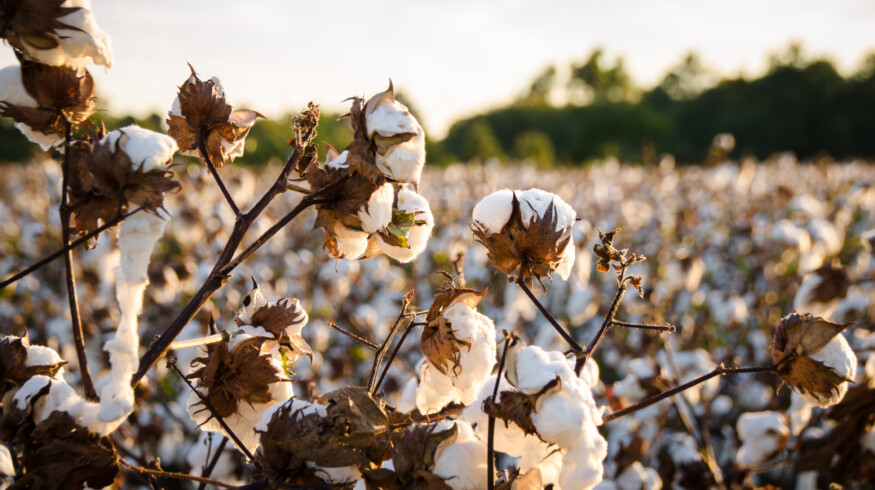
Cotton farmers across the southern United States are warning of an escalating financial crisis as persistently low commodity prices, high input costs, and limited government support threaten the viability of their operations. Producers in Georgia and Texas say the current environment has gone beyond eroding profits, with some now at risk of losing their farms altogether.

Franz Rowland, a cotton farmer in Boston, Georgia, described the situation as one of the most difficult in his nearly five-decade-long career. “We’re going to plant cotton and don’t even have a clue if we’re going to get our money back,” he said, citing low market prices and a farm bill that he called “irrelevant and worthless.”

Cotton, a high-input crop, has become increasingly expensive to grow. Fertilizers, chemicals, and machinery costs have risen sharply. Rowland noted that equipment alone has become a major burden: “Cotton pickers are over $1 million. And nobody makes a cotton picker but John Deere. So, we don’t have a choice.”

The situation is equally bleak in West Texas, where prolonged drought conditions have compounded the challenges. According to the U.S. Drought Monitor, nearly 68% of the state is experiencing drought, with 29% categorized as extreme. “It feels like the death of agriculture somewhat in our area,” said Heath Heinrich, a cotton and sorghum farmer near Lubbock. He described his struggle as a fight on multiple fronts—weather, trade, and market uncertainty—while attempting to sustain his business.

ADVERTISEMENT

The structural issues are not limited to weather and production costs. Gary Adams, president, and CEO of the National Cotton Council (NCC), said that global demand for cotton has dropped from 123 million bales in recent years to approximately 117–118 million bales in 2025 due in large part to the increased use of man-made fibers like polyester—particularly from China. “They’re almost twice the size of global cotton demand,” he noted.

Meanwhile, Brazil and Australia are producing large crops, intensifying competition for a shrinking share of the global market. The U.S. exports approximately 85% of its cotton, and Adams said the strong dollar has further weakened its global competitiveness.

A significant decline in U.S. cotton exports to China has also played a role. U.S. market share fell from 42% in 2018 to 17% following the trade war, and synthetic alternatives have further displaced demand. The NCC is urging the U.S. government to enforce trade agreements more stringently, particularly in cases where yarn and fabric from countries like India, Pakistan, and China are entering the U.S. market under duty-free arrangements not intended for non-qualifying products.

On the domestic front, U.S. cotton mills used 6.7 million bales in 2004 compared to just 1.7 million in 2024. The NCC is exploring ways to stimulate domestic demand, including potential tax credits to incentivize U.S. cotton use in retail supply chains.

In the short term, however, the top priority remains a new farm bill. The NCC and producers alike are pressing Congress to enact legislation that applies to the 2025 crop. “We have to have a farm bill. Farmers can’t survive without it,” Rowland said, warning that many younger farmers are struggling to obtain financing for the upcoming season due to previous losses.

Rowland said the optimism usually associated with spring planting has evaporated. “I just spent $50,000 today on fertilizer and chemicals. Am I going to get that back?” he asked. “If prices don’t improve this year, I could be looking at losses in the millions.”

Without intervention, industry leaders warn that the economic situation for U.S. cotton could worsen further, potentially leading to lasting structural damage in key production regions.

cotton
crisis
financial crisis
U.S.

Enjoyed this story?

Every Monday, our subscribers get their hands on a digest of the most trending agriculture news. You can join them too!

Sign me up
Check the example

Discussion0 comments

Спасибо за комментарий, он будет опубликован на сайте после проверки модератором. Хотите, чтобы ваши комментарии появлялись на сайте мгновенно? Достаточно пройти регистрацию.
Congratulations, you can be the first to start the conversation.
Do you have a question or suggestion? Please leave your comment to ignite conversation.
What’s on your mind?
Cancel Log in and comment
Or continue without registration
Get notified about new comments by email.
Advertisement
In focus
How to get here?
Stock quotes
Bayer
9.67
1.02
Bayer Crop Science
33.31
0.8
CF Industries
77.88
2.93
Corteva Agriscience
66
0.44
ICL Group
5.18
1.33
Intrepid Potash
25.31
1.36
Mosaic
23.61
2.03
Nutrien
60.34
0.48
Yara International
19.2
1.05
See all
Most read
Bowery Farming’s $70M Georgia vertical farm heads to liquidation as startup’s collapse triggers nationwide sell-offs
Michigan tightens manure-spreading rules for large animal farms
Monarch Tractor may lay off 100 employees or shut down as it struggles to pivot away from manufacturing toward pure software model
Russia imposed temporary ban on sulfur exports until the end of 2025
Tyson shutters high-volume beef plant in Nebraska as the industry faces a downturn
Events
Argus Clean Ammonia Europe
Rotterdam, Netherlands
Dec 2 — 4, 2025
Organic Grower Summit
Monterey (CA), USA
Dec 3 — 4, 2025
IFS Conference
Cambridge, UK
Dec 10 — 12, 2025
Fertilizer Latino Americano
Miami (FL), USA
Jan 26 — 28, 2026
Argus Fertilizer Africa
Dar es Salaam, Tanzania
Feb 10 — 11, 2026
See all
Live
Meripa Corson
August 4, 01:18 pm
Where does the money actually go? As a timber land owner, how do I benefit from the legislation?
USDA commits $80 million to expand timber markets and improve forest resilience
Patonkas Luksompulus
January 21, 12:36 pm
Greece meeds biological fertilizers! Great news about De sangosse.
DE SANGOSSE expands operations with Greek subsidiary
Pedro Diaz
November 20, 2024, 08:42 pm
Is it a Roundup lawsuit or more about bad financials? I think the market reacted only to announced financial results.
Bayer’s shares are pressed down by ongoing Roundup cancer lawsuit
Johan Fredin
August 22, 2024, 07:57 pm
Europe is falling behind in this field. The concerns 30 years ago was reasonable. Now not so much. We need crops that can survive in a more extreme future climate. Handle droughts and hot weather better. Crops that are less tasty to pests like hogs and deere.
Gene-edited crops set for groundbreaking European trials
Timothy Kirkwood
July 23, 2024, 01:39 pm

Your article about Sargassum shows Kelp, not Sargassum.

Sargassum in the Caribbean: turning seaweed crisis into economic opportunity?
About
Sections
Markets  ·  Business  ·  Politics  ·  Technologies  ·  Interviews  ·  Rankings  ·  Environment
Support
About  ·  Team  ·  Advertise  ·  Contacts  ·  Submit a Tip  ·  Privacy Policy  ·  Terms of Service
Copyright © 2014-2025 DigitalTree LLC. All rights reserved.
We deliver content lightning-fast thanks to the managed cloud WordPress hosting with CDN.
16+
More to read
U.S. cotton acreage to drop as farmers shift to other crops
Pakistan Textile Council to promote sustainable cotton production
Farmers buy less machinery as farm income slows
Advertising that helps us do quality reporting