

Israeli agtech firm XtrION develops electricity-based system to enhance crop yields

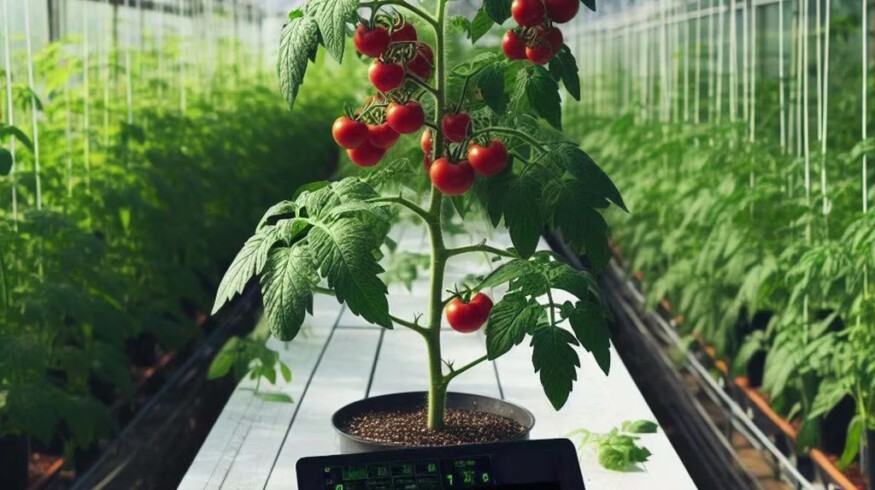
Israeli ag-tech startup XtrION is developing a system that uses low-intensity electrical currents to stimulate plant growth, enhance nutrient uptake, and reduce dependence on conventional fertilizers. The company’s proprietary technology, which it calls Tailored Electrical Fields (TEF), is currently undergoing proof-of-concept testing, and its founders say it could form the basis of a new agricultural input alongside seeds, irrigation, pest protection, and fertilization.
Founded in 2022, XtrION was established by Matan Rosenfeld and Asaf Zerach, who were previously partners in an agricultural lighting company. They later recruited Dr. Roy Winter, a physicist and materials engineer, to help translate experimental research into a commercial platform.
“Our system connects electrodes to the plant and collects real-time physiological data, similar to an ECG in humans,” said Rosenfeld, the company’s chief executive. “We can then use the same system to stimulate specific plant processes—nutrient absorption, photosynthesis, and water uptake—based on those measurements.”
In trials conducted in Israel, XtrION reported increased yields of 30% in coriander and 31% in lettuce, along with improved nutritional metrics. For example, coriander plants showed a 50% increase in iron content, and strawberries had 15% more sugar and produced 30% more fruit. The system, the company claims, can also help plants resist pests, as certain insects avoid the electric fields generated around the treated crops.
While plant electrophysiology has been studied in academia for decades, commercialization efforts have been limited. Rosenfeld said XtrION is aware of only two other early-stage companies, based in Argentina and Switzerland, working on similar approaches.
XtrION’s initial focus is on hydroponic and soil-less growing systems, where farmers tend to be more open to adopting new technologies. The company is operating within the InNegev incubator, backed by Israel’s Innovation Authority, and has conducted tests under external supervision, including one that showed a 20% increase in basil yields and another in which electricity offset an 80% reduction in fertilizer use.
The startup has raised 2.5 million shekels (approximately $670,000) to date from the Innovation Authority, the incubator, a German venture fund, and an Israeli angel investor. It recently secured a conditional grant of 2.8 million shekels, contingent on raising matching private investment. The company is now seeking additional funding and is preparing for a $4 million seed round.
With the next funding phase, XtrION plans to begin commercial production and launch a pilot program within six months. If successful, the company aims to market its technology to indoor and vertical farming operations, sectors that prioritize crop quality and proximity to consumers.
“If this succeeds, we believe it could become as ubiquitous in greenhouses as defibrillators are in public spaces,” Rosenfeld said. “It’s a system that lets growers understand the plant’s condition and treat it without chemicals or genetic modification.”

Enjoyed this story?
Every Monday, our subscribers get their hands on a digest of the most trending agriculture news. You can join them too!







Discussion0 comments