Skip to content
  • Professionals
  • Gardeners
 
Search
Log in
EN
RU
  • Markets
  • Business
  • Politics
  • Technologies
  • Interviews
  • Rankings
  • Environment
  • Events
  • Stock Quotes
  • Business Directory
Trending topic:
Featured company:
 
RU
  • Professionals
  • Gardeners
Sections
Events
Stock Quotes
Business Directory
Trending topic:
Featured company:
Follow us...
Helpful information
  • About
  • Team
  • Advertise
  • Contacts
  • Submit a Tip
  • Privacy Policy
  • Terms of Service
Sections
Seasonal tips
  • Spring
  • Summer
  • Autumn
  • Winter
Trending topics
  • compost
    22
  • garlic
    2
  • lemon
    1
  • potato
    12
Follow us...
Helpful information
  • About
  • Team
  • Advertise
  • Contacts
  • Submit a Tip
  • Privacy Policy
  • Terms of Service
Copyright © 2014-2025 DigitalTree LLC. All rights reserved.
We deliver content lightning-fast thanks to the managed cloud WordPress hosting with CDN.
16+

Home / Environment

Relentless spring rains leave Southern U.S. farmers with historic prevent plant losses


Kim Clarksen avatar Kim Clarksen
June 4, 2025, 10:00 am
11
Environment
Markets
Relentless spring rains leave Southern U.S. farmers with historic prevent plant losses
Save for later
Share

Southern U.S. farmers are confronting unprecedented planting challenges this year due to persistent rainfall that has rendered vast tracts of farmland unworkable. The situation, which began deteriorating in early spring, has now escalated into what growers describe as a crisis threatening their livelihoods and the regional agricultural economy.

Producers across Arkansas, Mississippi, Tennessee, and southern Missouri report that weeks of heavy rain have prevented them from planting critical crops such as cotton, soybeans, and rice. In many cases, previously planted fields have been inundated, forcing growers to consider costly replanting or to abandon fields altogether.

Wettest spring in over a century

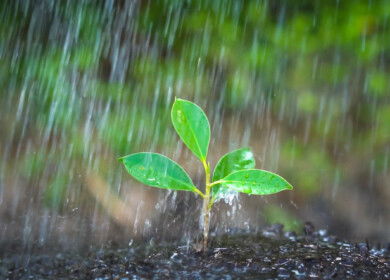
“It’s been a challenge,” said Franklin Fogleman, a Marion, Arkansas, farmer whose family has been in agriculture since 1849. “We’ve faced rain since the first of April that is unprecedented.” According to Fogleman, the early start to planting in late March was wiped out by more than 13 inches of rainfall in early April, followed by another 5 inches in May.

As of early June, Fogleman estimated that around 1,500 acres of rice would remain unplanted, and another 700 to 800 acres would need to be replanted—many of them likely too late for an economically viable crop. “The window has basically closed on us,” he said.

ADVERTISEMENT

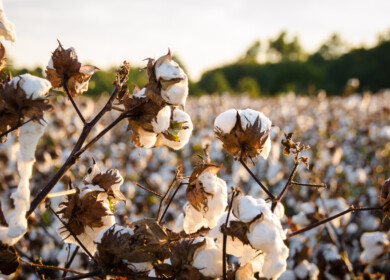
Similar struggles are reported across the Delta. Mississippi farmer Robert Agostinelli managed to plant just 550 of his planned 2,300 acres of cotton. “This has never happened before,” he said. “I’ve been farming for 41 years, and this has never happened.”

Agostinelli’s insurance, which included Enhanced Coverage Option (ECO), does not fully cover prevent plant losses. “Looking back on it, if we would have thought this was a possibility, we probably would have taken out different insurance,” he said.

Economic consequences deepen

Andy Graves, a crop consultant in Clarksdale, Mississippi, said many farmers in the region are facing potentially unrecoverable losses. “These guys are hurting. They’re hurting bad,” he said. “We needed a home run, and we’re not going to get it.”

Cotton planting in his area is around 65% complete, but much of that acreage has received up to 6 inches of rain shortly after sowing. Weed pressure is also mounting, made worse by the recent restrictions on dicamba use in soybean crops.

Graves noted that while weather has driven the current crisis, the underlying economics of farming were already fragile. “We’ve had two record yields up here with cotton, soybeans and corn the last couple of years, but they’re financial losses,” he said. “Now the prices are lower this year, and we’re faced with what we got now with weather.”

Beyond the farms themselves, the crisis is threatening the broader rural economy. “It rolls downhill,” said Graves. “If they’re out of business, I’m out of the business. We’ve got gins, airports, chemical applicators—we have a community.”

Worse than a drought

Growers say the wet conditions are more difficult to manage than drought, since they prevent any field access. “In our area of the Delta, we have irrigation. So, when it’s dry, we can cure that problem,” Fogleman said. “When your crops are underwater… there’s really nothing that you can do.”

For cotton in particular, the economics were already grim. “The price is so low that if we farmed it, we will lose even more money,” Agostinelli said. “It’s very stressful, and if there’s no assistance coming, I can just see a lot of farmers going out this year.”

Despite widespread financial and emotional strain, farmers say they are not ready to give up—but the resilience is wearing thin. “These are trying times and people are feeling the impacts of it,” Fogleman said. “We’ve gone beyond just losing money now that we’re to the point of losing the farm.”

ecological crisis
farming
U.S.
weather

Enjoyed this story?

Every Monday, our subscribers get their hands on a digest of the most trending agriculture news. You can join them too!

Sign me up
Check the example

Discussion0 comments

Спасибо за комментарий, он будет опубликован на сайте после проверки модератором. Хотите, чтобы ваши комментарии появлялись на сайте мгновенно? Достаточно пройти регистрацию.
Congratulations, you can be the first to start the conversation.
Do you have a question or suggestion? Please leave your comment to ignite conversation.
What’s on your mind?
Cancel Log in and comment
Or continue without registration
Get notified about new comments by email.
Advertisement
In focus
How to get here?
Stock quotes
Bayer
9.67
1.02
Bayer Crop Science
33.31
0.8
CF Industries
77.88
2.93
Corteva Agriscience
66
0.44
ICL Group
5.18
1.33
Intrepid Potash
25.31
1.36
Mosaic
23.61
2.03
Nutrien
60.34
0.48
Yara International
19.2
1.05
See all
Most read
Bowery Farming’s $70M Georgia vertical farm heads to liquidation as startup’s collapse triggers nationwide sell-offs
Michigan tightens manure-spreading rules for large animal farms
Monarch Tractor may lay off 100 employees or shut down as it struggles to pivot away from manufacturing toward pure software model
Tyson shutters high-volume beef plant in Nebraska as the industry faces a downturn
BASF plans to IPO its Agricultural Solutions division on Frankfurt Stock Exchange
Events
Argus Clean Ammonia Europe
Rotterdam, Netherlands
Dec 2 — 4, 2025
Organic Grower Summit
Monterey (CA), USA
Dec 3 — 4, 2025
IFS Conference
Cambridge, UK
Dec 10 — 12, 2025
Fertilizer Latino Americano
Miami (FL), USA
Jan 26 — 28, 2026
Argus Fertilizer Africa
Dar es Salaam, Tanzania
Feb 10 — 11, 2026
See all
Live
Meripa Corson
August 4, 01:18 pm
Where does the money actually go? As a timber land owner, how do I benefit from the legislation?
USDA commits $80 million to expand timber markets and improve forest resilience
Patonkas Luksompulus
January 21, 12:36 pm
Greece meeds biological fertilizers! Great news about De sangosse.
DE SANGOSSE expands operations with Greek subsidiary
Pedro Diaz
November 20, 2024, 08:42 pm
Is it a Roundup lawsuit or more about bad financials? I think the market reacted only to announced financial results.
Bayer’s shares are pressed down by ongoing Roundup cancer lawsuit
Johan Fredin
August 22, 2024, 07:57 pm
Europe is falling behind in this field. The concerns 30 years ago was reasonable. Now not so much. We need crops that can survive in a more extreme future climate. Handle droughts and hot weather better. Crops that are less tasty to pests like hogs and deere.
Gene-edited crops set for groundbreaking European trials
Timothy Kirkwood
July 23, 2024, 01:39 pm

Your article about Sargassum shows Kelp, not Sargassum.

Sargassum in the Caribbean: turning seaweed crisis into economic opportunity?
About
Sections
Markets  ·  Business  ·  Politics  ·  Technologies  ·  Interviews  ·  Rankings  ·  Environment
Support
About  ·  Team  ·  Advertise  ·  Contacts  ·  Submit a Tip  ·  Privacy Policy  ·  Terms of Service
Copyright © 2014-2025 DigitalTree LLC. All rights reserved.
We deliver content lightning-fast thanks to the managed cloud WordPress hosting with CDN.
16+
More to read
Cotton farmers warn of deepening crisis amid low prices and rising costs
U.S. cotton acreage to drop as farmers shift to other crops
Phytech’s Oren Kind: ‘Our technology enabled a 20% reduction in water usage’
Advertising that helps us do quality reporting