Skip to content
  • Professionals
  • Gardeners
 
Search
Log in
EN
RU
  • Markets
  • Business
  • Politics
  • Technologies
  • Interviews
  • Rankings
  • Environment
  • Events
  • Stock Quotes
  • Business Directory
Trending topic:
Featured company:
 
RU
  • Professionals
  • Gardeners
Sections
    Events
    Stock Quotes
    Business Directory
    Trending topic:
    Featured company:
    Follow us...
    Helpful information
    • About
    • Team
    • Advertise
    • Contacts
    • Submit a Tip
    • Privacy Policy
    • Terms of Service
    Sections
      Seasonal tips
      • Spring
      • Summer
      • Autumn
      • Winter
      Trending topics
      • compost
        23
      • garlic
        2
      • lemon
        1
      • potato
        12
      Follow us...
      Helpful information
      • About
      • Team
      • Advertise
      • Contacts
      • Submit a Tip
      • Privacy Policy
      • Terms of Service
      Copyright © 2014-2026 DigitalTree LLC. All rights reserved.
      We deliver content lightning-fast thanks to the managed cloud WordPress hosting with CDN.
      16+

      Home / Environment

      Macquarie University research suggests that widely used fungicide Chlorothalonil may contribute to insect population decline

      Timothy Bueno avatar Timothy Bueno
      July 14, 2025, 2:00 pm
      July 14, 2025, 2:00 pm
      [esi post-views ttl=0]
      Environment
      Macquarie University research suggests that widely used fungicide Chlorothalonil may contribute to insect population decline
      Save for later
      Share

      According to new research led by Macquarie University and published in Royal Society Open Science, chlorothalonil, a widely used agricultural fungicide, has been found to significantly harm beneficial insects, potentially contributing to long-term population declines.

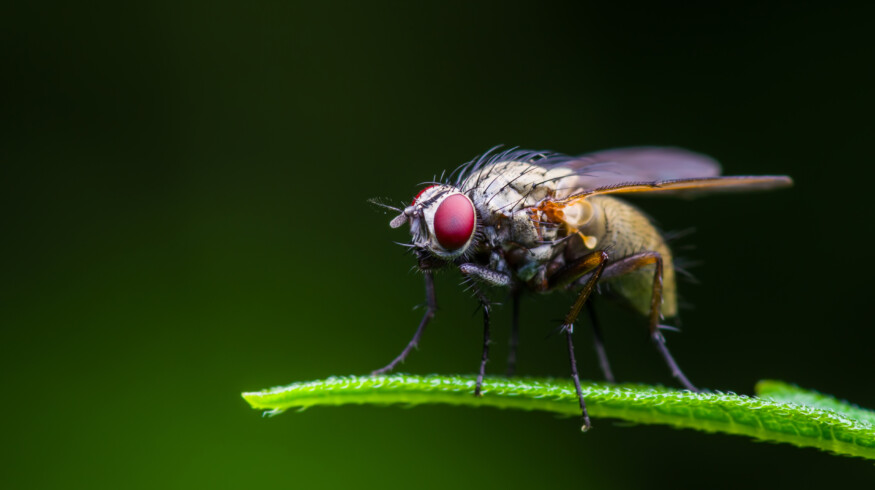
      The study found that even minimal exposure to the fungicide—commonly applied to fruits and vegetables to control fungal diseases—can sharply reduce reproductive performance in Drosophila melanogaster, a model insect species that plays a vital ecological role.

      Researchers exposed fruit fly larvae to levels of chlorothalonil comparable to those found on commercial produce. The results showed a 37% decline in egg production in exposed adult females, even at the lowest concentrations tested.

      “These impacts occurred at exposure levels typically found on treated crops,” said lead author Darshika Dissawa, a PhD candidate at Macquarie’s School of Natural Sciences. “Both male and female reproductive functions were affected, suggesting long-term population consequences.”

      ADVERTISEMENT

      Chlorothalonil is banned in the European Union but remains widely used in Australia, particularly in orchards and vineyards. The chemical has been detected in soil and water near treated areas and is commonly found as residue on produce, ranging from trace levels to as much as 460 milligrams per kilogram.

      The study documented additional physiological damage in exposed flies. Females had lower body mass and fewer egg-producing ovarioles, while males showed reduced iron levels, likely affecting sperm production. Larvae showed no significant aversion to treated food, indicating the effects stemmed from ingestion rather than avoidance.

      “This kind of chronic exposure in agricultural environments is hard for insects to avoid,” said Associate Professor Fleur Ponton, the study’s senior author. “Chlorothalonil is often applied preventively, even in the absence of disease, which amplifies the risks to non-target species.”

      The findings contribute to a growing body of evidence linking widespread chemical use to what some researchers have termed the “insect apocalypse”—a marked decline in global insect populations over recent decades.

      Despite chlorothalonil’s extensive use, the researchers noted that fewer than 25 peer-reviewed studies have examined its effects on insects. The authors are calling for more sustainable pest management practices, reduced application frequency, and further investigation into cumulative impacts from multiple agrochemicals.

      Future studies will explore whether the observed reproductive impairments persist across generations and assess how these effects interact with other chemicals commonly used in farming.

      The research underscores the need to incorporate broader ecological considerations into pesticide regulation and agricultural policy.

      ecology
      fungicide
      insects
      sustainabilty

      Enjoyed this story?

      Every Monday, our subscribers get their hands on a digest of the most trending agriculture news. You can join them too!

      Sign me up
      Check the example

      Discussion0 comments

      Спасибо за комментарий, он будет опубликован на сайте после проверки модератором. Хотите, чтобы ваши комментарии появлялись на сайте мгновенно? Достаточно пройти регистрацию.
      Congratulations, you can be the first to start the conversation.
      Do you have a question or suggestion? Please leave your comment to ignite conversation.
      What’s on your mind?
      Cancel Log in and comment
      Or continue without registration
      Get notified about new comments by email.
      Advertisement
      In focus
      How to get here?
      Stock quotes
      Bayer
      11.14
      3.3
      Bayer Crop Science
      39.53
      1.69
      CF Industries
      126.73
      2.79
      Corteva Agriscience
      79.34
      0.89
      ICL Group
      5.27
      2.04
      Intrepid Potash
      40.05
      4.51
      Mosaic
      27.78
      3.64
      Nutrien
      77.88
      2.1
      Yara International
      28.99
      0.21
      See all
      Most read
      Agromin composts 1.25 million tons of organic waste in 2025
      Agromin composts 1.25 million tons of organic waste in 2025
      U.S. Justice Department opens antitrust probe into fertilizer producers amid price concerns
      U.S. Justice Department opens antitrust probe into fertilizer producers amid price concerns
      Middle East conflict threatens fertilizer supply ahead of U.S. planting season
      Middle East conflict threatens fertilizer supply ahead of U.S. planting season
      FMC secures first dual-mode herbicide classification for rimisoxafen
      FMC secures first dual-mode herbicide classification for rimisoxafen
      DeKalb may launch 30 new corn hybrids for 2026 season
      DeKalb may launch 30 new corn hybrids for 2026 season
      Events
      World Agri-Tech Innovation Summit
      San Francisco (CA), USA
      Mar 17 — 18, 2026
      FSHOW
      Shanghai, China
      Mar 17 — 19, 2026
      Argus Fertilizer Asia
      Bali, Indonesia
      Mar 31 — Apr 2, 2026
      CRU Phosphates
      Paris, France
      Apr 13 — 15, 2026
      CFEX
      Antalya, Turkey
      Apr 15 — 17, 2026
      See all
      Live
      Isabelita Barreiro
      December 11, 2025, 01:54 am
      Excellent management of water resources and effective use of water-soluble fertilizers!
      Argentine nano-fertilizer firm AKO Agro expands to Brazil
      Meripa Corson
      August 4, 2025, 01:18 pm
      Where does the money actually go? As a timber land owner, how do I benefit from the legislation?
      USDA commits $80 million to expand timber markets and improve forest resilience
      Patonkas Luksompulus
      January 21, 2025, 12:36 pm
      Greece meeds biological fertilizers! Great news about De sangosse.
      DE SANGOSSE expands operations with Greek subsidiary
      Pedro Diaz
      November 20, 2024, 08:42 pm
      Is it a Roundup lawsuit or more about bad financials? I think the market reacted only to announced financial results.
      Bayer’s shares are pressed down by ongoing Roundup cancer lawsuit
      Johan Fredin
      August 22, 2024, 07:57 pm
      Europe is falling behind in this field. The concerns 30 years ago was reasonable. Now not so much. We need crops that can survive in a more extreme future climate. Handle droughts and hot weather better. Crops that are less tasty to pests like hogs and deere.
      Gene-edited crops set for groundbreaking European trials
      About
      Sections
      Markets  ·  Business  ·  Politics  ·  Technologies  ·  Interviews  ·  Rankings  ·  Environment
      Support
      About  ·  Team  ·  Advertise  ·  Contacts  ·  Submit a Tip  ·  Privacy Policy  ·  Terms of Service
      Copyright © 2014-2026 DigitalTree LLC. All rights reserved.
      We deliver content lightning-fast thanks to the managed cloud WordPress hosting with CDN.
      16+
      More to read
      Triple fungicide resistance confirmed in Yorke Peninsula barley
      Triple fungicide resistance confirmed in Yorke Peninsula barley
      Higher water levels could turn cultivated Arctic peatlands into a carbon sink
      Higher water levels could turn cultivated Arctic peatlands into a carbon sink
      UBC Bug Bake Off: testing the waters of insect cuisine
      UBC Bug Bake Off: testing the waters of insect cuisine
      Advertising that helps us do quality reporting