Skip to content
  • Professionals
  • Gardeners
 
Search
Log in
EN
RU
  • Markets
  • Business
  • Politics
  • Technologies
  • Interviews
  • Rankings
  • Environment
  • Events
  • Stock Quotes
  • Business Directory
Trending topic:
Featured company:
 
RU
  • Professionals
  • Gardeners
Sections
Events
Stock Quotes
Business Directory
Trending topic:
Featured company:
Follow us...
Helpful information
  • About
  • Team
  • Advertise
  • Contacts
  • Submit a Tip
  • Privacy Policy
  • Terms of Service
Sections
Seasonal tips
  • Spring
  • Summer
  • Autumn
  • Winter
Trending topics
  • compost
    22
  • garlic
    2
  • lemon
    1
  • potato
    12
Follow us...
Helpful information
  • About
  • Team
  • Advertise
  • Contacts
  • Submit a Tip
  • Privacy Policy
  • Terms of Service
Copyright © 2014-2025 DigitalTree LLC. All rights reserved.
We deliver content lightning-fast thanks to the managed cloud WordPress hosting with CDN.
16+

Home / Technologies

UC Davis scientists develop wheat that produces its own fertilizer

Timothy Bueno avatar Timothy Bueno
September 5, 2025, 2:00 pm
49
Technologies
Markets
UC Davis scientists develop wheat that produces its own fertilizer
Save for later
Share

Scientists at the University of California, Davis, have developed wheat plants that stimulate the production of their own fertilizer. This breakthrough could reduce pollution and lower production costs for farmers worldwide.

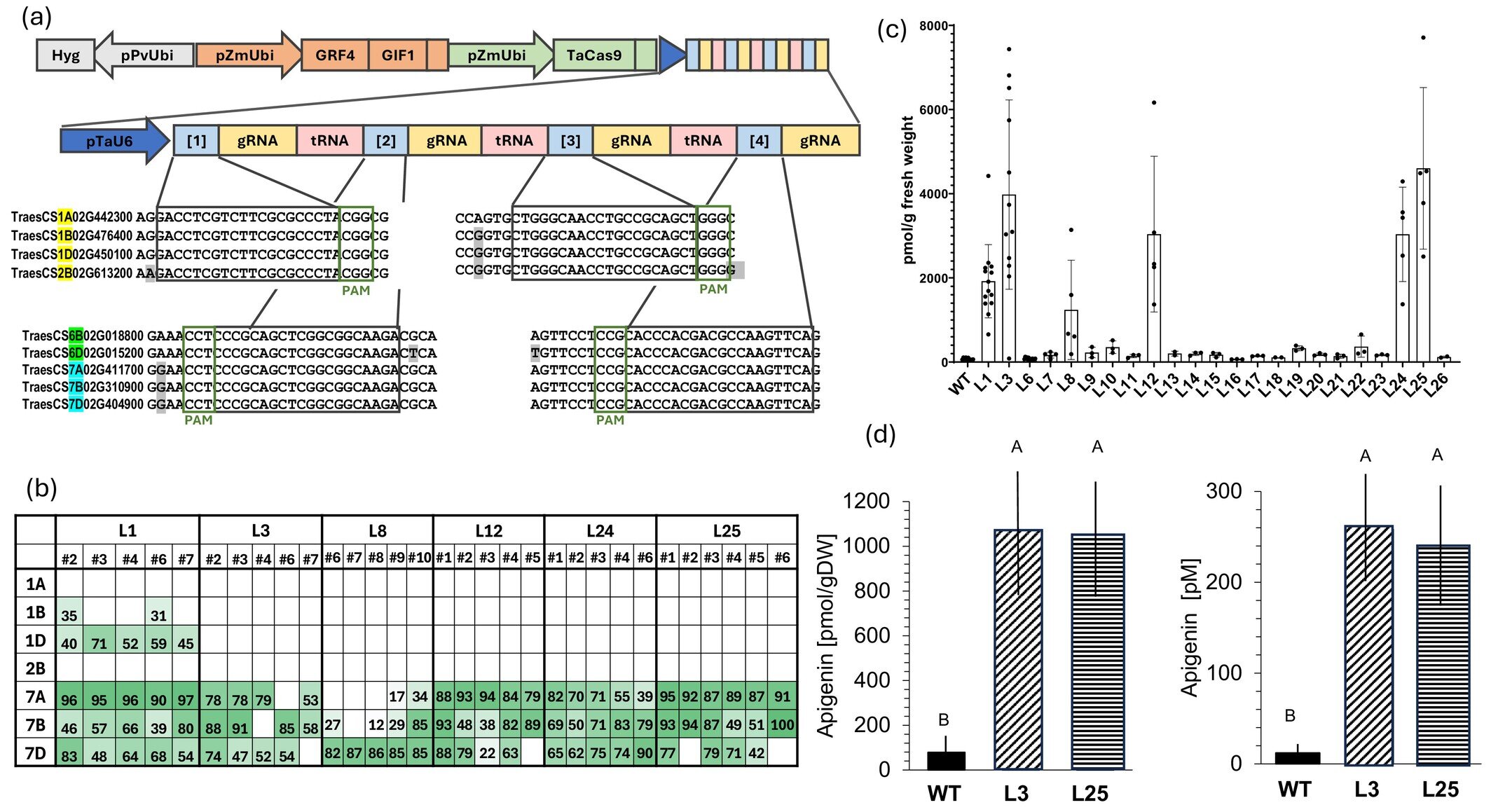
The research team, led by Eduardo Blumwald, a professor in the Department of Plant Sciences, used the gene-editing tool CRISPR to enhance the plant’s natural production of apigenin, a flavone compound. Excess apigenin released into the soil promotes the formation of bacterial biofilms, which create a low-oxygen environment that allows microbes to fix nitrogen from the air into a form plants can use.

The findings, published in the Plant Biotechnology Journal, build on earlier work by Blumwald’s group in rice and may eventually be extended to other cereals.

Wheat is the world’s second-largest cereal crop by yield and the single biggest consumer of nitrogen fertilizer, accounting for roughly 18% of global use. Fertilizer production topped 800 million tons in 2020, according to the United Nations Food and Agriculture Organization. Yet plants absorb only 30–50% of applied nitrogen, with the remainder polluting waterways or contributing to greenhouse gas emissions.
ADVERTISEMENT

Blumwald said the new approach avoids decades of unsuccessful attempts to give cereals root nodules like legumes, where nitrogen-fixing bacteria naturally thrive. Instead, the modified wheat creates soil conditions that allow bacteria to perform nitrogen fixation outside the plant.

In greenhouse experiments, the gene-edited wheat produced higher yields under low nitrogen conditions compared with conventional plants. If applied at scale, the technology could ease input costs. U.S. farmers spent nearly $36 billion on fertilizers in 2023, according to the Department of Agriculture. Blumwald estimates that cutting fertilizer use by even 10% across the nearly 500 million acres of cereals planted in the United States could save more than $1 billion annually.

The potential benefits may be most significant in developing regions where fertilizer is scarce or unaffordable. “In Africa, people don’t use fertilizers because they don’t have money, and farms are small,” Blumwald said. “Imagine planting crops that stimulate bacteria in the soil to create the fertilizer they need, naturally.”

The study, Increased Apigenin in DNA‐Edited Hexaploid Wheat Promoted Soil Bacterial Nitrogen Fixation and Improved Grain Yield Under Limiting Nitrogen Fertiliser, was authored by Hiromi Tajima and colleagues and published in August 2025.

bacteria
gene editing
genomics
research
study
UC Davis
wheat

Enjoyed this story?

Every Monday, our subscribers get their hands on a digest of the most trending agriculture news. You can join them too!

Sign me up
Check the example

Discussion0 comments

Спасибо за комментарий, он будет опубликован на сайте после проверки модератором. Хотите, чтобы ваши комментарии появлялись на сайте мгновенно? Достаточно пройти регистрацию.
Congratulations, you can be the first to start the conversation.
Do you have a question or suggestion? Please leave your comment to ignite conversation.
What’s on your mind?
Cancel Log in and comment
Or continue without registration
Get notified about new comments by email.
Advertisement
In focus
How to get here?
Stock quotes
Bayer
9.76
2.01
Bayer Crop Science
33.58
1.97
CF Industries
80.23
1.19
Corteva Agriscience
66.29
1.52
ICL Group
5.18
1.33
Intrepid Potash
25.66
0.54
Mosaic
24.1
0.46
Nutrien
60.05
0.03
Yara International
19.01
0.96
See all
Most read
Bowery Farming’s $70M Georgia vertical farm heads to liquidation as startup’s collapse triggers nationwide sell-offs
Michigan tightens manure-spreading rules for large animal farms
Monarch Tractor may lay off 100 employees or shut down as it struggles to pivot away from manufacturing toward pure software model
Washington Supreme Court reinstates $185 million verdict against Monsanto over PCB contamination
Russia imposed temporary ban on sulfur exports until the end of 2025
Events
Argus Clean Ammonia Europe
Rotterdam, Netherlands
Dec 2 — 4, 2025
Organic Grower Summit
Monterey (CA), USA
Dec 3 — 4, 2025
IFS Conference
Cambridge, UK
Dec 10 — 12, 2025
Fertilizer Latino Americano
Miami (FL), USA
Jan 26 — 28, 2026
Argus Fertilizer Africa
Dar es Salaam, Tanzania
Feb 10 — 11, 2026
See all
Live
Meripa Corson
August 4, 01:18 pm
Where does the money actually go? As a timber land owner, how do I benefit from the legislation?
USDA commits $80 million to expand timber markets and improve forest resilience
Patonkas Luksompulus
January 21, 12:36 pm
Greece meeds biological fertilizers! Great news about De sangosse.
DE SANGOSSE expands operations with Greek subsidiary
Pedro Diaz
November 20, 2024, 08:42 pm
Is it a Roundup lawsuit or more about bad financials? I think the market reacted only to announced financial results.
Bayer’s shares are pressed down by ongoing Roundup cancer lawsuit
Johan Fredin
August 22, 2024, 07:57 pm
Europe is falling behind in this field. The concerns 30 years ago was reasonable. Now not so much. We need crops that can survive in a more extreme future climate. Handle droughts and hot weather better. Crops that are less tasty to pests like hogs and deere.
Gene-edited crops set for groundbreaking European trials
Timothy Kirkwood
July 23, 2024, 01:39 pm

Your article about Sargassum shows Kelp, not Sargassum.

Sargassum in the Caribbean: turning seaweed crisis into economic opportunity?
About
Sections
Markets  ·  Business  ·  Politics  ·  Technologies  ·  Interviews  ·  Rankings  ·  Environment
Support
About  ·  Team  ·  Advertise  ·  Contacts  ·  Submit a Tip  ·  Privacy Policy  ·  Terms of Service
Copyright © 2014-2025 DigitalTree LLC. All rights reserved.
We deliver content lightning-fast thanks to the managed cloud WordPress hosting with CDN.
16+
More to read
Switch Bioworks’ Tim Schnabel: ‘We don’t sell fertilizer, we create the thing that makes the fertilizer’
Essential tips for growing and fertilizing your Hosta plant
Advancing Wheat Cultivation: Syngenta’s Solutions and Insights
Advertising that helps us do quality reporting