

Wabash Valley Resources receives $1.5 billion loan from U.S. Department of Energy for it coal-powered fertilizer project

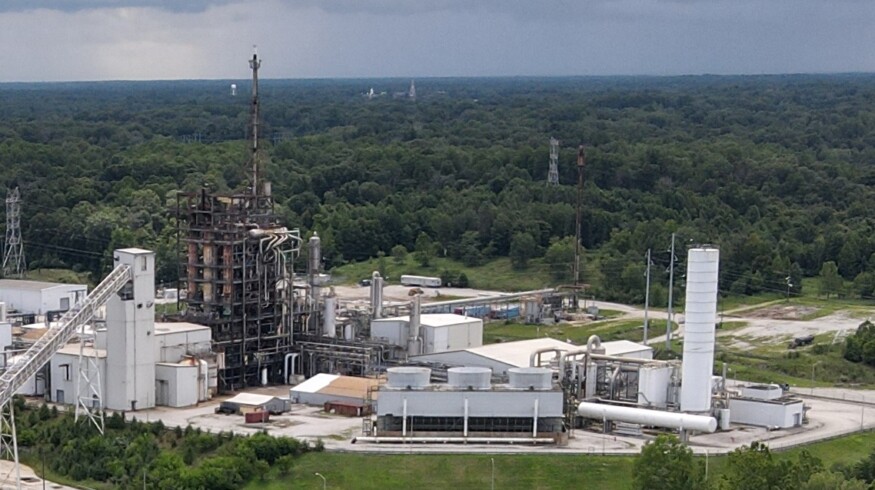
The U.S. Department of Energy (DOE) has closed a $1.5 billion loan to Wabash Valley Resources (WVR), to finance a coal- and petcoke-based ammonia fertilizer facility in West Terre Haute, Indiana. The funding supports a $2.6 billion project that will repurpose an idled coal gasification plant to produce anhydrous ammonia using domestic coal and petroleum coke as feedstock.
According to the DOE, the plant—shuttered since 2016—will be reconfigured to produce approximately 500,000 metric tons of ammonia annually. The facility is expected to create several hundred jobs and supply cost-competitive fertilizer to farmers across the Eastern Corn Belt, a region currently dependent on imports from Canada, the Caribbean, the Middle East, and Russia.
The project was financed through the DOE’s Loan Programs Office under the Energy Dominance Financing (EDF) Program, created by the Working Families Tax Cut, also known as the One Big Beautiful Bill Act. It is the second loan completed under the EDF program, which aims to strengthen domestic industrial capacity and reduce dependence on foreign energy and fertilizer sources.
U.S. Energy Secretary Chris Wright said the initiative is part of a broader effort to bolster domestic energy and agricultural supply chains. “For too long, America has been dependent on foreign sources of fertilizer,” Wright stated. “Under President Trump’s leadership, we are changing that by putting America first, relying on American coal, American workers, and American innovation to power our farms and feed our families.”
Simon Greenshields, Chairman of the Board at Wabash Valley Resources, credited federal and state leaders for their support of the project. “We are grateful to the leadership of the U.S. Department of Energy and its Loan Programs Office for their confidence in our vision and steadfast partnership,” Greenshields said.
“Senator Jim Banks, Congressman Mark Messmer, and Governor Mike Braun have been unwavering champions from the outset. Their commitment to strengthening Indiana’s energy infrastructure and securing reliable fertilizer supply chains for America’s farmers has been essential to reaching this milestone.”
Greenshields also noted the participation of international partners. “We are equally honored by the trust shown by the Government of the Republic of Korea through its Ministry of Land, Infrastructure and Transport (MOLIT), and by our Korean investment partners, Hanwha Asset Management and Korea Investment Real Asset Management Co., Ltd. (KIRA), who have invested in Wabash,” he said.
“Wabash demonstrates what’s possible when DOE’s catalytic support is combined with trusted global capital. Together, we are forging a new chapter in U.S.–Korea energy cooperation that advances shared goals of industrial innovation, energy security, and economic resilience.”
DOE said the Wabash project will enhance fertilizer supply reliability, reduce transportation costs, and strengthen national food security by supporting domestic ammonia production in the Corn Belt.

Enjoyed this story?
Every Monday, our subscribers get their hands on a digest of the most trending agriculture news. You can join them too!



Discussion0 comments