

Farmers in Punjab turn to stubble recycling as air pollution concerns rise

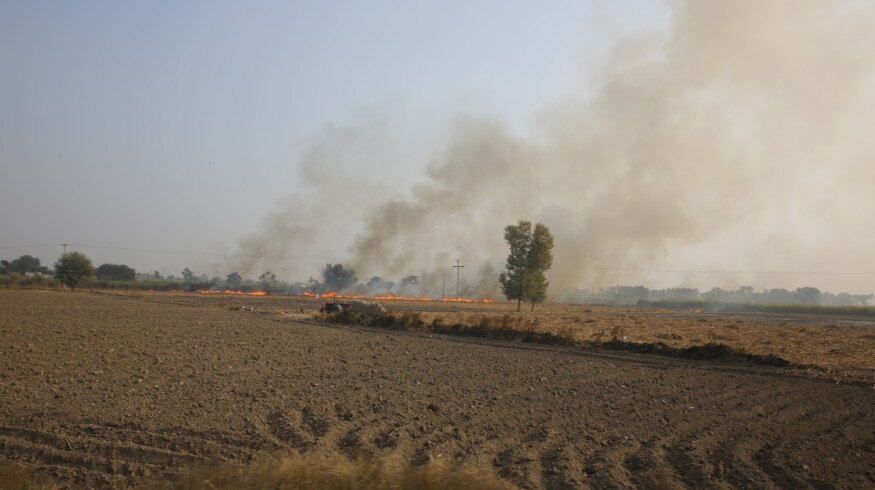
Farmers in India’s northern state of Punjab are increasingly sending crop stubble to recycling facilities instead of burning it, a shift aimed at reducing the seasonal air pollution that affects New Delhi and surrounding regions.
Stubble burning remains a significant factor contributing to the capital’s deteriorating winter air quality, as smoke from farm fires combines with vehicle emissions and dust, and lingers due to slow winds and lower temperatures. Punjab has approximately 12,000 villages, and open-field burning is prevalent in both Punjab and neighboring states.
According to the Confederation of Indian Industry (CII), farmers in over 800 villages in Punjab have started using baling machines to collect and transport stubble to factories. The material is then converted into biogas, bio-fertilizer, cardboard, and other products. CII says it is providing machinery and support to expand the program.
Analysts caution that progress remains uneven. Sunil Dahiya, founder of the New Delhi-based research group Envirocatalysts, stated that the current level of incentives and outreach is insufficient in relation to the scale of the problem. “While this has led to some reduction in stubble burning, the incentivisation and awareness of such initiatives is still limited,” he said.
Some farmers argue that both environmental and practical considerations drive the shift. Dalbir Singh, a 25-year-old farmer in Balwar Kalan village in Sangrur district, said that smoke exposure has encouraged growers to seek alternatives. “It’s not an exciting activity for us, that’s why we are stocking it and sending it to boilers to be sold,” he said.
Others are moving further up the value chain. In Phaguwala village, 53-year-old farmer Gurnaib Singh has established a small facility that manufactures cardboard from crop residue, creating local employment opportunities while reducing open-field burning.
The change in farming practices comes amid another season of hazardous air in New Delhi. The city’s air quality index hovered around 400 last week, a level classified as “severe,” prompting authorities to tighten restrictions on construction and industrial operations.

Enjoyed this story?
Every Monday, our subscribers get their hands on a digest of the most trending agriculture news. You can join them too!



Discussion0 comments