

First US field trial tests biosolids as fertilizer for industrial hemp


A team of crop scientists at the University of Illinois Urbana-Champaign has launched what researchers describe as the first US field trial to evaluate Class A biosolids as a fertilizer for industrial hemp grown for grain and fiber. The study, conducted in partnership with the Metropolitan Water Reclamation District of Greater Chicago (MWRD) and hemp-technology firm Flura, aims to determine whether EPA-approved biosolids can support yield goals while advancing regenerative agriculture.
The multi-year project, formally titled Evaluating Environmental Benefits of Growing Hemp with Biosolids, compares hemp plots fertilized with biosolids to plots treated with standard urea. The team is assessing multiple factors, including crop performance, fiber and grain yields, soil carbon sequestration, PFAS absorption, and the crop’s broader remediation potential.
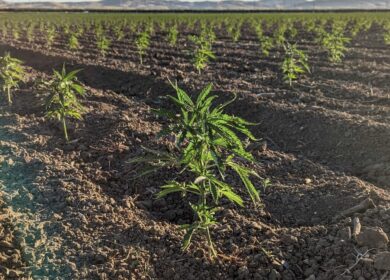
Early field observations from the Champaign-Urbana research site suggest stronger vegetative growth in the biosolids-treated plots. Researchers reported taller plants and thicker stalks ahead of the first full harvest in November 2025. A second year of trials is scheduled for 2026 to validate results.
“This trial is being led by Dr. D.K. Lee, a crop science researcher with more than 25 years of experience conducting field studies for universities, the Department of Energy and commercial growers,” said Jeffrey Yarosz, founder of Flura. “His leadership ensures scientific rigor, transparency and the kind of independent oversight needed to set a national standard.”
Field design and objectives
The work is taking place on University of Illinois crop science research fields. Each plot covers roughly one-eighth of an acre and uses Flura’s proprietary hemp genetics. Independent scientific supervision is in place throughout the project.
Key areas of analysis include fertilizer efficacy, differences in fiber and grain output, root-driven carbon sequestration, and PFAS uptake across plant tissues. The research team is also examining how hemp’s deep root system may influence soil structure, moisture retention and erosion control—factors that could translate into lower input costs and improved long-term productivity for growers.
“Hemp does not require heavy fertilizer inputs compared with other row crops, but it still needs nutrients depending on whether a farmer is targeting fiber, grain or both,” Dr. Lee said. “Our study is examining how biosolids can provide those nutrients while improving soil health over time.”
Public-private collaboration
MWRD is supplying both funding and Class A biosolids for the trial. Flura is providing seed and technical support, while the university is managing field implementation and data collection. The partners say the initiative reflects a circular-economy approach to nutrient management.
“By partnering on this trial, we’re exploring innovative ways to use Class A biosolids to support sustainable agriculture,” Yarosz said. “The goal is to understand how these nutrient-rich, EPA-approved materials can enhance soil health, improve crop productivity and provide a model for environmentally responsible farming practices that other regions across the US can follow.”
Next steps
Harvest analysis from the 2025 season will continue into early 2026. Findings will inform recommendations on nutrient strategies for hemp and potentially other crops. Replication of the trial in 2026 is expected to support peer-reviewed publication and contribute to broader discussions on reducing reliance on synthetic fertilizers.
The project is part of a wider effort by the University of Illinois and its partners to evaluate sustainable nutrient pathways, strengthen soil resilience and expand applied research on climate-smart agriculture.

Enjoyed this story?
Every Monday, our subscribers get their hands on a digest of the most trending agriculture news. You can join them too!




Discussion0 comments