

Petrobras faces mounting strategic, financial and labor pressures

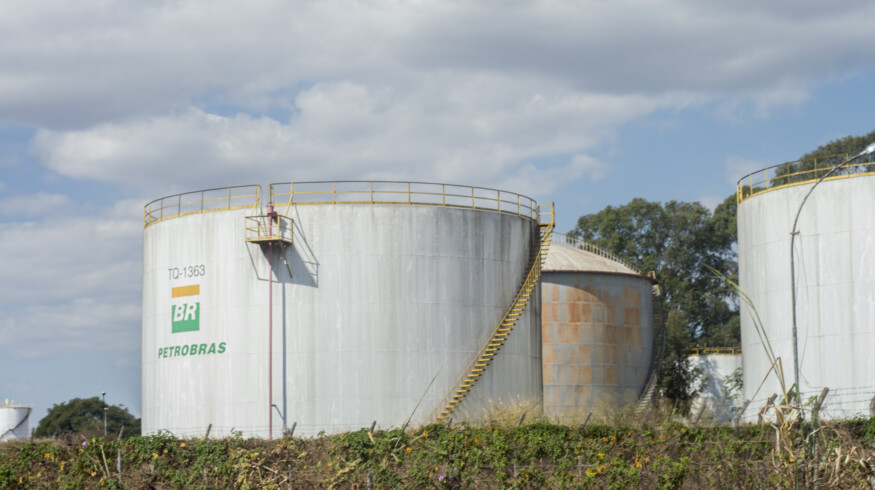
Brazil’s Petrobras is entering 2026 under intensifying strain on several fronts, as the state-controlled producer cuts shareholder payouts and trims capital spending while contending with an escalating labor dispute that threatens to test its operational resilience. The pressures come at a politically sensitive moment, with President Luiz Inácio Lula da Silva urging higher investment and gearing up for a re-election campaign next year.
The company remains financially strong after a year of record output and solid profitability, yet its latest strategic decisions point to a more cautious posture in the face of weaker oil prices, uncertain cash flow and increasingly complex political demands. A nationwide strike set to begin on December 15 adds another layer of operational and reputational risk.
Investment cuts signal shift in Petrobras outlook
Petrobras’ new five-year plan, released at the end of November, outlines the company’s most significant strategic adjustment since Lula returned to office. Management cut expected investments by almost 2% to $109 billion for 2026–2030, marking the first decline in capex under the current administration. The revision reflects expectations that Brent crude will average about $63 per barrel next year, well below the $77 assumption used in the previous plan.
Shareholder remuneration also came under review. Petrobras now expects to distribute $45–50 billion in ordinary dividends over the plan period, down from up to $55 billion previously projected, and made no reference to extraordinary payouts once estimated at as much as $10 billion. The recalibration underscores the company’s need to balance political priorities against cash-flow realities at a time of subdued oil prices.
Still, Petrobras increased spending on exploration and production to $78 billion and reaffirmed its production targets. The company expects oil output to peak at 2.7 million barrels per day in 2028, with total oil and gas production reaching 3.4 million barrels of oil equivalent per day in 2028–2029.
Dividend commitments persist despite tighter plan
Even as long-term distributions shrink, Petrobras proceeded with a sizeable near-term payout. The company confirmed it will distribute R$12.16 billion in shareholder remuneration for the third quarter of 2025, to be paid in February and March 2026. Payments will be adjusted by the Selic benchmark rate and taxed on the interest component.
Petrobras’ shares continue to draw attention for a combination of strong valuation metrics and high dividend yield, though technical indicators point to short-term volatility. The company retains a market capitalization of roughly $76 billion and remains one of Brazil’s most widely held equities.
Union unrest threatens operational stability
The company’s financial recalibration coincides with deepening labor tensions. Brazil’s oil workers federation FUP has called a nationwide strike starting December 15 after rejecting Petrobras’ second counteroffer for a new labor agreement. Union leaders described the proposal as “insufficient,” pointing to a widening deficit in the Petros pension fund, concerns over career progression and demands for wage increases free of fiscal adjustment constraints.
Petrobras maintains that negotiations have yielded advances and says it will keep dialogue open while preparing contingency measures to ensure operational continuity. Early signals suggest production may not be severely affected, with sources indicating that Petrobras has developed plans to mitigate disruptions. But the scale of the strike—covering both onshore and offshore facilities—leaves scope for short-term operational challenges.
Strong operational year clashes with policy friction
The labor turmoil contrasts sharply with Petrobras’ operational performance in 2025. Output climbed throughout the year, reaching a record 3.14 million barrels of oil equivalent per day in the third quarter, driven by new pre-salt capacity from units such as Almirante Tamandaré and Alexandre de Gusmão. EBITDA approached $12 billion in the period, with net income around $6 billion.
The company has already adjusted its capex trajectory once before, cutting 2025 spending to $17 billion from an earlier $21 billion to better reflect financial capacity. Meanwhile, its longer-term plan still envisions a substantial rise in investment through 2028, reflecting pressure from the Lula administration to support jobs and domestic industry.
Brazil’s broader upstream outlook remains resilient. Wood Mackenzie forecasts that private operators will lift national oil production by 75% by 2030, supported by partnerships with Petrobras across key pre-salt developments.
Outlook: balancing politics, prices and workforce risks
Petrobras enters the new planning cycle with a strong operational base but thinner financial room for maneuver. The revised investment plan, scaled-back dividends and unresolved labor tensions highlight the competing pressures shaping the company’s trajectory: a government pushing for growth, a workforce demanding concessions, and market conditions requiring discipline.
How Petrobras manages these tensions over the coming months will be central to its ability to preserve production stability, meet political expectations and maintain investor confidence in an environment of rising uncertainty.

Enjoyed this story?
Every Monday, our subscribers get their hands on a digest of the most trending agriculture news. You can join them too!





Discussion0 comments