

BASF’s Nunhems to buy India’s Noble Seeds

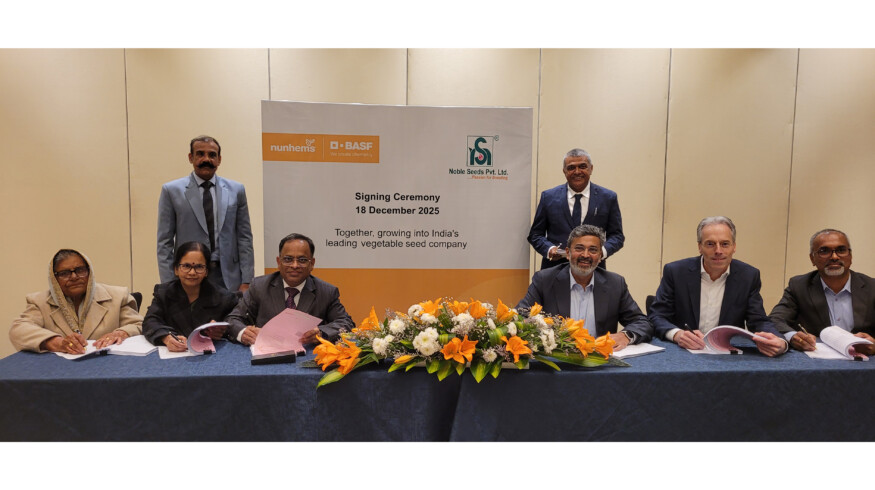
BASF’s vegetable seed business, Nunhems, has agreed to acquire India-based Noble Seeds, a move aimed at strengthening its position in one of the world’s largest and fastest-growing vegetable seed markets and expanding its footprint in northern India.
The transaction would add cauliflower and radish to Nunhems’ Indian portfolio, which currently includes hot peppers, watermelons, gourds and tomatoes. BASF said the acquisition would position its vegetable seed unit as a market leader in India. Financial terms were not disclosed. The deal is subject to regulatory approval and is expected to close by the end of the first quarter of 2026.
India’s vegetable seed market is estimated to be worth roughly $700–800 million annually and is growing at a mid-single-digit rate, driven by rising hybrid seed adoption and a gradual shift toward higher-value horticultural crops. Hybrid varieties account for the bulk of sales, reflecting farmers’ demand for higher yields, disease resistance and more predictable performance.
The market remains fragmented, with global players such as Syngenta, Bayer CropScience and UPL-owned Advanta competing alongside large domestic groups including Mahyco and VNR Seeds, as well as dozens of regional breeders. Industry estimates suggest no single company holds more than about a tenth of the market, underscoring the strategic value of scale, regional germplasm and distribution reach.
Noble Seeds, founded in 2004 and headquartered in New Delhi, employs about 154 people and is a leading seller of cauliflower hybrid seeds in India. The company breeds and supplies hybrids across a range of crops, including radish, tomato, hot pepper, watermelon, gourds, okra and cucumber, with distribution spanning much of the country.
For BASF, the acquisition deepens exposure to crops where local breeding expertise and regional adaptation are critical. Analysts note that global seed companies have increasingly turned to bolt-on acquisitions in India to accelerate growth, rather than relying solely on organic expansion, given the country’s diverse agro-climatic conditions and strong regional loyalties among farmers. Integration risks remain, particularly in aligning global research platforms with local sales networks, but such deals can deliver faster market access and portfolio breadth.
“This agreement brings our company to the next growth level,” said Lakshmi Narasimhaiah Madenahally, chief executive of Noble Seeds, pointing to the combination of BASF’s breeding capabilities with Noble Seeds’ regional market knowledge and distribution.
Maximilian Becker, senior vice president at BASF | Nunhems, said the deal supports the group’s strategy to expand its presence in vegetables and strengthen its crop rotation and connected offerings in fruits and vegetables.
The acquisition comes along with broader shifts in Indian agriculture, where government support for quality seeds, the spread of protected cultivation and rising urban demand for vegetables are encouraging farmers to invest in improved genetics. For growers, the combined business could mean wider access to hybrid varieties tailored to local conditions. For distributors, it promises a broader portfolio under a single supplier, though continued competition among multinational and domestic seed companies is expected to keep pricing pressure in place.
Under Indian law, the transaction will require clearance from the Competition Commission of India, which reviews mergers to assess potential impacts on market competition. The companies said both businesses will continue to operate independently until completion, with a dedicated integration team overseeing the transition.
BASF’s Agricultural Solutions division generated €9.8 billion (about $11.5 billion) in sales in 2024, supported by €919 million (roughly $1.1 billion) in research and development spending. The broader BASF group reported sales of €65.3 billion, or approximately $76.5 billion, last year.

Enjoyed this story?
Every Monday, our subscribers get their hands on a digest of the most trending agriculture news. You can join them too!






Discussion0 comments