

Food companies test new market tool to cut fertilizer emissions

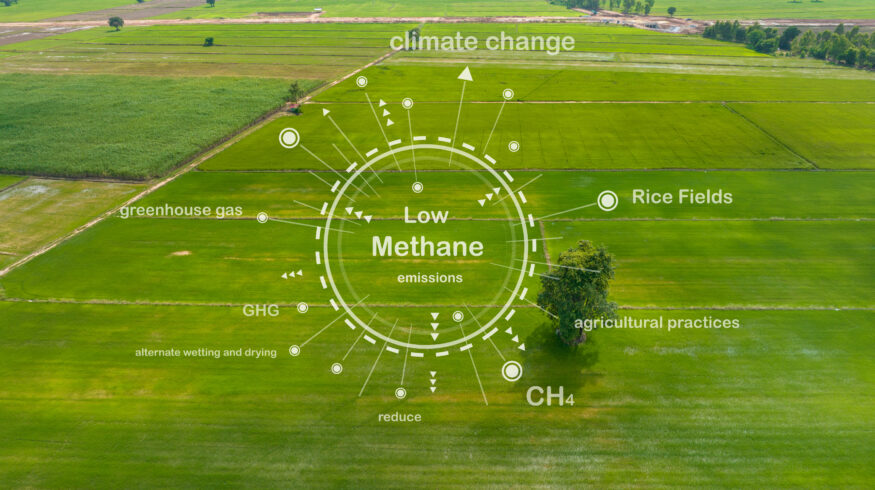
Food and beverage companies are turning to a new market-based mechanism to address one of agriculture’s most carbon-intensive inputs: nitrogen fertilizer.
The Center for Green Market Activation (GMA) and energy think tank RMI said they are launching a pilot “book-and-claim” procurement system that allows companies to finance low-emission fertilizer production and count the resulting emissions reductions toward their Scope 3 climate targets, without changing how fertilizer physically moves through farm supply chains.
Agriculture accounts for about one-quarter of global greenhouse gas emissions, with fertilizer production, distribution, and use responsible for an estimated 1.31 gigatons of carbon dioxide equivalent annually. Roughly 40% of those emissions come from fertilizer manufacturing itself, largely due to reliance on fossil fuels.
Low-emission alternatives, including renewable-powered green ammonia, already exist but remain more expensive than conventional production. Farmers, who typically operate on thin margins and buy fertilizer seasonally, are unlikely to absorb those higher costs. At the same time, food companies face growing pressure from investors and regulators to cut Scope 3 emissions embedded in agricultural inputs.
Under the new model, fertilizer producers generate Environmental Attribute Certificates (EACs) for verified low-emission output. Food and beverage companies can purchase those certificates to claim emissions reductions, while the physical fertilizer continues to flow through conventional distribution channels at standard prices.
GMA and RMI said the approach is designed to bridge a structural gap in the fertilizer value chain, where corporate buyers sit several steps removed from manufacturers and lack direct procurement options for low-carbon inputs. More than 900 companies across food, beverage, and consumer goods sectors have set near-term science-based climate targets that include fertilizer emissions.
The pilot aims to aggregate demand from multiple corporate buyers to provide long-term revenue certainty for producers developing green ammonia and other low-emission technologies. Companies involved say the cost impact on packaged food prices would likely be modest, estimated at 1% to 2%.
Similar book-and-claim systems have been used in renewable power markets and are being adapted for aviation fuel, steel, and cement. GMA and RMI said they plan to apply comparable verification and registry standards to ensure emissions reductions are credible and not double counted.
If successful, the initiative could help accelerate investment in low-carbon fertilizer production, addressing one of agriculture’s most persistent sources of emissions while offering companies a clearer path to meeting Scope 3 commitments.

Enjoyed this story?
Every Monday, our subscribers get their hands on a digest of the most trending agriculture news. You can join them too!







Discussion0 comments