

Canopii aims to prove small autonomous greenhouses can succeed where indoor farms failed

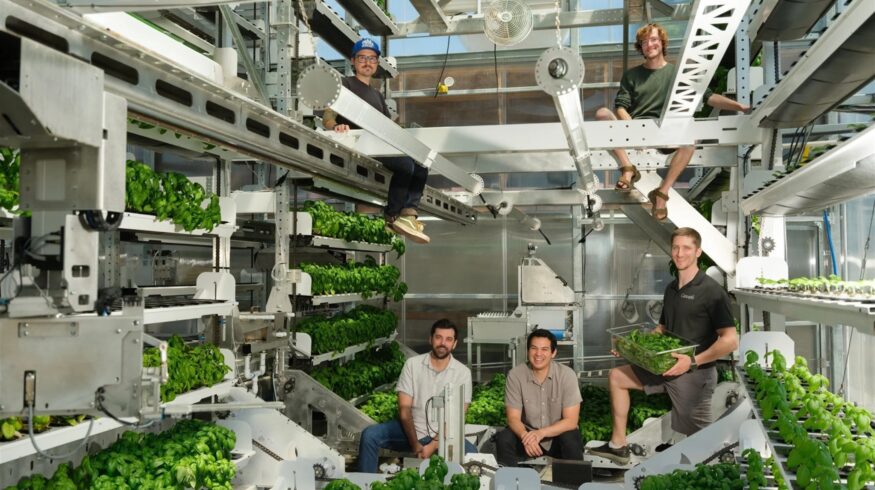
Portland-based agtech startup Canopii is developing robotic greenhouses designed to grow produce autonomously, seeking to demonstrate a more capital-efficient model for indoor agriculture following the collapse of several high-profile vertical farming companies.
The system automates the entire crop cycle—from seeding to harvest—without human intervention. Each greenhouse occupies roughly the space of a basketball court and can produce up to 40,000 pounds of herbs and specialty greens annually while requiring minimal water. The units are currently designed to grow crops such as baby bok choy and gai lan and are manufactured by GK Designs.
Founder David Ashton said the concept was inspired by years of driving between Sacramento and San Luis Obispo during California’s drought in the late 2000s, where irrigated lettuce fields contrasted with the region’s dry landscape. Ashton later began developing the idea after a Portland agtech company he planned to join filed for bankruptcy, prompting him to work on the project independently.
The company has raised about USD 3.6 million to date, including approximately USD 2.3 million in grants from the National Science Foundation, which funded the construction of early prototypes. Canopii recently achieved a milestone with a fully autonomous demonstration farm and plans to build its first commercial facility in downtown Portland.
Ashton argues the company’s approach differs from vertical farming models that rely heavily on venture capital and large-scale infrastructure. Several indoor agriculture companies—including Bowery Farming and Plenty Unlimited—raised hundreds of millions of dollars before facing financial difficulties.
Canopii is exploring partnerships with institutions such as schools, restaurants, and casinos and plans to franchise its greenhouse systems in the future. According to Ashton, the farms run on standard household-level power, which could allow the systems to be deployed in small urban locations or even residential settings.
Source: TechCrunch

Enjoyed this story?
Every Monday, our subscribers get their hands on a digest of the most trending agriculture news. You can join them too!





Discussion0 comments