Skip to content
  • Professionals
  • Gardeners
 
Search
Log in
EN
RU
  • Markets
  • Business
  • Politics
  • Technologies
  • Interviews
  • Rankings
  • Environment
  • Events
  • Stock Quotes
  • Business Directory
Trending topic:
Featured company:
 
RU
  • Professionals
  • Gardeners
Sections
Events
Stock Quotes
Business Directory
Trending topic:
Featured company:
Follow us...
Helpful information
  • About
  • Team
  • Advertise
  • Contacts
  • Submit a Tip
  • Privacy Policy
  • Terms of Service
Sections
Seasonal tips
  • Spring
  • Summer
  • Autumn
  • Winter
Trending topics
  • compost
    22
  • garlic
    2
  • lemon
    1
  • potato
    12
Follow us...
Helpful information
  • About
  • Team
  • Advertise
  • Contacts
  • Submit a Tip
  • Privacy Policy
  • Terms of Service
Copyright © 2014-2025 DigitalTree LLC. All rights reserved.
We deliver content lightning-fast thanks to the managed cloud WordPress hosting with CDN.
16+

Home / Markets

Friday’s Insider: Urea vs. UAN — similarities and differences of application

Ilya Motorygin avatar Ilya Motorygin
August 30, 2024, 4:30 pm
541
Markets
Friday’s Insider: Urea vs. UAN — similarities and differences of application
Save for later
Share

When I worked for a Ukrainian production holding, we produced a lot of UAN. Yes, we used exactly that verb—“to brew.” Whenever we had an issue with urea quality (high biuret content, in particular), we would make UAN. And I must say—farmers still like it. Urea and UAN (Urea Ammonium Nitrate) liquid fertilizers are widely used by farmers across the globe. Both have unique properties, applications, and benefits, making them suitable for different scenarios.

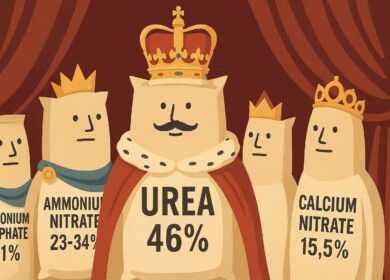
Both urea and UAN are primarily used to supply nitrogen to plants, a critical nutrient for plant growth. Urea contains 46% nitrogen, making it one of the most concentrated nitrogen fertilizers. UAN, on the other hand, is a liquid mixture typically containing 28–32% nitrogen, combining urea, ammonium nitrate, and water.

Urea and UAN can be used on a wide range of crops, including cereals, fruits, vegetables, and ornamental plants. They can be applied to both large-scale agricultural fields and smaller garden plots, making them versatile options for different farming practices.

Both fertilizers can be applied using various methods, such as broadcast spreading, banding, and foliar feeding. Urea can be spread as granules, while UAN is typically applied through fertigation (injection into irrigation water) or as a spray. This flexibility in application methods allows farmers to choose the best approach for their specific needs.

ADVERTISEMENT

At the same time, there are some differences between these two nitrogen fertilizers.

One of the most significant differences is their physical form. Urea is a solid, granular fertilizer, while UAN is a liquid. This difference impacts how they are stored, handled, and applied. Urea granules are easy to spread and can be mixed with other dry fertilizers. Still, they require careful handling to avoid losses due to volatilization (the conversion of nitrogen to ammonia gas). UAN, being a liquid, can be easily mixed with other liquid fertilizers or pesticides, making it more convenient for tank mixing and precision application.

As I mentioned earlier, urea is prone to volatilization, especially when applied to the soil surface without incorporation. If urea is not quickly absorbed into the soil or not applied before rain, nitrogen loss can occur, reducing its efficiency. UAN, particularly when injected into the soil or used in no-till systems, has a lower risk of volatilization, making it more efficient in retaining nitrogen for plant uptake.

UAN is often preferred when multiple inputs must be applied simultaneously. Its liquid form allows it to be mixed with herbicides, insecticides, and other nutrients, enabling farmers to save time and labor by using several products in one pass. Being solid, Urea needs to have this level of compatibility and usually requires separate applications.

Urea is generally less expensive per unit of nitrogen compared to UAN, making it a more cost-effective option for many farmers. However, UAN’s ease of application and reduced risk of volatilization (which I consider a critical point and why I keep mentioning it) can offset the higher cost in certain situations, especially where precision agriculture practices are employed.

As always, a sophisticated and educated farmer will base his or her choice of nitrogen fertilizers on various factors, such as the method of application, risk of nitrogen loss, compatibility with other farm inputs, and overall cost. Understanding the strengths and limitations of each allows them to make informed decisions that optimize crop yield and sustainability.

————

About the Author of “Friday’s Insider”: Ilya Motorygin is the co-founder of GG-Trading and brings 30 years of experience to the fertilizer industry. Renowned for his comprehensive problem-solving skills, Ilya expertly manages deals from inception to completion, overseeing aspects such as financing, supply chains, and logistics.

analy
Friday's Insider
trading
UAN
urea

Enjoyed this story?

Every Monday, our subscribers get their hands on a digest of the most trending agriculture news. You can join them too!

Sign me up
Check the example

Discussion0 comments

Спасибо за комментарий, он будет опубликован на сайте после проверки модератором. Хотите, чтобы ваши комментарии появлялись на сайте мгновенно? Достаточно пройти регистрацию.
Congratulations, you can be the first to start the conversation.
Do you have a question or suggestion? Please leave your comment to ignite conversation.
What’s on your mind?
Cancel Log in and comment
Or continue without registration
Get notified about new comments by email.
Advertisement
In focus
How to get here?
Stock quotes
Bayer
9.67
1.02
Bayer Crop Science
33.31
0.8
CF Industries
77.88
2.93
Corteva Agriscience
66
0.44
ICL Group
5.18
1.33
Intrepid Potash
25.31
1.36
Mosaic
23.61
2.03
Nutrien
60.34
0.48
Yara International
19.2
1.05
See all
Most read
Bowery Farming’s $70M Georgia vertical farm heads to liquidation as startup’s collapse triggers nationwide sell-offs
Michigan tightens manure-spreading rules for large animal farms
Monarch Tractor may lay off 100 employees or shut down as it struggles to pivot away from manufacturing toward pure software model
Russia imposed temporary ban on sulfur exports until the end of 2025
Tyson shutters high-volume beef plant in Nebraska as the industry faces a downturn
Events
Argus Clean Ammonia Europe
Rotterdam, Netherlands
Dec 2 — 4, 2025
Organic Grower Summit
Monterey (CA), USA
Dec 3 — 4, 2025
IFS Conference
Cambridge, UK
Dec 10 — 12, 2025
Fertilizer Latino Americano
Miami (FL), USA
Jan 26 — 28, 2026
Argus Fertilizer Africa
Dar es Salaam, Tanzania
Feb 10 — 11, 2026
See all
Live
Meripa Corson
August 4, 01:18 pm
Where does the money actually go? As a timber land owner, how do I benefit from the legislation?
USDA commits $80 million to expand timber markets and improve forest resilience
Patonkas Luksompulus
January 21, 12:36 pm
Greece meeds biological fertilizers! Great news about De sangosse.
DE SANGOSSE expands operations with Greek subsidiary
Pedro Diaz
November 20, 2024, 08:42 pm
Is it a Roundup lawsuit or more about bad financials? I think the market reacted only to announced financial results.
Bayer’s shares are pressed down by ongoing Roundup cancer lawsuit
Johan Fredin
August 22, 2024, 07:57 pm
Europe is falling behind in this field. The concerns 30 years ago was reasonable. Now not so much. We need crops that can survive in a more extreme future climate. Handle droughts and hot weather better. Crops that are less tasty to pests like hogs and deere.
Gene-edited crops set for groundbreaking European trials
Timothy Kirkwood
July 23, 2024, 01:39 pm

Your article about Sargassum shows Kelp, not Sargassum.

Sargassum in the Caribbean: turning seaweed crisis into economic opportunity?
About
Sections
Markets  ·  Business  ·  Politics  ·  Technologies  ·  Interviews  ·  Rankings  ·  Environment
Support
About  ·  Team  ·  Advertise  ·  Contacts  ·  Submit a Tip  ·  Privacy Policy  ·  Terms of Service
Copyright © 2014-2025 DigitalTree LLC. All rights reserved.
We deliver content lightning-fast thanks to the managed cloud WordPress hosting with CDN.
16+
More to read
Friday’s Insider: Granular Urea vs. Prilled Urea
Friday’s Insider: Nano-urea — too far to be perfect
Friday’s Insider: If fertilizers are expensive, can farmers skip their application?
Advertising that helps us do quality reporting