

Friday’s Insider: Urea’s cousins — can they take over the throne?

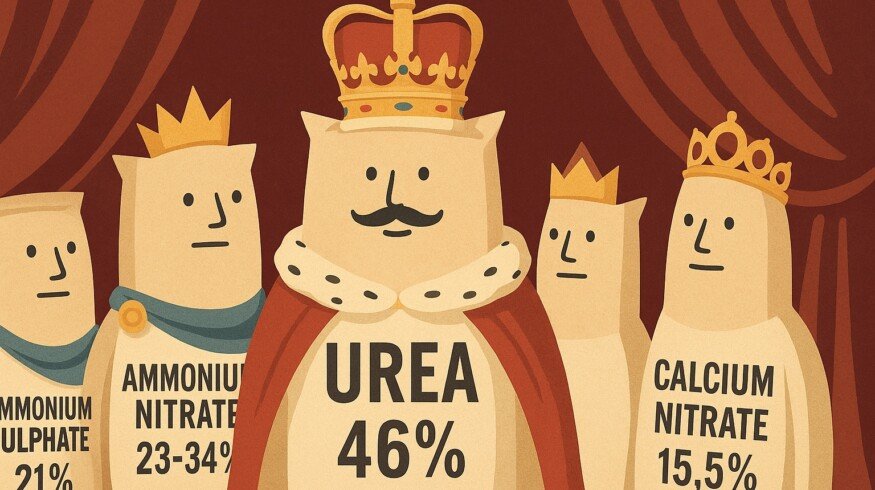

In the kingdom of nitrogen fertilizers, Urea still rules with a firm grip — high N content, flexible application, and a fanbase from Brazil to Bangladesh. But what happens when the king is absent, pricey, or embargoed? Enter the lesser royals: ammonium nitrate (AN), ammonium sulphate (AS), and calcium nitrate (CN) -each eager to prove they’re not just substitutes, but strategic alternatives.
Spoiler alert: They’re not one-size-fits-all. Context is everything — crop, soil, climate, logistics, and regulation. Let’s break it down continent by continent, field by field.
1. Europe: The Home of Ammonium Nitrate
AN is almost synonymous with European nitrogen. Thanks to a cooler, wetter climate and strong nitrate efficiency, crops like wheat and barley thrive on it. Plus,EU farmers love the quick uptake.
But it’s not just agronomics — regulation and security risks have turned AN into a bureaucratic headache. Increasing restrictions, storage requirements, and safety concerns make it less appealing. Enter urea, but only with inhibitors. Enter calcium nitrate, but only for speciality use.
Substitution logic:
- AN can replace urea for cereals in cool, nitrate-hungry zones.
- Urea can’t always replace AN unless protected with urease inhibitors.
- AS? Mostly for S-deficient soils, but not a base N source.
2. Latin America: Urea Country with AS as the Loyal Brother
Brazil lives on urea, plain and simple. But it also happens to be the world’s largest consumer of ammonium sulphate, thanks to sulphur-poor soils and a huge soy economy. AS is not a urea substitute — it’s a complementary snack, not the main course.
So when Chinese urea exports tighten or global prices spike, can Brazil switch to AS? Not really.
- AS has only 21% N, versus urea’s 46%.
- It’s also heavier and costlier per N unit to ship inland from ports like Santos and Paranaguá.
- Not to mention, soy doesn’t respond well to late N; timing and placement matter more than source.
Substitution logic:
- AS can complement urea, especially in first applications on soy and maize.
- It can’t replace urea economically or agronomically.
- CN? Too posh for row crops — save it for greenhouse strawberries in Spain.
3. South & Southeast Asia: Urea is Religion
Try telling an Indian or Thai rice farmer to switch from subsidised urea to calcium nitrate. That’s like replacing chai with kombucha.
Still, in certain intensive horticulture segments (tomatoes, onions, bananas), CN and AS have niche appeal due to their nitrate and calcium benefits. But bulk replacement? Dream on.
In flood-irrigated rice paddies, urea floats (literally and figuratively). AN dissolves too fast, and CN doesn’t make sense economically.
Substitution logic:
- CN and AS are niche tools in high-value horticulture.
- AN is rare due to logistics, humidity, and regulation.
- Urea remains unchallenged in row crops.
4. Africa: A Fertilizer Puzzle with Gaps
In much of Sub-Saharan Africa, fertilizer access matters more than type. Where used, urea and NPKs dominate, with some local AN (notably in North Africa). AS is rare unless blended. CN is virtually absent outside export horticulture.
But here’s the twist: agronomic need for sulphur and calcium is high — so AS and CN should see more use. The problem is affordability, logistics, and awareness.
Substitution logic:
- AS has growth potential but can’t replace urea on price or logistics.
- CN could help export crops (avocados, flowers) but not staples.
- AN is a regional player, especially in North Africa and Sudan.
5. USA: It’s Complicated
In the US Corn Belt, urea, UAN (urea ammonium nitrate), and AN all compete. Farmers choose based on application method, weather risk, and price. Urea is flexible, AN is powerful, and UAN flows well through rigs.
Calcium nitrate is mostly confined to California’s vegetable fields and greenhouses. Ammonium sulphate? Popular in the South for cotton, soy, and sulphur-hungry crops.
Substitution logic:
- AN and UAN can replace urea if the weather favours them.
- AS fits specific crops and soils, especially when blended.
- CN remains a premium input, not a field crop staple.
Agronomy vs. Economics vs. Logistics
| Fertilizer | N Content | Bonus Element | Strengths | Weaknesses |
| Urea | 46% | – | High N, low cost, widely traded | Volatile losses, regulation (EU, US) |
| Ammonium Nitrate | 33-34% | – | Fast-acting, rainproof, efficient | Explosive risks, tight rules, regional use |
| Ammonium Sulphate | 21% | Sulphur (24%) | Great for sulphur, stable | Low N content, bulkier, costlier per N |
| Calcium Nitrate | 15.5% | Calcium (19%) | For fruits/veg, nitrate-N & Ca | Expensive, niche, leachable |
Substitution is Not Swapping, It’s Strategising
None of these products truly replaces each other. Substitution is always contextual:
- By crop: Maize loves AN; rice loves urea; lettuce loves CN.
- By soil: S-deficient = AS; acidic = avoid AN; leached = love CN.
- By region: EU sticks to AN; Brazil lives on urea + AS; US mixes it all.
In trade terms, remember: volume trades follow urea, but margin lives in CN and AS. Understanding what your customer grows, where they farm, and what they’re missing is what turns a fertilizer trader into a problem solver — not just a price setter.
After all, even kings like Urea have cousins with crowns of their own.
————
About the Author of “Friday’s Insider”: Ilya Motorygin is the co-founder of GG-Trading and brings 30 years of experience to the fertilizer industry. Renowned for his comprehensive problem-solving skills, Ilya expertly manages deals from inception to completion, overseeing aspects such as financing, supply chains, and logistics.

Enjoyed this story?
Every Monday, our subscribers get their hands on a digest of the most trending agriculture news. You can join them too!






Discussion0 comments