Skip to content
  • Professionals
  • Gardeners
 
Search
Log in
EN
RU
  • Markets
  • Business
  • Politics
  • Technologies
  • Interviews
  • Rankings
  • Environment
  • Events
  • Stock Quotes
  • Business Directory
Trending topic:
Featured company:
 
RU
  • Professionals
  • Gardeners
Sections
    Events
    Stock Quotes
    Business Directory
    Trending topic:
    Featured company:
    Follow us...
    Helpful information
    • About
    • Team
    • Advertise
    • Contacts
    • Submit a Tip
    • Privacy Policy
    • Terms of Service
    Sections
      Seasonal tips
      • Spring
      • Summer
      • Autumn
      • Winter
      Trending topics
      • compost
        23
      • garlic
        2
      • lemon
        1
      • potato
        12
      Follow us...
      Helpful information
      • About
      • Team
      • Advertise
      • Contacts
      • Submit a Tip
      • Privacy Policy
      • Terms of Service
      Copyright © 2014-2026 DigitalTree LLC. All rights reserved.
      We deliver content lightning-fast thanks to the managed cloud WordPress hosting with CDN.
      16+

      Home / Environment

      Texas Tech takes on ‘forever chemicals’ in farming with $1.6 million EPA grant

      Elena Shalashnik avatar Elena Shalashnik
      September 12, 2024, 10:00 am
      September 12, 2024, 10:00 am
      [esi post-views ttl=0]
      Environment
      Texas Tech takes on ‘forever chemicals’ in farming with $1.6 million EPA grant
      #image_title
      Save for later
      Share

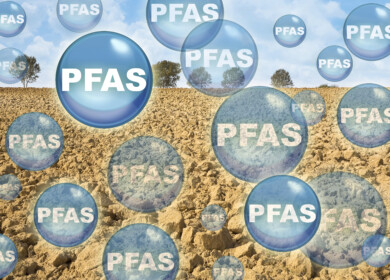
      Texas Tech University is taking a lead role in addressing a critical challenge facing modern agriculture: PFAS contamination. With a $1.6 million grant from the U.S. Environmental Protection Agency (EPA), Texas Tech’s Department of Civil, Environmental, & Construction Engineering will research ways to reduce the presence of per- and polyfluoroalkyl substances (PFAS) in farming operations, safeguarding both food safety and public health. This initiative is part of a larger $15 million effort that includes 10 institutions focused on reducing PFAS exposure in agricultural and rural communities.

      PFAS, often called “forever chemicals,” have been widely used since the 1940s in products like food packaging, non-stick cookware, and stain-resistant fabrics. Their resistance to environmental breakdown has allowed them to accumulate in the soil, water, and food supply, making their way into farms through sources like contaminated groundwater, fertilizers, and even livestock feed. Once introduced into farming systems, PFAS can affect everything from crop yields to livestock health, posing risks for both producers and consumers.

      “PFAS are a growing concern for farmers,” explains Dr. Jennifer Guelfo, associate professor of environmental engineering and lead investigator of the Texas Tech project. “Our goal is to develop solutions that protect both the environment and the livelihoods of those in agriculture.”

      The research project, titled “Evaluating and Mitigating Bioaccumulation of PFAS in Plant, Mammalian, and Aquaculture Systems,” will span four years and examine how PFAS accumulate in plants and animals, focusing on ways to prevent and manage contamination. Guelfo’s team will explore various contamination pathways, from biosolid fertilizers to irrigation water, and develop strategies like manure treatment processes to mitigate PFAS before they enter the soil or water supply.

      ADVERTISEMENT

      For farmers, this research couldn’t come at a more critical time. With PFAS contamination linked to reduced livestock productivity and compromised crop quality, the economic consequences are significant. “Farmers dealing with PFAS contamination often face devastating decisions, such as euthanizing entire herds or abandoning contaminated fields,” says Guelfo. “Once a farm is impacted, returning to normal operations can be incredibly difficult.”

      The research team, which includes experts in environmental chemistry, aquatic toxicology, and engineering, will also conduct lab studies to model PFAS bioavailability in soil and animal systems. By understanding how PFAS move through agricultural environments, the team hopes to develop practical guidelines for farmers, allowing them to reduce contamination risks and adapt to evolving regulatory demands.

      Texas Tech’s role in this research is particularly important given its location in a heavily agricultural region. “As an urban center surrounded by farms, Texas Tech is in a unique position to address this issue locally while also contributing to national and international efforts,” Guelfo noted. By collaborating with local agricultural stakeholders, the team ensures that the solutions developed are both scientifically sound and feasible for real-world implementation.

      agriculture
      contamination
      environment
      EPA
      forever chemicals
      PFAS
      Texas

      Enjoyed this story?

      Every Monday, our subscribers get their hands on a digest of the most trending agriculture news. You can join them too!

      Sign me up
      Check the example

      Discussion0 comments

      Спасибо за комментарий, он будет опубликован на сайте после проверки модератором. Хотите, чтобы ваши комментарии появлялись на сайте мгновенно? Достаточно пройти регистрацию.
      Congratulations, you can be the first to start the conversation.
      Do you have a question or suggestion? Please leave your comment to ignite conversation.
      What’s on your mind?
      Cancel Log in and comment
      Or continue without registration
      Get notified about new comments by email.
      Advertisement
      In focus
      How to get here?
      Stock quotes
      Bayer
      11.52
      4.82
      Bayer Crop Science
      40.09
      3.77
      CF Industries
      122.33
      5.59
      Corteva Agriscience
      79.04
      0.21
      ICL Group
      5.33
      0.74
      Intrepid Potash
      41.61
      8.06
      Mosaic
      27.67
      5.6
      Nutrien
      77.79
      6.11
      Yara International
      28.47
      1.83
      See all
      Most read
      Agromin composts 1.25 million tons of organic waste in 2025
      Agromin composts 1.25 million tons of organic waste in 2025
      U.S. Justice Department opens antitrust probe into fertilizer producers amid price concerns
      U.S. Justice Department opens antitrust probe into fertilizer producers amid price concerns
      Middle East conflict threatens fertilizer supply ahead of U.S. planting season
      Middle East conflict threatens fertilizer supply ahead of U.S. planting season
      DeKalb may launch 30 new corn hybrids for 2026 season
      DeKalb may launch 30 new corn hybrids for 2026 season
      FMC secures first dual-mode herbicide classification for rimisoxafen
      FMC secures first dual-mode herbicide classification for rimisoxafen
      Events
      World Agri-Tech Innovation Summit
      San Francisco (CA), USA
      Mar 17 — 18, 2026
      FSHOW
      Shanghai, China
      Mar 17 — 19, 2026
      Argus Fertilizer Asia
      Bali, Indonesia
      Mar 31 — Apr 2, 2026
      CRU Phosphates
      Paris, France
      Apr 13 — 15, 2026
      CFEX
      Antalya, Turkey
      Apr 15 — 17, 2026
      See all
      Live
      Isabelita Barreiro
      December 11, 2025, 01:54 am
      Excellent management of water resources and effective use of water-soluble fertilizers!
      Argentine nano-fertilizer firm AKO Agro expands to Brazil
      Meripa Corson
      August 4, 2025, 01:18 pm
      Where does the money actually go? As a timber land owner, how do I benefit from the legislation?
      USDA commits $80 million to expand timber markets and improve forest resilience
      Patonkas Luksompulus
      January 21, 2025, 12:36 pm
      Greece meeds biological fertilizers! Great news about De sangosse.
      DE SANGOSSE expands operations with Greek subsidiary
      Pedro Diaz
      November 20, 2024, 08:42 pm
      Is it a Roundup lawsuit or more about bad financials? I think the market reacted only to announced financial results.
      Bayer’s shares are pressed down by ongoing Roundup cancer lawsuit
      Johan Fredin
      August 22, 2024, 07:57 pm
      Europe is falling behind in this field. The concerns 30 years ago was reasonable. Now not so much. We need crops that can survive in a more extreme future climate. Handle droughts and hot weather better. Crops that are less tasty to pests like hogs and deere.
      Gene-edited crops set for groundbreaking European trials
      About
      Sections
      Markets  ·  Business  ·  Politics  ·  Technologies  ·  Interviews  ·  Rankings  ·  Environment
      Support
      About  ·  Team  ·  Advertise  ·  Contacts  ·  Submit a Tip  ·  Privacy Policy  ·  Terms of Service
      Copyright © 2014-2026 DigitalTree LLC. All rights reserved.
      We deliver content lightning-fast thanks to the managed cloud WordPress hosting with CDN.
      16+
      More to read
      ‘Forever chemicals’ in biosolids draw scrutiny in Virginia and Maryland
      ‘Forever chemicals’ in biosolids draw scrutiny in Virginia and Maryland
      New U.S. PFAS regulations may force sale restrictions for certain fertilizer products
      New U.S. PFAS regulations may force sale restrictions for certain fertilizer products
      University of Maine receives $1.5M to develop a US-based PFAS monitoring system
      University of Maine receives $1.5M to develop a US-based PFAS monitoring system
      Advertising that helps us do quality reporting