

‘Forever chemicals’ in biosolids draw scrutiny in Virginia and Maryland

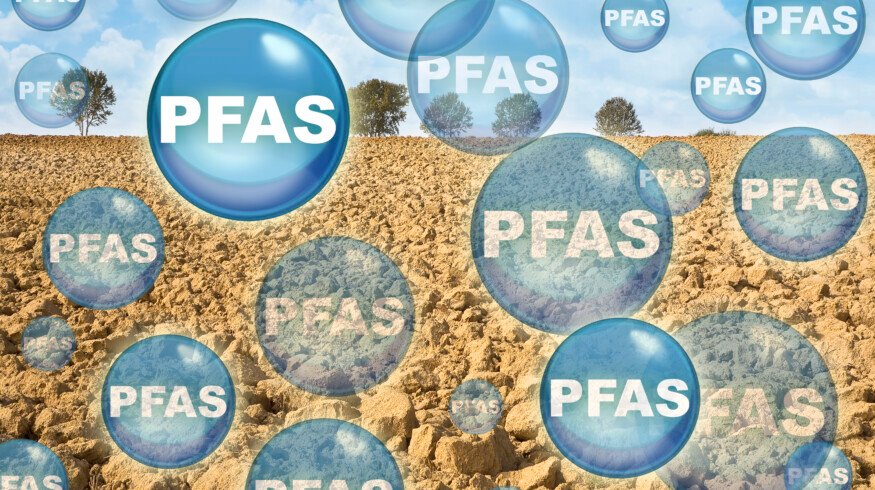

As evidence mounts about the health risks associated with per- and polyfluoroalkyl substances (PFAS), commonly known as “forever chemicals,” the use of biosolids as fertilizer in Virginia and Maryland is facing intensifying resistance from residents and environmental advocates.
Biosolids—treated sewage sludge applied to farmland—are widely used in both states to enrich soils for crops such as corn and soybeans. But the material often contains PFAS, a class of persistent synthetic chemicals linked to cancer, immune dysfunction, and liver damage. With PFAS showing up in water, soil, and food chains, concerns about their presence in biosolids have prompted both local opposition and regulatory attention.
Jennifer Campagne, a resident of Hague, Virginia, discovered PFAS in her private well, located just 30 yards from a farm field where biosolids have been applied. “I never knew it was more than just the smell,” she said, referencing the odor that lingers after each application. Campagne’s case highlights a broader problem: PFAS contamination without an obvious industrial source, potentially traced to routine agricultural practices.
The U.S. Environmental Protection Agency (EPA) has taken initial steps to address the issue. In 2024, the agency finalized drinking water limits for six PFAS compounds and issued a draft risk assessment suggesting that even biosolids with as little as one part per billion of certain PFAS may pose serious health risks. However, the risk assessment remains under review and has not yet led to enforceable federal regulations.
In the absence of federal mandates, states have begun to act independently. Maryland’s Department of the Environment (MDE) issued a moratorium on new land application permits in 2023 and conducted PFAS testing on biosolids. In August 2024, it recommended stopping the use of biosolids on farmland if concentrations of specific PFAS exceed 100 parts per billion. All but one of Maryland’s wastewater treatment plants reportedly met the threshold. The one facility exceeding it exports its sludge to Virginia.
While Maryland’s measures are currently non-binding guidelines, environmental groups say they fall short. The EPA’s risk assessment identified potential risks at PFAS levels 100 times lower than Maryland’s recommended ceiling.
Virginia, which received about one-quarter of its biosolids from Maryland in 2024, does not require PFAS testing under its current regulations. Applications must observe buffer zones—100 feet from wells and 200 feet from residences—but these provisions do not address chemical contamination. The Virginia Department of Environmental Quality (DEQ) has cited the draft status of the EPA’s findings as a reason for deferring stricter action.
Public opposition has nevertheless started to influence permitting decisions. In Westmoreland County, VA, Baltimore-based Synagro Technologies withdrew an application to expand its biosolids spreading on an additional 1,900 acres after objections from residents and watermen prompted DEQ to schedule a public hearing. Testing data revealed that biosolids from nearly all Maryland plants permitted to export sludge to Virginia contained PFAS.
Local concerns escalated when DEQ detected PFAS in the water of Nomini Bay, a Potomac River tributary. While the detected levels were below federal drinking water thresholds, they exceeded the EPA’s proposed aquatic life criteria. Watermen, aquaculture businesses, and tourism operators in the region have expressed alarm over potential contamination of fish and shellfish.
A second proposed expansion by Synagro in Essex County has also triggered a hearing, scheduled for May 19, following written objections from 28 stakeholders, including the Rappahannock Tribe and large oyster producers.
Advocates say broader policy changes are needed. “This likely needs a fix at the state level, not just on a permit-by-permit basis,” said Brent Hunsinger of Friends of the Rappahannock.
In Maryland, proposed legislation to prohibit land application of biosolids with more than one part per billion of PFAS—aligned with EPA’s risk threshold—failed to pass this year. Wastewater treatment plant operators argued the measure would effectively end agricultural use of biosolids and increase costs for disposal and water treatment.
Utilities also noted that PFAS largely originate from consumer products, not industrial discharges, suggesting that solutions must focus on reducing PFAS at the source.
“Until that time,” said Evan Isaacson of the Chesapeake Legal Alliance, “it’s basically triage mode. Don’t put it next to someone’s well, don’t put it next to a school.”
Campagne, whose well contained four different PFAS compounds, including unregulated ones, shares that sentiment. “It does bother me now,” she said, citing her chronic autoimmune condition and a family history of cancer. “I feel like that’s an added risk.”
As testing continues and regulatory frameworks evolve, communities across the Chesapeake Bay watershed remain caught between longstanding agricultural practices and emerging scientific evidence of chemical risks.

Enjoyed this story?
Every Monday, our subscribers get their hands on a digest of the most trending agriculture news. You can join them too!





Discussion0 comments