

Is large-scale crop harvesting ready for robots?


In an ideal world, industrial gardening is ready for the technological revolution that could streamline large-scale crop harvesting. Traditional harvesting methods are labor-intensive, while modern technologies could meet the demand of the expanding global market for fresh produce. New advancements could potentially address chronic labor shortages, particularly during peak harvest periods, by replacing manual labor with sophisticated mechanized solutions, but are the gardeners ready yet?
“At this point, 100% of the apples grown in the U.S. are harvested by hand,” — says Vice President on Insights and Analytics of U.S. Apple Association Christopher Gerlach. “There are companies working on automated harvesting technologies that are being tested in the orchard, but they are not widespread and not yet commercially viable.”
According to Gerlach, the primary issue with harvesting 11-12 billion pounds of apples by hand is that it is very expensive. Some varieties, like Honeycrisp, are even more expensive as pickers have to stem clip the apples off of the tree (two hands per apple vs. one). This is done to keep the stem of one apple from piercing the thin skin of another apple in the bin. You don’t want one bad apple spoiling the bunch, especially for a premium variety like Honeycrisp.
There are a number of issues with automated harvesters, including the difficulty of replicating the human hand. Currently, developed machines are dropping a lot of fruit and are not necessarily as gentile as getting them into the bin. Besides, it is difficult to train them on quality control from the perspective of picking one apple vs. another. Often, pickers will be instructed on the size, color, and blemish tolerance and only pick specific apples leaving the rest.
Another issue is that orchards vary dramatically in size. While an older orchard may have 400 trees per acre with huge canopies and 20-foot row spacing, a new one could have 1,200 trees per acre grown on a v-trellis system with 12-foot row spacing. The technology and equipment needed to harvest both of these orchards would look dramatically different.
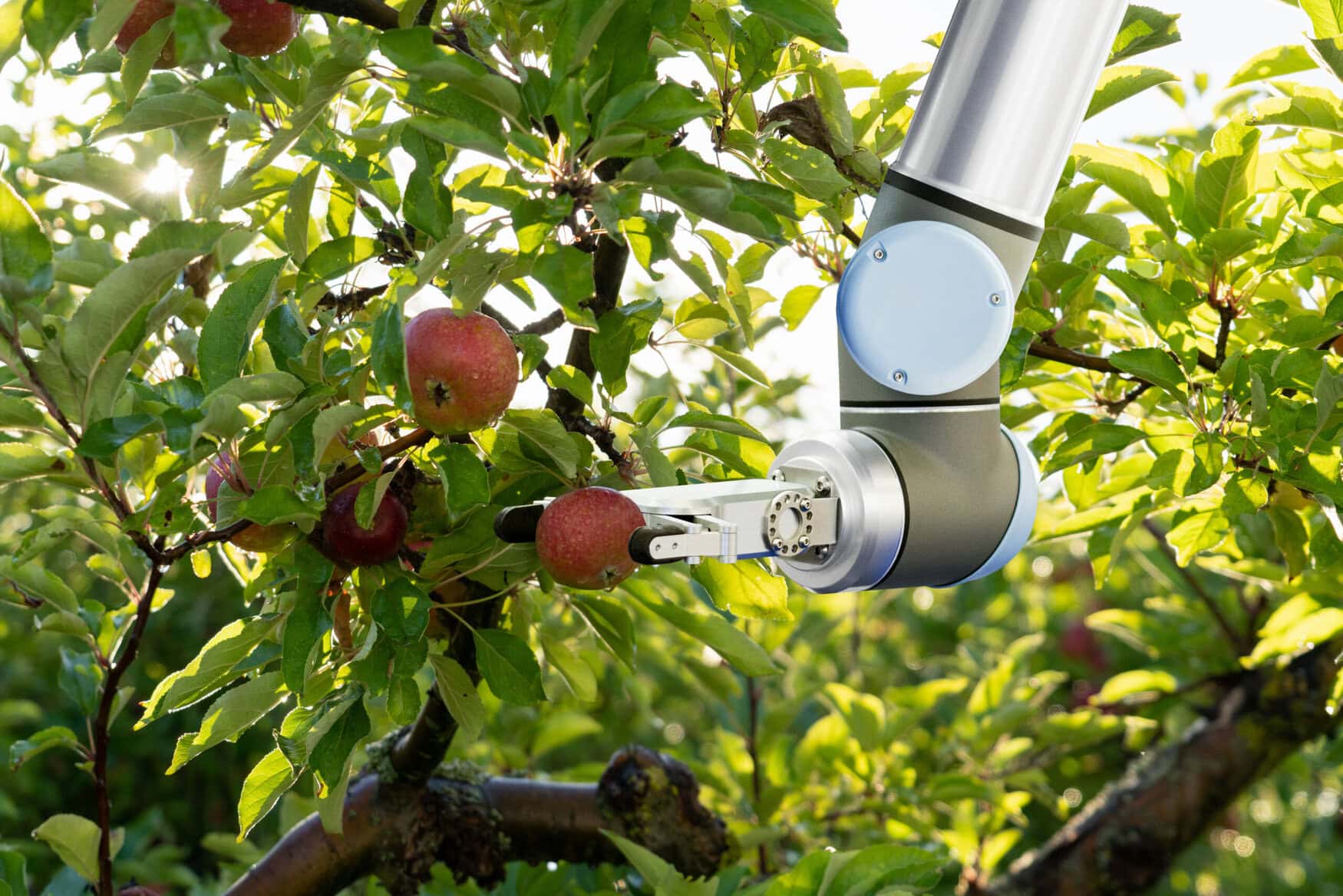
But Mr. Gerlach sees some prospects as well: “I do expect that automated harvesters for apples that are commercially viable will eventually be developed – particularly if labor rates continue to increase as they have over the last decade or more. These will be prohibitively expensive for most growers at first and will only be used by the larger commercial growers that have the scale to make it worthwhile until the costs come down to make those machines accessible to smaller operations.”
Cropler’s CEO Nik Bedunkevich summarizes, “Over the past few decades, industrial gardening has undergone a technological renaissance, transforming the way crops get harvested at scale. Traditional methods often involve extreme, labor-intensive, and mechanical procedures, whereas modern solutions take advantage of state-of-the-art technologies to keep pace with an ever-expanding global market for fresh produce.”
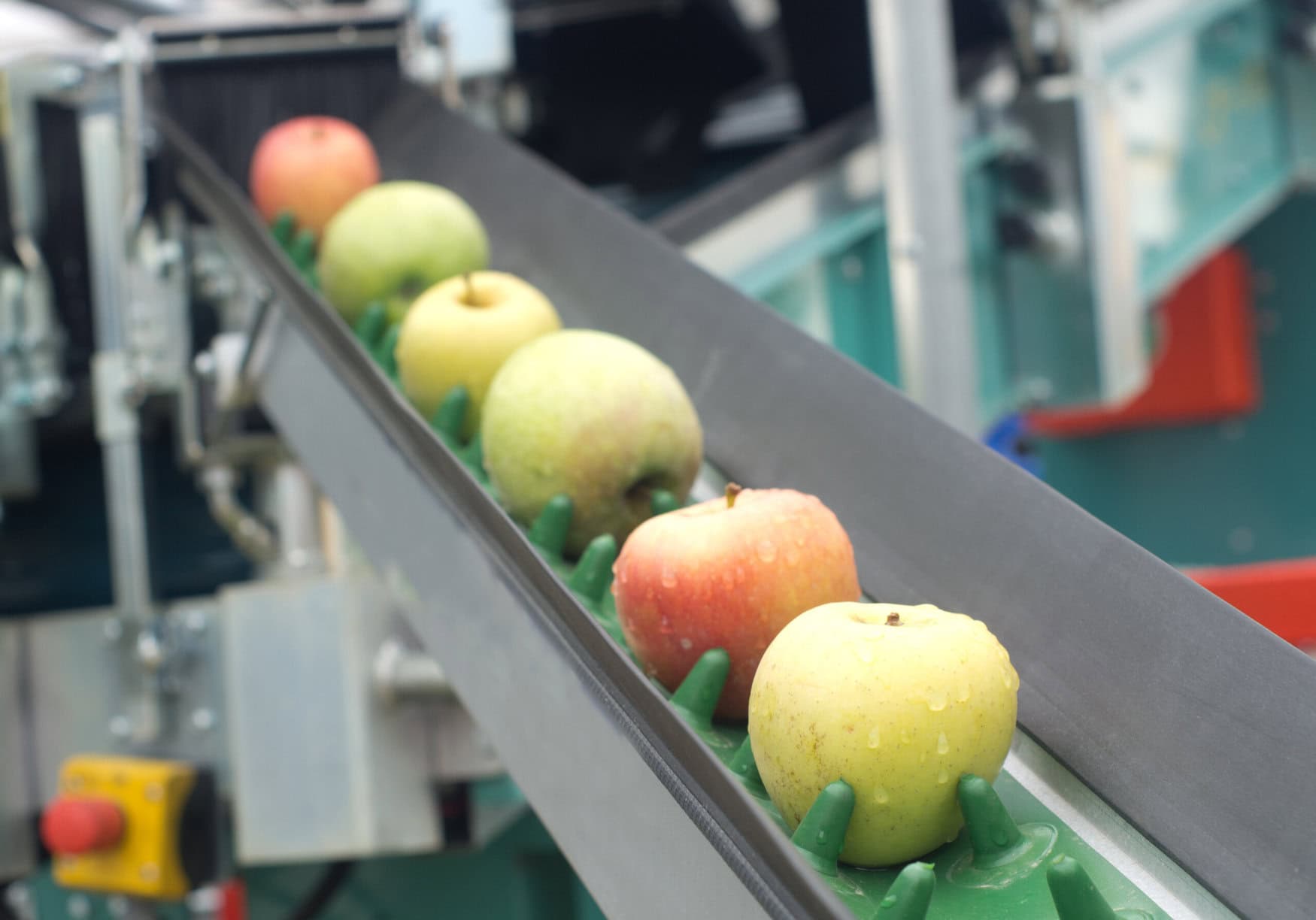
He thinks that to solve chronic labor shortages — particularly during peak harvest times — most industrial-scale harvesting is now done using mechanical yield-harvesting machines. In orchards, machines shake fruit trees to release harvests, which are collected with nets or conveyor belts. However, these methods can bruise or waste the yields, and that is why they require careful human calibration.
Another hurdle is the inconsistent ripening of even a single tree — an issue conventional methods fight to tackle. Recent advances provide answers, like vision-guided robotic arms that spot and pluck ripe fruit within a bud. Autonomous drones, such as those developed by Tevel Aerobotics, also promise to transform harvesting. Those drones can autonomously identify, pick, and transport ripe fruit. Barriers to entry, including high start-up costs, integration challenges, and skepticism from growers set in their ways with conventional techniques, remain substantial. If drones are ever to succeed, they need to be shown that they can be effective — and scalable — across different types of orchards and climatic regions.
Nik adds, “Beyond drones, new technologies are also reconfiguring industrial gardening. Automation platforms that integrate data analytics with mechanized picking systems are emerging. One such enabler of more informed decision-making is sensor-based products and AI-powered solutions, like Cropler. For example, Cropler’s platform helps agronomists receive plant photo data in real-time 24/7, satellite imagery for advanced smart field scouting — enabling users to track crop health, observe critical plant growth cycles, and benchmark various fields to maximize yields.”
In conclusion, the future of industrial gardening may lie in the integration of robotics, AI, and real-time data analytics, which together would enhance efficiency, reduce waste, and increase productivity to meet the growing global demand for food. Current barriers to the penetration of hi-tech growing and harvesting methods are the high price, lower quality of work compared to manual labor, and, of course, skepticism from conservative farmers.

Enjoyed this story?
Every Monday, our subscribers get their hands on a digest of the most trending agriculture news. You can join them too!




Discussion0 comments