Skip to content
  • Professionals
  • Gardeners
 
Search
Log in
EN
RU
  • Markets
  • Business
  • Politics
  • Technologies
  • Interviews
  • Rankings
  • Environment
  • Events
  • Stock Quotes
  • Business Directory
Trending topic:
Featured company:
 
RU
  • Professionals
  • Gardeners
Sections
    Events
    Stock Quotes
    Business Directory
    Trending topic:
    Featured company:
    Follow us...
    Helpful information
    • About
    • Team
    • Advertise
    • Contacts
    • Submit a Tip
    • Privacy Policy
    • Terms of Service
    Sections
      Seasonal tips
      • Spring
      • Summer
      • Autumn
      • Winter
      Trending topics
      • compost
        23
      • garlic
        2
      • lemon
        1
      • potato
        12
      Follow us...
      Helpful information
      • About
      • Team
      • Advertise
      • Contacts
      • Submit a Tip
      • Privacy Policy
      • Terms of Service
      Copyright © 2014-2026 DigitalTree LLC. All rights reserved.
      We deliver content lightning-fast thanks to the managed cloud WordPress hosting with CDN.
      16+

      Home / Environment

      Farmers in Argentina battle drought and a shrinking harvest

      Kim Clarksen avatar Kim Clarksen
      February 10, 2025, 10:00 am
      February 10, 2025, 10:00 am
      [esi post-views ttl=0]
      Environment
      Markets
      Farmers in Argentina battle drought and a shrinking harvest
      Save for later
      Share

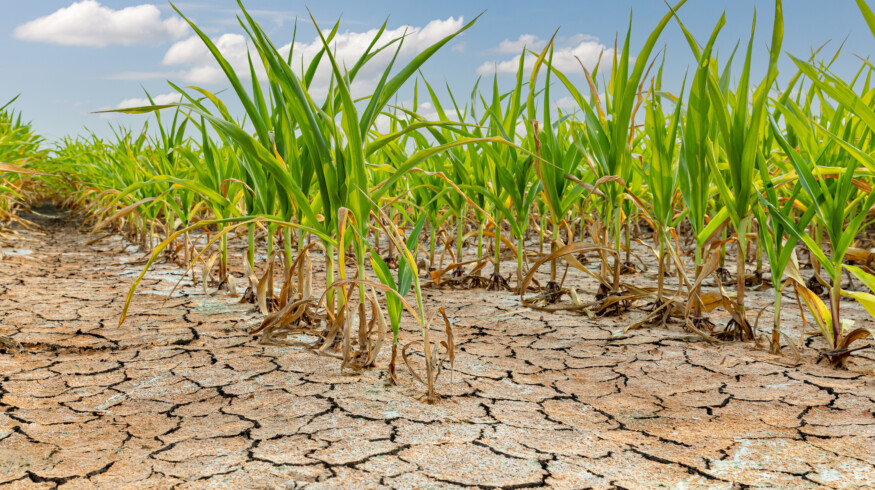
      In Veinticinco de Mayo, Argentina, amidst his parched fields of corn, farmer Dario Sabini surveys the undersized cobs and crinkles the withered, yellowing leaves—signs of a crop irrevocably lost to drought. Sabini’s predicament is emblematic of a broader agricultural crisis in Argentina, as a persistent dry spell prompts a downward revision of grain forecasts in one of the world’s leading exporters of soy oil, meal, and corn.

      “The plant is already yellow, it will not come back,” remarks Sabini, who manages over 3,000 hectares of soybeans, corn, and beef cattle about 200 kilometers west of Buenos Aires. The recent drought has significantly impacted thousands of farmers across the region, compounded by the climatic effects of La Niña since January.

      According to the Buenos Aires grains exchange, the 2024/25 harvest projections for soybeans have been reduced to 49.6 million tons and corn to 49 million tons, with the possibility of further decline. “It has to rain soon,” says Juan Gardey, another local farmer, amid his withering soy crops. “You see a lot of aborted flowers and you can see that their development has stopped.”

      The implications of these reduced harvests extend beyond the farms, threatening Argentina’s economy which heavily relies on grain exports for foreign currency. This currency is vital for supporting the local peso and bolstering state finances.

      ADVERTISEMENT

      Agro-climatologist Eduardo Sierra, advisor to the grains exchange, suggests that the soy and corn harvests could plummet well below current estimates without timely rainfall. “If it started to rain now, you could have 45 million tons of each crop. Every week in February that goes by without rain, you lose 5 million tons more,” he explains.

      This year’s grain output is anticipated to fall short of last year’s totals, which stood at 50.2 million tons of soy and 49.5 million tons of corn. The forecasted rains over the coming weeks are uncertain in both timing and distribution, potentially leaving some agricultural areas dry.

      Amid these challenges, Argentina’s government, led by libertarian President Javier Milei, has temporarily reduced taxes on agricultural exports to encourage quicker sales that generate essential foreign currency. Despite this, the actual benefits perceived by farmers like José Cozzi from the Lobos region are minimal due to stagnant international prices and high local costs.

      “The outlook is pretty uncertain, yields are going to be low for both corn and soybeans. Basically, everything is complicated,” Cozzi told Reuters.

      The tax cuts have led to a slight increase in local soybean prices, but the impact on farmers’ revenue and the overall export volume remains constrained, suggesting that the fiscal policy may not achieve its intended relief for the agricultural sector.

      As Argentina grapples with these multifaceted challenges, the outcomes will resonate through its economy, affecting both domestic stability and international market dynamics.

      Source: Reuters

      Argentina
      corn
      crop yield
      drought
      El Nino
      harvest
      soybean
      yield

      Enjoyed this story?

      Every Monday, our subscribers get their hands on a digest of the most trending agriculture news. You can join them too!

      Sign me up
      Check the example

      Discussion0 comments

      Спасибо за комментарий, он будет опубликован на сайте после проверки модератором. Хотите, чтобы ваши комментарии появлялись на сайте мгновенно? Достаточно пройти регистрацию.
      Congratulations, you can be the first to start the conversation.
      Do you have a question or suggestion? Please leave your comment to ignite conversation.
      What’s on your mind?
      Cancel Log in and comment
      Or continue without registration
      Get notified about new comments by email.
      Advertisement
      In focus
      How to get here?
      Stock quotes
      Bayer
      13.15
      0.15
      Bayer Crop Science
      44.56
      1.24
      CF Industries
      93.23
      0.85
      Corteva Agriscience
      72.8
      1.41
      ICL Group
      5.35
      2.19
      Intrepid Potash
      32.84
      2.41
      Mosaic
      27.5
      1.93
      Nutrien
      68.89
      3.15
      Yara International
      22.93
      1.08
      See all
      Most read
      China cancels export tax rebates for pesticides including glufosinate
      China cancels export tax rebates for pesticides including glufosinate
      ADAMA and BASF agree to develop new fungicide for European crops
      ADAMA and BASF agree to develop new fungicide for European crops
      Phospholutions advances RhizoSorb approvals and expands leadership team
      Phospholutions advances RhizoSorb approvals and expands leadership team
      European fertilizer market stalled after European Commission signaled it could be changing CBAM rules
      European fertilizer market stalled after European Commission signaled it could be changing CBAM rules
      China’s ECEC to build $2 billion phosphate fertilizer complex in Iraq
      China’s ECEC to build $2 billion phosphate fertilizer complex in Iraq
      Events
      International Crop-Science Conference & Expo
      Dubai, UAE
      Jan 19 — 20, 2026
      Fertilizer Latino Americano
      Miami (FL), USA
      Jan 26 — 28, 2026
      Argus Fertilizer Africa
      Dar es Salaam, Tanzania
      Feb 10 — 11, 2026
      CRU Nitrogen + Syngas
      Barcelona, Spain
      Feb 10 — 12, 2026
      TFI Annual Business Conference
      Orlando (FL), USA
      Feb 16 — 18, 2026
      See all
      Live
      Isabelita Barreiro
      December 11, 2025, 01:54 am
      Excellent management of water resources and effective use of water-soluble fertilizers!
      Argentine nano-fertilizer firm AKO Agro expands to Brazil
      Meripa Corson
      August 4, 2025, 01:18 pm
      Where does the money actually go? As a timber land owner, how do I benefit from the legislation?
      USDA commits $80 million to expand timber markets and improve forest resilience
      Patonkas Luksompulus
      January 21, 2025, 12:36 pm
      Greece meeds biological fertilizers! Great news about De sangosse.
      DE SANGOSSE expands operations with Greek subsidiary
      Pedro Diaz
      November 20, 2024, 08:42 pm
      Is it a Roundup lawsuit or more about bad financials? I think the market reacted only to announced financial results.
      Bayer’s shares are pressed down by ongoing Roundup cancer lawsuit
      Johan Fredin
      August 22, 2024, 07:57 pm
      Europe is falling behind in this field. The concerns 30 years ago was reasonable. Now not so much. We need crops that can survive in a more extreme future climate. Handle droughts and hot weather better. Crops that are less tasty to pests like hogs and deere.
      Gene-edited crops set for groundbreaking European trials
      About
      Sections
      Markets  ·  Business  ·  Politics  ·  Technologies  ·  Interviews  ·  Rankings  ·  Environment
      Support
      About  ·  Team  ·  Advertise  ·  Contacts  ·  Submit a Tip  ·  Privacy Policy  ·  Terms of Service
      Copyright © 2014-2026 DigitalTree LLC. All rights reserved.
      We deliver content lightning-fast thanks to the managed cloud WordPress hosting with CDN.
      16+
      More to read
      US soy industry cuts carbon footprint by 19% from 2015 to 2021 – study
      US soy industry cuts carbon footprint by 19% from 2015 to 2021 – study
      How to grow and care for corn for plentiful harvest
      How to grow and care for corn for plentiful harvest
      Brazilian drought slows fertilizer purchases, affecting global suppliers
      Brazilian drought slows fertilizer purchases, affecting global suppliers
      Advertising that helps us do quality reporting