Skip to content
  • Professionals
  • Gardeners
 
Search
Log in
EN
RU
  • Trade & Policy
  • Markets
  • AgTech & Research
  • Corporate
  • Sustainability
  • Interviews
  • Rankings
  • Events
  • Stock Quotes
  • Business Directory
Trending topic:

Strait of Hormuz

Featured company:
 
RU
  • Professionals
  • Gardeners
Sections
    Events
    Stock Quotes
    Business Directory
    Trending topic:

    Strait of Hormuz

    Featured company:
    Follow us...
    Helpful information
    • About
    • Team
    • Advertise
    • Contacts
    • Submit a Tip
    • Privacy Policy
    • Terms of Service
    • Site Map
    Sections
      Seasonal tips
      • Spring
      • Summer
      • Autumn
      • Winter
      Trending topics
      • compost
        25
      • garlic
        2
      • lemon
        1
      • potato
        15
      Follow us...
      Helpful information
      • About
      • Team
      • Advertise
      • Contacts
      • Submit a Tip
      • Privacy Policy
      • Terms of Service
      • Site Map
      Copyright © 2014-2026 DigitalTree LLC. All rights reserved.
      We deliver content lightning-fast thanks to the managed cloud WordPress hosting with CDN.
      16+

      Home / Markets

      Illinois farmer turns flooded bottomlands into state’s first rice farm

      Editors avatar Editors
      September 8, 2025, 12:00 pm
      September 8, 2025, 12:00 pm
      [esi post-views ttl=0]
      Markets
      AgTech & Research
      Sustainability
      Illinois farmer turns flooded bottomlands into state’s first rice farm
      Save for later
      Share
      Never miss important fertilizer news

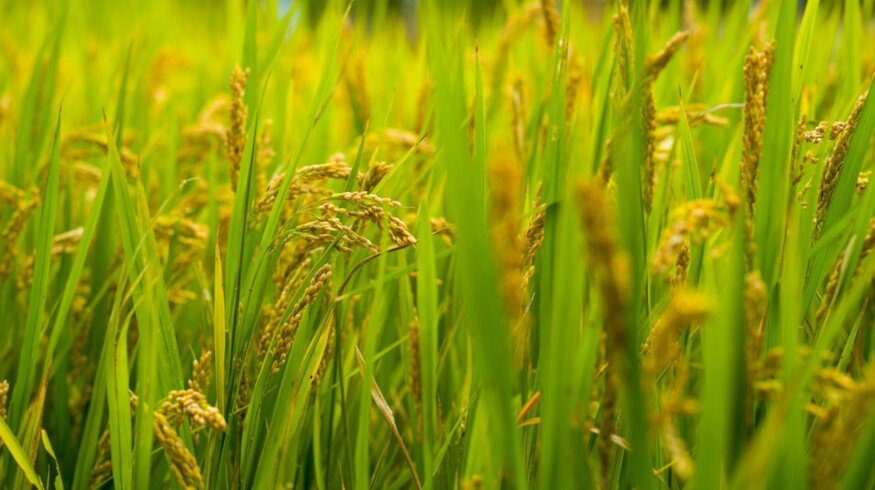
      In southern Illinois, where corn and soybeans dominate the landscape, farmer Blake Gerard has turned the flood-prone bottomlands of Alexander County into the state’s only commercial rice farm. His operation, now covering about 2,500 acres, is an unusual response to climate change in a region where federal farm policy, infrastructure, and tradition overwhelmingly favor corn and soy production.

      Gerard, 55, grew up farming the family’s land near the confluence of the Ohio and Mississippi rivers. By the early 1990s, increasingly frequent floods were making corn and soybean production more precarious. “I could grow something that would grow in water,” Gerard recalled. “Or quit.” Inspired by rice farmers in Arkansas and Missouri, he began experimenting in 1999 with 40 acres. Today, his farm produces rice in fields managed by levees, pumps and cascading water systems.

      His decision has been costly. Grading land for water management alone ran about $1,000 per acre, requiring millions of dollars in investment. Equipment such as turbines, pipes and fuel tanks added to the expense. “Rice farming is way more work. Double, triple the work that corn and beans are,” Gerard said. But after 25 years, his operation is now stable, and 2024 was his most successful season yet.

      Climate data underscores why Gerard’s bet may prove prescient. The latest National Climate Assessment shows Midwest annual precipitation has risen by up to 15% since the 1990s, while extreme rainfall days have increased by 45% over 50 years, intensifying flooding and erosion risks. Rice, which thrives in waterlogged soil, has gradually extended north from the southern U.S., with Gerard’s farm representing a new frontier.

      ADVERTISEMENT

      Yet Gerard’s path illustrates the structural barriers to diversification. U.S. farm subsidies and insurance are designed for corn and soybeans, while infrastructure from grain elevators to export networks serves those crops. Even cultural factors — what farmers’ parents grew, what local experts know best — reinforce existing systems. “Everything’s stacked against it,” said Jonathan Coppess, a University of Illinois farm policy expert.

      Federal policy offers little to address climate-driven crop shifts. The 1996 “Freedom to Farm Act” gave producers flexibility in crop choice, but later farm bills and insurance programs entrenched support for corn and soybeans. Recent funding for climate-smart initiatives, including a grant Gerard briefly secured, has been inconsistent, with programs suspended and renamed amid political shifts.

      Gerard’s success shows that alternatives are possible, but also how improbable large-scale change is without stronger policy support. Researchers warn that reliance on a narrow corn-soy rotation contributes to soil degradation and erosion, exemplified by a dust storm that reached Chicago in May 2025 — the city’s first such warning since the 1930s.

      “Climate change is coming anyway, so we have to be positive and respond to it appropriately,” said Herry Utomo, a Louisiana State University researcher who developed the rice strain Gerard grows. But Coppess, the former USDA official, noted that current farm policy is “at best neutral and at worst counterproductive” for climate adaptation.

      For Gerard, the risk has paid off. His rice now grows in fields where floods once ruined corn. He no longer fears the Mississippi washing away his crop. “People said you can’t grow rice here,” he said. “That was a quarter-century ago.”

      Source: Pro Publica

      climate change
      corn belt
      flooding
      Illinois
      rice
      U.S.

      Enjoyed this story?

      Every Monday, our subscribers get their hands on a digest of the most trending agriculture news. You can join them too!

      Sign me up
      Check the example

      Discussion0 comments

      Спасибо за комментарий, он будет опубликован на сайте после проверки модератором. Хотите, чтобы ваши комментарии появлялись на сайте мгновенно? Достаточно пройти регистрацию.
      Congratulations, you can be the first to start the conversation.
      Do you have a question or suggestion? Please leave your comment to ignite conversation.
      What’s on your mind?
      Cancel Log in and comment
      Or continue without registration
      Get notified about new comments by email.
      Advertisement
      In focus
      How to get here?
      Stock quotes
      Bayer
      10.44
      0.38
      Bayer Crop Science
      36.31
      0.33
      CF Industries
      106.9
      2.36
      Corteva Agriscience
      75.71
      0.56
      ICL Group
      5.75
      0.35
      Intrepid Potash
      35.86
      0.8
      Mosaic
      22.52
      0.75
      Nutrien
      66.13
      2.2
      Yara International
      24.71
      2.79
      See all
      Most read
      IPL finalizes 1.346mt DAP purchase from 14 global suppliers at $930–935/t CFR
      IPL finalizes 1.346mt DAP purchase from 14 global suppliers at $930–935/t CFR
      Holganix bets on soil biology and carbon markets to reshape regenerative agriculture
      Holganix bets on soil biology and carbon markets to reshape regenerative agriculture
      China reopens urea exports with $660/t price floor
      China reopens urea exports with $660/t price floor
      OCP warns Hormuz disruption has evolved into global fertilizer supply shock
      OCP warns Hormuz disruption has evolved into global fertilizer supply shock
      Sulphuric acid tops $500 per tonne as Hormuz closure tightens phosphate fertilizer production inputs globally
      Sulphuric acid tops $500 per tonne as Hormuz closure tightens phosphate fertilizer production inputs globally
      Events
      Agriculture & Organic Farming Summit
      Paris, France
      Jun 17 — 18, 2026
      International Crop-Science Conference & Expo
      New Delhi, India
      Jun 25 — 26, 2026
      IFA Annual Conference
      Monaco
      Jun 29 — Jul 1, 2026
      Agrovolga
      Kazan, Russia
      Jul 8 — 10, 2026
      Southwestern Fertilizer Conference
      New Orleans (LA), USA
      Jul 12 — 16, 2026
      See all
      Live
      Stefan Petko
      May 6, 06:48 pm
      It is alarming to see these developments in California. As a vineyard grower, I have faced significant challenges this year, with fertilizer costs rising sharply while market conditions have made it difficult to sell the harvest.
      California peach growers forced to remove 420,000 trees after bankruptcy of Del Monte Foods canneries
      Estebel
      April 23, 10:26 pm
      Sounds like magic ))
      MIT study: rice seeds germinate faster when exposed to rainfall sounds
      Isabelita Barreiro
      December 11, 2025, 01:54 am
      Excellent management of water resources and effective use of water-soluble fertilizers!
      Argentine nano-fertilizer firm AKO Agro expands to Brazil
      Meripa Corson
      August 4, 2025, 01:18 pm
      Where does the money actually go? As a timber land owner, how do I benefit from the legislation?
      USDA commits $80 million to expand timber markets and improve forest resilience
      Patonkas Luksompulus
      January 21, 2025, 12:36 pm
      Greece meeds biological fertilizers! Great news about De sangosse.
      DE SANGOSSE expands operations with Greek subsidiary
      About
      Sections
      Trade & Policy  ·  Markets  ·  AgTech & Research  ·  Corporate  ·  Sustainability  ·  Interviews  ·  Rankings
      Support
      About  ·  Team  ·  Advertise  ·  Contacts  ·  Submit a Tip  ·  Privacy Policy  ·  Terms of Service  ·  Site Map
      Copyright © 2014-2026 DigitalTree LLC. All rights reserved.
      We deliver content lightning-fast thanks to the managed cloud WordPress hosting with CDN.
      16+
      More to read
      Rice water: a natural booster for plant growth
      Rice water: a natural booster for plant growth
      Indonesia faces record-high rice prices as El Niño intensifies
      Indonesia faces record-high rice prices as El Niño intensifies
      Ilagan Corn Complex Will Stimualte Corn Indutry Growth on Philippines
      Ilagan Corn Complex Will Stimualte Corn Indutry Growth on Philippines
      Advertising that helps us do quality reporting