

Genetic research, drone tech and biocontrol lead new developments in corn production


A series of recent scientific and technological developments could help shape the next generation of corn production. Researchers are reporting key advances in genetic control, biocontrol agents, fertilizer formulation, and drone-based stress management tools.
A study led by Andrea Eveland at the Donald Danforth Plant Science Center, published in Nature Communications, has identified regulatory genetic mechanisms influencing pleiotropy in corn, where one gene affects multiple traits. This discovery could allow breeders to manipulate traits such as leaf angle and tassel branching without compromising yield potential. Previously, the interconnected nature of these traits posed challenges for crop improvement.
The research, carried out with contributions from the University of Illinois, University of California, Berkeley, and North Carolina State University, involved developmental geneticists, computational biologists, and statisticians. Eveland’s findings align with longstanding breeder visions, such as those from retired corn breeder Dave Nanda, who 25 years ago predicted a corn plant with narrower leaves and smaller tassels to maximize efficiency and yield.
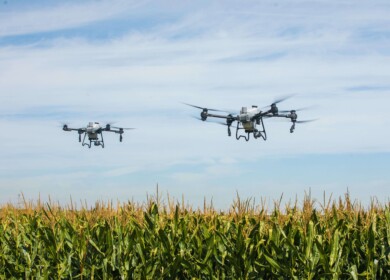
In parallel, Sweetwater Technologies has introduced a new drone-compatible product, Dronezone Recharged. The U.S. Environmental Protection Agency has registered it as a plant growth regulator. According to the company, two drone-applied treatments can provide up to 60 days of resistance to abiotic stress, double the current industry standard. The product activates the plant’s natural defense mechanisms to enhance stress tolerance.
Regarding nutrient management, researchers are raising concerns about the environmental impact of polymer-coated, controlled-release fertilizers (PC-CRFs). While these fertilizers improve nutrient availability and reduce runoff, Maryam Salehi of the University of Missouri warns they may contribute to microplastic pollution. Her team, writing in the Journal of Hazardous Materials, is studying the breakdown of these coatings and urges the use of biodegradable alternatives and effective stormwater management practices.
Additionally, a novel biocontrol product from Pro Farm Group, RinoTec, is entering field trials and is expected to be commercially available in 2026, pending state approvals. Recently registered by the U.S. EPA, RinoTec targets nematodes, wireworms, and corn rootworms. According to product manager JR Abele, it acts as a stomach poison and is designed for both planting-time and foliar application. Early lab tests show potential effectiveness against Bt-resistant pests, offering a non-synthetic alternative for integrated pest management programs.

Enjoyed this story?
Every Monday, our subscribers get their hands on a digest of the most trending agriculture news. You can join them too!






Discussion0 comments