Skip to content
  • Professionals
  • Gardeners
 
Search
Log in
EN
RU
  • Markets
  • Business
  • Politics
  • Technologies
  • Interviews
  • Rankings
  • Environment
  • Events
  • Stock Quotes
  • Business Directory
Trending topic:
Featured company:
 
RU
  • Professionals
  • Gardeners
Sections
    Events
    Stock Quotes
    Business Directory
    Trending topic:
    Featured company:
    Follow us...
    Helpful information
    • About
    • Team
    • Advertise
    • Contacts
    • Submit a Tip
    • Privacy Policy
    • Terms of Service
    Sections
      Seasonal tips
      • Spring
      • Summer
      • Autumn
      • Winter
      Trending topics
      • compost
        23
      • garlic
        2
      • lemon
        1
      • potato
        12
      Follow us...
      Helpful information
      • About
      • Team
      • Advertise
      • Contacts
      • Submit a Tip
      • Privacy Policy
      • Terms of Service
      Copyright © 2014-2026 DigitalTree LLC. All rights reserved.
      We deliver content lightning-fast thanks to the managed cloud WordPress hosting with CDN.
      16+

      Home / Markets

      Grafting and polyhouses improve tomato yields for Indian smallholders

      Elena Shalashnik avatar Elena Shalashnik
      May 6, 2025, 2:00 pm
      May 6, 2025, 2:00 pm
      [esi post-views ttl=0]
      Markets
      Technologies
      Grafting and polyhouses improve tomato yields for Indian smallholders
      #image_title
      Save for later
      Share

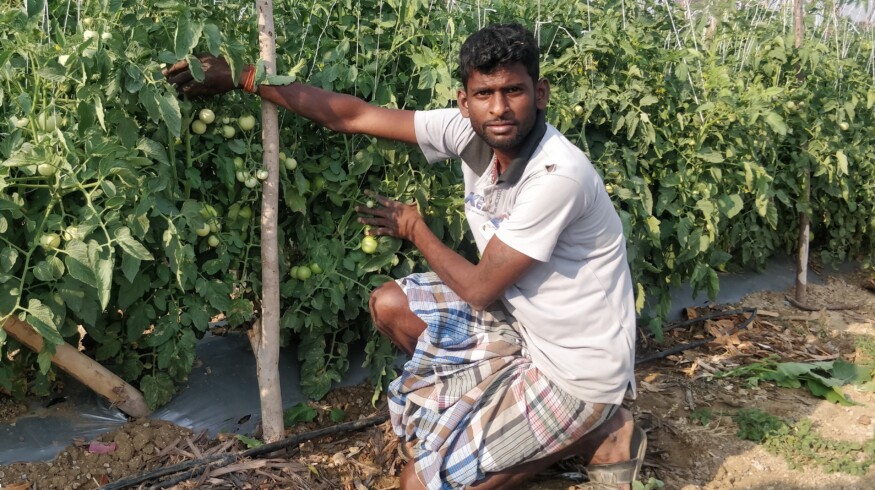
      A study led by the International Crops Research Institute for the Semi-Arid Tropics (ICRISAT) has found that combining vegetable grafting with protected cultivation can significantly improve yields and profitability for smallholder farmers in India.

      Published in Frontiers in Agronomy, the research examined tomato farming using naturally ventilated polyhouses, a low-cost greenhouse alternative. When grafted tomato seedlings were planted under polyhouse conditions, yields increased by nearly 64% compared to non-grafted tomatoes grown in open fields. The study attributed the higher output to extended harvest periods, improved plant vigor, and greater resilience to heat and soilborne diseases.

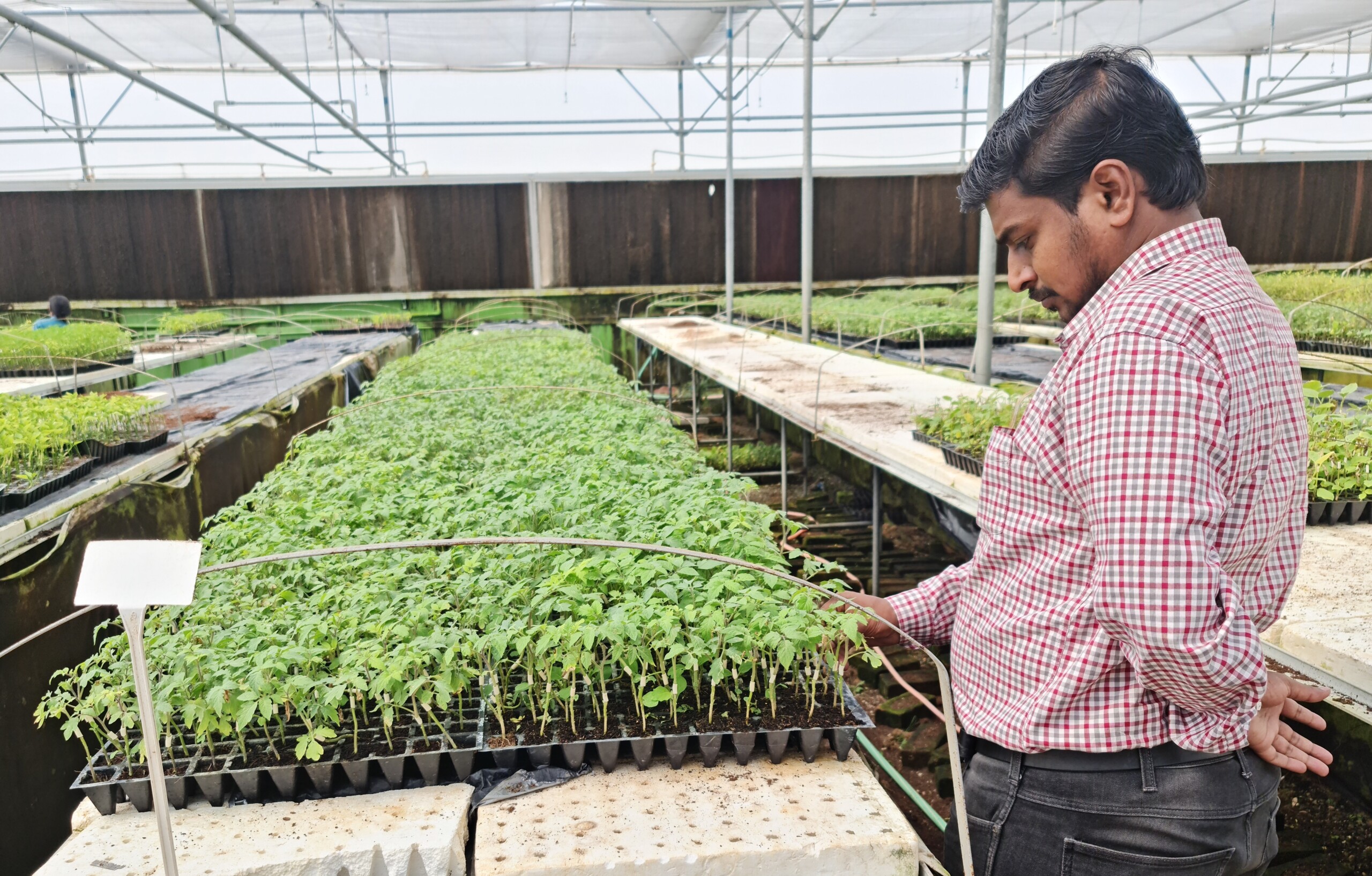
      Vegetable grafting involves attaching a high-yielding scion to a disease-resistant rootstock. In this case, the rootstock used was Solanum torvum, which is known for its tolerance to abiotic stress and soil pathogens. The approach is already common in East Asia but remains underused in most Indian smallholder systems.

      The economic returns also favored the combined method. Grafted plants grown in polyhouses delivered the highest net income and benefit-cost ratios among the treatments tested. Researchers cited improved photosynthetic performance, larger leaf area, and more consistent fruit development as factors contributing to higher output and returns.
      ADVERTISEMENT

      The trial is part of a broader program between ICRISAT and the Andhra Pradesh state government, aimed at increasing smallholder incomes through horticulture. According to the study, productivity gains ranged from 30% to 150% across different locations and crop cycles.

      Scaling hurdles remain despite promising results

      While agronomic benefits are clear, broader adoption faces cost and logistics constraints. Building a naturally ventilated polyhouse with drip irrigation over one acre costs roughly Rs. 18 lakhs ($21,600). Establishing a grafted seedling production unit adds another Rs. 3.5 lakhs ($4,200). Grafted seedlings themselves cost between Rs. 1.5 to Rs. 2.5 ($0.018 and $0.030 respectively) apiece, depending on production scale and technology used.

      These costs present a barrier for smallholders, even with subsidies covering up to 50% of infrastructure expenses under India’s national horticulture program. In addition, the labor-intensive nature of grafting and a shortage of skilled workers further slow scale-up efforts.

      Despite these challenges, some private nurseries have begun producing grafted seedlings commercially. In one example from Karnataka, a nursery trained under a government-supported program scaled up to produce 50,000 grafted seedlings monthly. But such examples remain limited.

      Researchers argue that success on a wider scale will depend on stronger public-private partnerships, targeted financial incentives, and farmer training programs. Standardized protocols and expanded extension services are also seen as key to reducing entry barriers and ensuring consistent plant quality.

      While the study focused on tomatoes, researchers say the grafting method is applicable to other vegetables, including eggplant, cucumbers, and melons. As climate change increases production risks, the technique offers a non-GMO, science-based method for improving both resilience and returns in vegetable farming.
      drip irrigation
      grafting
      greenhouse
      ICRISAT
      India
      protected cultivation
      smallholder farm
      ventilated polyhouse

      Enjoyed this story?

      Every Monday, our subscribers get their hands on a digest of the most trending agriculture news. You can join them too!


      Sign me up
      Check the example

      Discussion0 comments

      Спасибо за комментарий, он будет опубликован на сайте после проверки модератором. Хотите, чтобы ваши комментарии появлялись на сайте мгновенно? Достаточно пройти регистрацию.
      Congratulations, you can be the first to start the conversation.
      Do you have a question or suggestion? Please leave your comment to ignite conversation.
      What’s on your mind?
      Cancel Log in and comment
      Or continue without registration
      Get notified about new comments by email.
      Advertisement
      In focus
      How to get here?
      Stock quotes
      Bayer
      11.52
      4.82
      Bayer Crop Science
      40.09
      3.77
      CF Industries
      122.33
      5.59
      Corteva Agriscience
      79.04
      0.21
      ICL Group
      5.33
      0.74
      Intrepid Potash
      41.61
      8.06
      Mosaic
      27.67
      5.6
      Nutrien
      77.79
      6.11
      Yara International
      28.47
      1.83
      See all
      Most read
      Agromin composts 1.25 million tons of organic waste in 2025
      Agromin composts 1.25 million tons of organic waste in 2025
      U.S. Justice Department opens antitrust probe into fertilizer producers amid price concerns
      U.S. Justice Department opens antitrust probe into fertilizer producers amid price concerns
      Middle East conflict threatens fertilizer supply ahead of U.S. planting season
      Middle East conflict threatens fertilizer supply ahead of U.S. planting season
      DeKalb may launch 30 new corn hybrids for 2026 season
      DeKalb may launch 30 new corn hybrids for 2026 season
      FMC secures first dual-mode herbicide classification for rimisoxafen
      FMC secures first dual-mode herbicide classification for rimisoxafen
      Events
      World Agri-Tech Innovation Summit
      San Francisco (CA), USA
      Mar 17 — 18, 2026
      FSHOW
      Shanghai, China
      Mar 17 — 19, 2026
      Argus Fertilizer Asia
      Bali, Indonesia
      Mar 31 — Apr 2, 2026
      CRU Phosphates
      Paris, France
      Apr 13 — 15, 2026
      CFEX
      Antalya, Turkey
      Apr 15 — 17, 2026
      See all
      Live
      Isabelita Barreiro
      December 11, 2025, 01:54 am
      Excellent management of water resources and effective use of water-soluble fertilizers!
      Argentine nano-fertilizer firm AKO Agro expands to Brazil
      Meripa Corson
      August 4, 2025, 01:18 pm
      Where does the money actually go? As a timber land owner, how do I benefit from the legislation?
      USDA commits $80 million to expand timber markets and improve forest resilience
      Patonkas Luksompulus
      January 21, 2025, 12:36 pm
      Greece meeds biological fertilizers! Great news about De sangosse.
      DE SANGOSSE expands operations with Greek subsidiary
      Pedro Diaz
      November 20, 2024, 08:42 pm
      Is it a Roundup lawsuit or more about bad financials? I think the market reacted only to announced financial results.
      Bayer’s shares are pressed down by ongoing Roundup cancer lawsuit
      Johan Fredin
      August 22, 2024, 07:57 pm
      Europe is falling behind in this field. The concerns 30 years ago was reasonable. Now not so much. We need crops that can survive in a more extreme future climate. Handle droughts and hot weather better. Crops that are less tasty to pests like hogs and deere.
      Gene-edited crops set for groundbreaking European trials
      About
      Sections
      Markets  ·  Business  ·  Politics  ·  Technologies  ·  Interviews  ·  Rankings  ·  Environment
      Support
      About  ·  Team  ·  Advertise  ·  Contacts  ·  Submit a Tip  ·  Privacy Policy  ·  Terms of Service
      Copyright © 2014-2026 DigitalTree LLC. All rights reserved.
      We deliver content lightning-fast thanks to the managed cloud WordPress hosting with CDN.
      16+
      More to read
      BASF’s Nunhems to buy India’s Noble Seeds
      BASF’s Nunhems to buy India’s Noble Seeds
      Ovoschevod opens new greenhouse complex
      Ovoschevod opens new greenhouse complex
      Bayer partners with Pula Foundation to insure 10 million smallholder farmers in South Asia and Africa
      Bayer partners with Pula Foundation to insure 10 million smallholder farmers in South Asia and Africa
      Advertising that helps us do quality reporting