

Friday’s Insider: Beyond crops — the other lives of mineral fertilizers

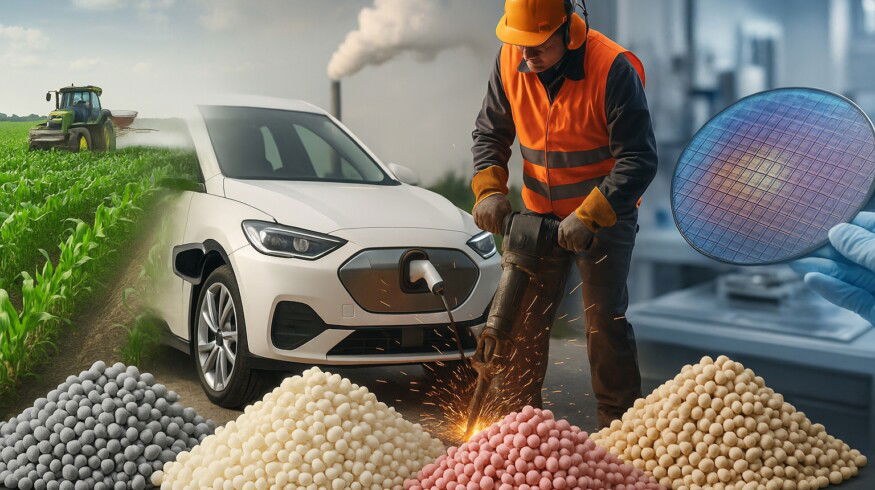
We tend to see fertilizers through one lens: crops. Corn, wheat, soybeans — the usual suspects. But peel back the agri-layer, and you’ll find nitrogen, phosphates, and potash quietly moonlighting across industries that have nothing to do with tractors and everything to do with explosives, EVs, and emissions.
Here’s a brief dive into how fertilizers are far more versatile than their bag labels suggest.
1. Nitrogen: Not just for farmers — also for fireballs and diesel vans
Let’s start with nitrogen. Urea and ammonium nitrate may have been designed to feed plants – but turns out, they’re just as good at blowing rocks apart (or worse, if misused).
Ammonium nitrate is a key ingredient in mining explosives. No mining, means no smartphones, no copper wire, no EVs. So yes, your Tesla starts with fertilizer.
Urea has carved itself a second career as AdBlue (DEF), the magic juice injected into diesel engines to make EU emissions inspectors slightly less angry.
And if that’s not enough, ammonia is now a hydrogen carrier in the green energy transition. From villain to net-zero saviour? The irony writes itself.
2. Phosphates: From soil to smartphones
Phosphates are not just about grain yields — they’re embedded in your iPhone, quite literally.
Lithium Iron Phosphate (LFP) batteries, the workhorse chemistry behind a growing share of EVs, rely on phosphate salts.
Feed-grade phosphates (DCP, MCP) are standard in animal nutrition—no phosphate, no chicken growth.
And let’s not forget the niche but vital uses: fire retardants, food additives, cleaning agents, and metal processing. TSP isn’t sexy, but it’s busy.
3. Potash: Quiet, unsexy, everywhere
Potash is like the CFO of fertilizers. Doesn’t shout, doesn’t sparkle — but without it, nothing works.
Potassium carbonate pops up in everything from glass to soap to pharmaceuticals. It helps make solar panels, softens water, and even finds its way into biodegradable plastic production. So yes, that shower gel and your climate-friendly windowpane may owe something to MOP.
4. Recycling, refining, and the grey zone between
The overlap between fertilizers and industrial inputs keeps growing: Phosphate rock is involved in rare earth extraction, battery recycling, and even uranium recovery.
Nitrogen compounds serve in chemical manufacturing, industrial coolants, and cleaning systems. Even SSP, long dismissed as old-school, finds fans in composting systems where sulphur-starved soils meet circular economy dreams.
Summary
The world of mineral fertilizers is much more layered than “plant nutrition.” These are industrial raw materials traded, transformed, and repurposed across global value chains.
Next time someone says “fertilizer market’s boring”, just smile and tell them their EV battery, their diesel van, and their Friday-night pizza dough all run on it.
Because truth is: nitrogen, phosphate, and potash aren’t just feeding the planet — they’re wiring it, fuelling it, and even cleaning up after it.
————
About the Author of “Friday’s Insider”: Ilya Motorygin is the co-founder of GG-Trading and brings 30 years of experience to the fertilizer industry. Renowned for his comprehensive problem-solving skills, Ilya expertly manages deals from inception to completion, overseeing aspects such as financing, supply chains, and logistics.

Enjoyed this story?
Every Monday, our subscribers get their hands on a digest of the most trending agriculture news. You can join them too!





Discussion0 comments