

Drones drive rapid growth in Mexican agriculture

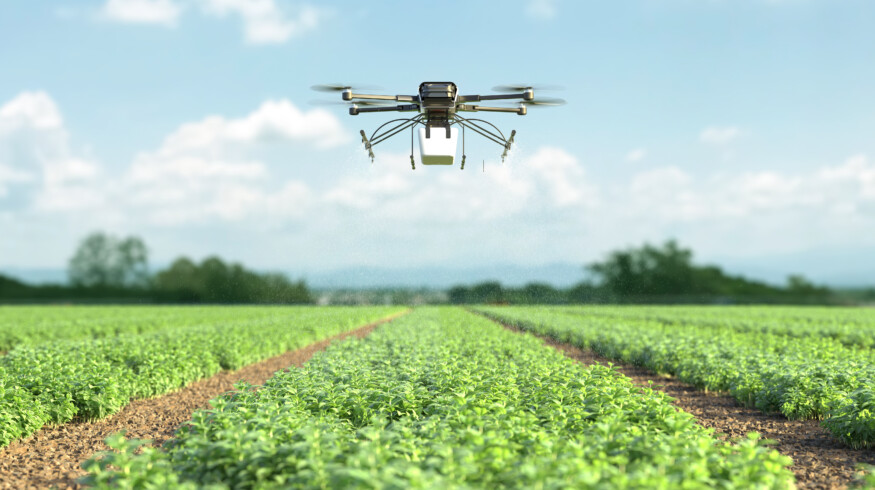
The use of drones in Mexican agriculture is expanding at an annual rate of 35%, driven by labor shortages, climate change, water scarcity, and the need to increase crop yields, according to specialists at the Autonomous University of Chapingo (UACh).
During the 2025 International Convention DJI-DTS Drones for Agriculture, held at UACh, nearly 100 companies from across Latin America and China gathered to discuss the technology’s impact. Experts highlighted that Mexico was the first country in the region to adopt drones in agriculture, followed by Argentina, Chile, and Colombia.
Gilberto de Jesús López, researcher at UACh, said the domestic market is projected to grow from $39 million to $650 million by 2035, with an annual expansion rate of nearly 36%. “This represents a business opportunity for manufacturers, service providers, data integrators, and financial actors,” López noted.
He explained that demographic shifts are a central driver, as Mexico’s rural workforce ages and fewer people are willing to work in fields with long hours and agrochemical exposure. A single drone operator can cover several hectares in minutes, applying products up to 10 times faster than conventional spraying methods while reducing human contact with chemicals.
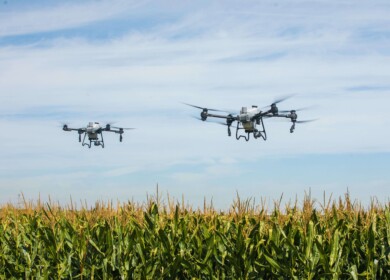
Advances in drone technology allow applications in remote or uneven terrain with precision and without soil compaction or crop damage. Features such as GPS guidance, automatic dosage control, and multispectral sensors enable real-time adjustments to droplet size, minimizing wind drift and cutting water and chemical use. Traditional spraying methods require 200 to 400 liters per hectare, while drones use only 10 to 15 liters.
Ángel Garduño, president of UACh, underlined the university’s partnership with DIMASUR in agricultural education and research. Their collaboration led to the creation of Latin America’s first official DJI Academy for agricultural drone pilots, providing training to students and faculty. Since 2022, around 3,000 operators have been trained in Mexico.
Applied studies presented at the event showed drones can quantify up to 78% of corn plants in difficult terrain and identify flowering stages in pineapple crops, enabling better yield forecasts and uniform harvest planning. According to López, drones are currently used in more than 300 crop types, including corn, potatoes, sugarcane, berries, agave, and orchards of avocado, citrus, mango, and banana.

Enjoyed this story?
Every Monday, our subscribers get their hands on a digest of the most trending agriculture news. You can join them too!




Discussion0 comments