

Orchard Robotics secures $22 million to scale AI-driven crop management

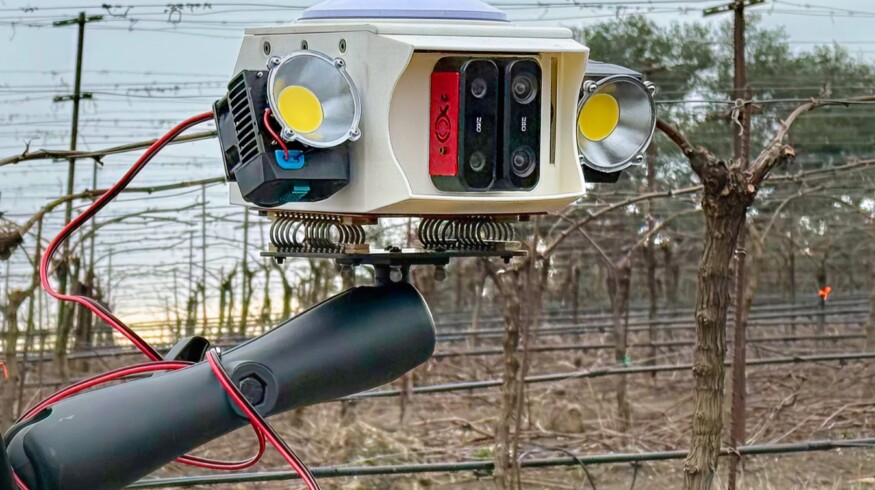
Orchard Robotics, a U.S. agritech startup founded by former Cornell student and Thiel fellow Charlie Wu, has raised $22 million in Series A funding to expand its computer vision technology for specialty crops. The round was led by Quiet Capital and Shine Capital, with participation from General Catalyst and Contrary.
The company develops AI-powered systems that use high-resolution cameras mounted on farm vehicles to collect images of fruits as operators drive through orchards or vineyards. The data, which tracks fruit size, color, and health, is analyzed by Orchard’s software platform to help growers make decisions about fertilization, pruning, thinning, labor, and harvest planning.
Wu, who was inspired by his grandparents’ apple farming in China, said the goal is to improve accuracy in farm management, as most large operations still rely on manual sampling of a small fraction of crops. “If you don’t know what you’re growing in the field, you don’t know how much chemical to apply to it. You don’t know how many workers to hire to harvest it. You don’t know what you can actually sell and market,” he said.
Orchard Robotics’ technology is already being used on major apple and grape farms, and the company has recently expanded to blueberries, cherries, almonds, pistachios, citrus, and strawberries. The firm operates in a competitive field that includes Bloomfield Robotics—acquired by Japan’s Kubota in 2024—alongside startups Vivid Robotics and Green Atlas.
Wu estimates the current market for fruit and vegetable data at around $1.5 billion but argues that future AI advancements could allow systems to make autonomous decisions, significantly broadening opportunities. He likens the company’s long-term vision to the growth of Flock Safety, a public safety startup that scaled from license plate readers to a $7.5 billion valuation with broader surveillance and detection technologies.
“Our ambition is to be a lot more than just collecting data,” Wu said. “We want to collect the data, then build an operating system on top of the data, and eventually own all the workflows in the farm.”

Enjoyed this story?
Every Monday, our subscribers get their hands on a digest of the most trending agriculture news. You can join them too!



Discussion0 comments