

USDA Secretary Brooke Rollins outlines measures to ease farm input costs and expand U.S. trade opportunities


U.S. Secretary of Agriculture Brooke L. Rollins said the federal government is moving to ease cost pressures on American farmers while expanding export opportunities, outlining a series of measures during the Agriculture Outlook Forum in Kansas City.
Rollins noted that production expenses for U.S. farms have risen sharply since 2020, with seed costs up 18%, fuel and oil 32%, fertilizer 37%, and interest payments 73%. Labor costs have increased 47%, driven in part by wage rates under the H-2A seasonal worker program.
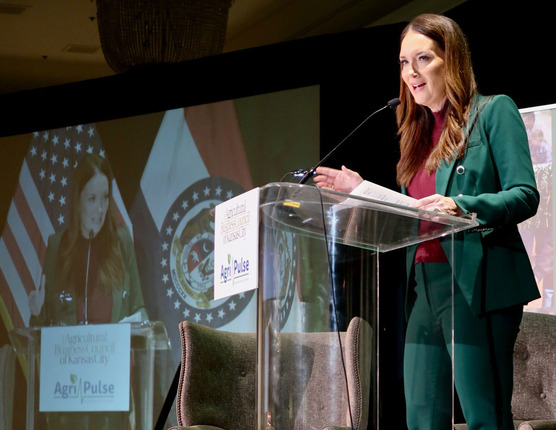
To address high input costs, the U.S. Department of Agriculture (USDA) signed a memorandum of understanding with the Department of Justice, aimed at strengthening antitrust enforcement in agricultural supply chains. The move will enable closer scrutiny of competitive conditions affecting fertilizer, seed, fuel, and equipment markets.
Rollins also confirmed the USDA has discontinued its Farm Labor Survey, which had been used to set Adverse Effect Wage Rates under the H-2A program. She said the agency is working with the Departments of Labor and Homeland Security to revise program rules to make seasonal labor more affordable and accessible.
Emergency support and export promotion
The USDA has already delivered more than $8 billion to 560,000 producers through the Emergency Commodity Assistance Program (ECAP) and will release the remaining $2 billion this week, covering nearly all eligible claims for the 2024 crop year. Additional payments have been made through livestock and disaster relief programs.
In parallel, the department will purchase 417,000 metric tons of U.S. commodities for international food assistance programs, part of a $480 million package supporting projects in countries such as Benin, Honduras, Mozambique, Pakistan, and Senegal. These allocations mark a significant increase from 2024 levels under the McGovern-Dole and Food for Progress initiatives.
USDA is also advancing its trade promotion agenda. The “America First Trade Promotion Program,” funded at $285 million, will be launched on October 2, a year earlier than planned, to expand market access for U.S. agricultural exports.
Rollins said the combined actions are designed to stabilize farm incomes, counter rising costs, and ensure market opportunities abroad. “The success of our farmers is a national security priority,” she told the forum. “We are looking at every option to ensure the future viability of American agriculture.”

Enjoyed this story?
Every Monday, our subscribers get their hands on a digest of the most trending agriculture news. You can join them too!




Discussion0 comments