

Hidden soybean cyst nematode threatens North American yields

The SCN Coalition, together with Syngenta, Indigo, and BASF, has declared October 6 National Nematode Day to draw attention to the growing threat of soybean cyst nematode (SCN)—the leading yield-reducing pathogen for soybeans in North America. The pest causes an estimated $1.5 billion in annual yield losses across the region.
Experts warn that, despite few visible symptoms in many fields this season, the pest may still be eroding yields undetected. “It’s going to be a deceptive year for a lot of growers because we’ve had a little bit more rain than usual,” said Dylan Mangel, Extension plant pathologist at the University of Nebraska. “Something that’s already hard to detect may be a little harder still. That doesn’t mean they’re not struggling with some level of yield loss.”
Soil testing remains crucial
Regular soil testing for SCN populations is increasingly important as the pest shows growing resistance to PI 88788, the most common source of genetic resistance in commercial soybean varieties. Knowing SCN levels allows farmers to better assess yield risk and adjust management plans.
Harvest is generally the best time to test for SCN in corn–soybean rotations, according to Mangel. “The nematode levels are going to hit their peak at the end of the soybean season,” he said. “Soil sampling at the end of the soybean season is your best chance at catching them if they’re there.”
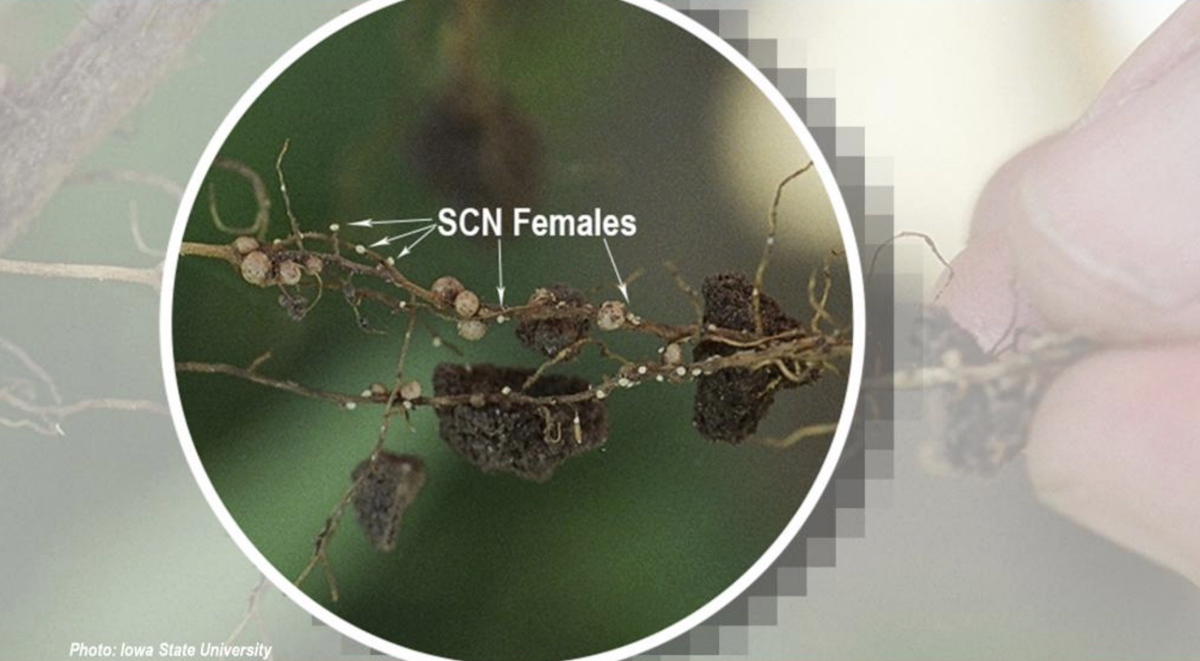
Experts recommend sampling from uniform landscapes or collecting separate samples from distinct high and low areas. Fields with high pH, visible sudden death syndrome, or chronically low yields should be prioritized. Soil tests should be repeated every three to five years, ideally at the same time of year, to monitor population changes over time.
“Soil sampling every second soybean crop over a period of years will give you a general idea of how SCN levels are changing and if management practices are working,” said Dale Ireland, technical product lead at Syngenta. Several U.S. states, including Nebraska and Ohio, currently offer free testing services through university Extension programs.
To help growers estimate potential yield impacts, the SCN Coalition has developed the SCN Profit Checker, an online tool combining location, egg count data, and soil characteristics to predict likely yield losses.
New management options on the horizon
Seed companies are advancing new genetic and chemical solutions to strengthen SCN control. BASF’s Nemasphere transgenic trait produces a Cry14 protein that disrupts nematode feeding. In more than 200 U.S. field trials, the technology has shown yield increases of up to 8%. BASF plans to stack Nemasphere with the Enlist E3 herbicide tolerance trait, targeting market introduction by 2028 pending regulatory approvals.
Syngenta’s Victrato seed treatment, currently under U.S. EPA review, uses a new SDHI active ingredient (TYMIRIUM technology) to target SCN eggs, juveniles, and adults while suppressing early foliar diseases. Field trials conducted between 2015 and 2022 showed an 84% yield advantage compared to untreated controls.
Stewardship remains essential
As resistance to PI 88788 continues to expand, agronomists stress the need for crop and trait rotation. “If you find a good variety, the last thing you want to do is switch,” Mangel said. “But switching it up will make that variety and those resistance sources stronger for longer. Don’t give nematodes a chance to find new ways to work around those varieties.”
Growers are urged to combine resistant varieties, crop rotation, and seed treatments to preserve the effectiveness of emerging management tools and reduce long-term yield losses from this hidden but costly pest.

Enjoyed this story?
Every Monday, our subscribers get their hands on a digest of the most trending agriculture news. You can join them too!








Discussion0 comments