Skip to content
  • Professionals
  • Gardeners
 
Search
Log in
EN
RU
  • Markets
  • Business
  • Politics
  • Technologies
  • Interviews
  • Rankings
  • Environment
  • Events
  • Stock Quotes
  • Business Directory
Trending topic:
Featured company:
 
RU
  • Professionals
  • Gardeners
Sections
Events
Stock Quotes
Business Directory
Trending topic:
Featured company:
Follow us...
Helpful information
  • About
  • Team
  • Advertise
  • Contacts
  • Submit a Tip
  • Privacy Policy
  • Terms of Service
Sections
Seasonal tips
  • Spring
  • Summer
  • Autumn
  • Winter
Trending topics
  • compost
    22
  • garlic
    2
  • lemon
    1
  • potato
    12
Follow us...
Helpful information
  • About
  • Team
  • Advertise
  • Contacts
  • Submit a Tip
  • Privacy Policy
  • Terms of Service
Copyright © 2014-2025 DigitalTree LLC. All rights reserved.
We deliver content lightning-fast thanks to the managed cloud WordPress hosting with CDN.
16+

Home / Environment

Scientists highlight ‘grassy trees’ as overlooked allies in climate mitigation

FD Editors avatar FD Editors
November 3, 2025, 10:00 am
25
Environment
Scientists highlight ‘grassy trees’ as overlooked allies in climate mitigation
Save for later
Share

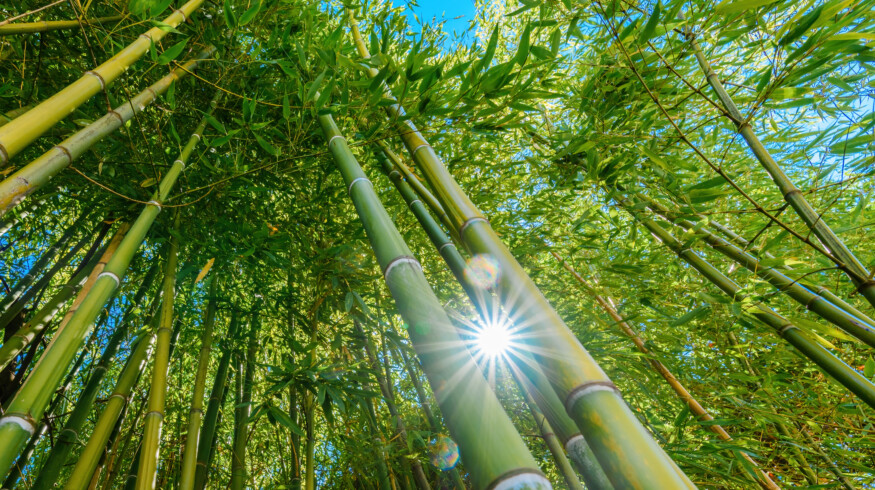
A new study by New York University scientists has identified bamboo, palms, and banana plants as a distinct ecological category—“grassy trees”—that could play a key role in addressing climate change. The analysis, published in Trends in Ecology & Evolution, argues that these species bridge the gap between trees and grasses, combining rapid growth and resilience with the capacity to store carbon and support biodiversity.

“Bamboo, palms, and bananas, which don’t fit neatly as trees or grasses, are actually a powerful group of plants we call ‘grassy trees,’” said lead author Aiyu Zheng of NYU’s Department of Environmental Studies. “Their hybrid nature—tall structures of trees with the quick recovery of grasses—makes them strong allies in responding to climate change.”

The researchers found that ecosystems dominated by these species—such as bamboo forests and palm or banana plantations—tend to grow faster than tree- or grass-based systems, while storing intermediate levels of carbon. They are also more adaptable to extreme weather, recovering quickly after fires, storms, or harvesting.

The study compiled data across 12 types of ecosystems ranging from forests and savannas to croplands and bamboo stands. It concluded that “grassy trees” occupy a unique ecological niche that has been largely absent from current carbon and biodiversity frameworks.

ADVERTISEMENT

Senior author Mingzhen Lu said the findings highlight the importance of including these species in nature-based climate strategies. “Our study provides the first global overview of how much carbon grassy trees capture and store, showing that they are abundant, practical, and deeply embedded in tropical cultures,” Lu noted.

The paper outlines examples of how local communities are already benefiting from such plants: moriche palms in South America sustain wetlands and provide fruit and oil; lowland bamboo in Ethiopia restores degraded soils while supporting a growing green industry; and banana groves in Southeast Asia enhance food security and rural incomes.

Researchers also identified high-opportunity regions for “grassy tree” cultivation based on UN Food and Agriculture Organization data from over 30 countries with extensive bamboo or palm resources.

According to Zheng, the study provides a framework for governments and communities to better plan sustainable land use and carbon management. “By acknowledging grassy trees as a unique form of growth, we’ve set the stage for future research that will better illuminate their ecological and social value,” she said.

The study, Grassy Trees: The Neglected Hybrids for Sustainability, was published on October 24, 2025, in Trends in Ecology & Evolution.

bamboo
banana
biodiversity
Carbon capture
climate change
forest
grassy trees
New York University
palm
research
study

Enjoyed this story?

Every Monday, our subscribers get their hands on a digest of the most trending agriculture news. You can join them too!

Sign me up
Check the example

Discussion0 comments

Спасибо за комментарий, он будет опубликован на сайте после проверки модератором. Хотите, чтобы ваши комментарии появлялись на сайте мгновенно? Достаточно пройти регистрацию.
Congratulations, you can be the first to start the conversation.
Do you have a question or suggestion? Please leave your comment to ignite conversation.
What’s on your mind?
Cancel Log in and comment
Or continue without registration
Get notified about new comments by email.
Advertisement
In focus
How to get here?
Stock quotes
Bayer
9.76
2.01
Bayer Crop Science
33.58
1.97
CF Industries
80.23
1.19
Corteva Agriscience
66.29
1.52
ICL Group
5.18
1.33
Intrepid Potash
25.66
0.54
Mosaic
24.1
0.46
Nutrien
60.05
0.03
Yara International
19.01
0.96
See all
Most read
Bowery Farming’s $70M Georgia vertical farm heads to liquidation as startup’s collapse triggers nationwide sell-offs
Michigan tightens manure-spreading rules for large animal farms
Monarch Tractor may lay off 100 employees or shut down as it struggles to pivot away from manufacturing toward pure software model
Washington Supreme Court reinstates $185 million verdict against Monsanto over PCB contamination
Russia imposed temporary ban on sulfur exports until the end of 2025
Events
Argus Clean Ammonia Europe
Rotterdam, Netherlands
Dec 2 — 4, 2025
Organic Grower Summit
Monterey (CA), USA
Dec 3 — 4, 2025
IFS Conference
Cambridge, UK
Dec 10 — 12, 2025
Fertilizer Latino Americano
Miami (FL), USA
Jan 26 — 28, 2026
Argus Fertilizer Africa
Dar es Salaam, Tanzania
Feb 10 — 11, 2026
See all
Live
Meripa Corson
August 4, 01:18 pm
Where does the money actually go? As a timber land owner, how do I benefit from the legislation?
USDA commits $80 million to expand timber markets and improve forest resilience
Patonkas Luksompulus
January 21, 12:36 pm
Greece meeds biological fertilizers! Great news about De sangosse.
DE SANGOSSE expands operations with Greek subsidiary
Pedro Diaz
November 20, 2024, 08:42 pm
Is it a Roundup lawsuit or more about bad financials? I think the market reacted only to announced financial results.
Bayer’s shares are pressed down by ongoing Roundup cancer lawsuit
Johan Fredin
August 22, 2024, 07:57 pm
Europe is falling behind in this field. The concerns 30 years ago was reasonable. Now not so much. We need crops that can survive in a more extreme future climate. Handle droughts and hot weather better. Crops that are less tasty to pests like hogs and deere.
Gene-edited crops set for groundbreaking European trials
Timothy Kirkwood
July 23, 2024, 01:39 pm

Your article about Sargassum shows Kelp, not Sargassum.

Sargassum in the Caribbean: turning seaweed crisis into economic opportunity?
About
Sections
Markets  ·  Business  ·  Politics  ·  Technologies  ·  Interviews  ·  Rankings  ·  Environment
Support
About  ·  Team  ·  Advertise  ·  Contacts  ·  Submit a Tip  ·  Privacy Policy  ·  Terms of Service
Copyright © 2014-2025 DigitalTree LLC. All rights reserved.
We deliver content lightning-fast thanks to the managed cloud WordPress hosting with CDN.
16+
More to read
USDA explores the role of climate-smart agriculture in addressing climate change
Researchers urge management of pawpaw tree growth to balance biodiversity in North America
New study reveals that smaller arable fields and organic farming practices enhance pollinator diversity
Advertising that helps us do quality reporting