Skip to content
  • Professionals
  • Gardeners
 
Search
Log in
EN
RU
  • Markets
  • Business
  • Politics
  • Technologies
  • Interviews
  • Rankings
  • Environment
  • Events
  • Stock Quotes
  • Business Directory
Trending topic:
Featured company:
 
RU
  • Professionals
  • Gardeners
Sections
    Events
    Stock Quotes
    Business Directory
    Trending topic:
    Featured company:
    Follow us...
    Helpful information
    • About
    • Team
    • Advertise
    • Contacts
    • Submit a Tip
    • Privacy Policy
    • Terms of Service
    Sections
      Seasonal tips
      • Spring
      • Summer
      • Autumn
      • Winter
      Trending topics
      • compost
        23
      • garlic
        2
      • lemon
        1
      • potato
        12
      Follow us...
      Helpful information
      • About
      • Team
      • Advertise
      • Contacts
      • Submit a Tip
      • Privacy Policy
      • Terms of Service
      Copyright © 2014-2026 DigitalTree LLC. All rights reserved.
      We deliver content lightning-fast thanks to the managed cloud WordPress hosting with CDN.
      16+

      Home / Environment

      Ocean upwelling identified as key driver behind massive sargassum blooms in the Atlantic

      Kim Clarksen avatar Kim Clarksen
      November 11, 2025, 12:00 pm
      November 11, 2025, 12:00 pm
      [esi post-views ttl=0]
      Environment
      Ocean upwelling identified as key driver behind massive sargassum blooms in the Atlantic
      Save for later
      Share

      An international team led by the Max Planck Institute for Chemistry has identified the main mechanism behind the recurring blooms of Sargassum seaweed across the Atlantic Ocean, which have caused widespread beach strandings from the Caribbean to West Africa over the past decade.

      The study, published in Nature Geoscience, attributes the phenomenon to wind-driven upwelling near the equator that brings phosphorus-rich water from the ocean depths to the surface. This nutrient boost supports cyanobacteria that colonize Sargassum and fix atmospheric nitrogen into a form usable by the algae—fueling rapid growth.

      The findings help clarify why the so-called Great Atlantic Sargassum Belt, first detected in 2011, has expanded dramatically, with an estimated 38 million tons drifting toward the Caribbean, Gulf of Mexico and northern South America by mid-2025.

      Symbiotic relationship and long-term evidence
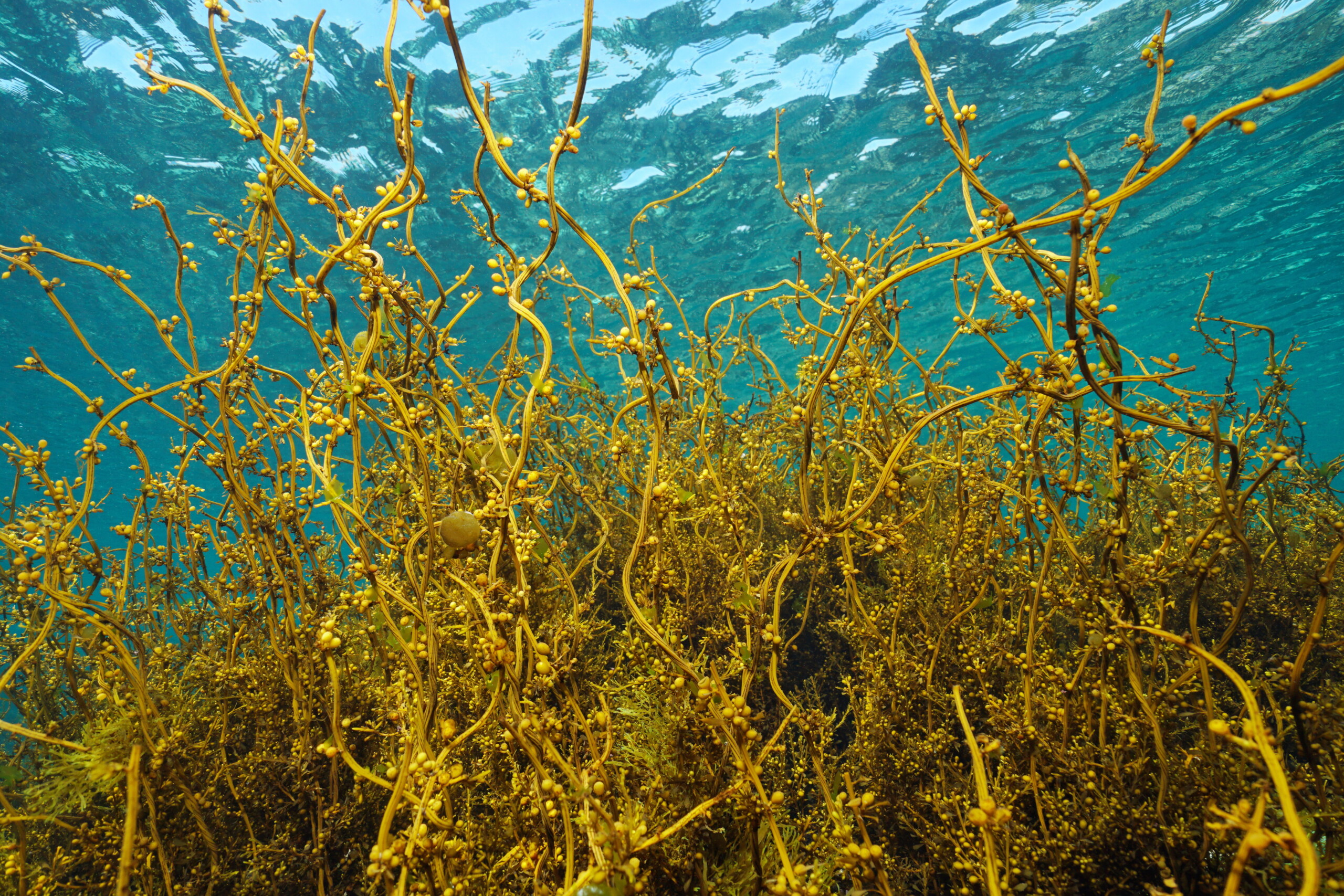
      Japanese wireweed seaweed underwater in the ocean, Sargassum muticum alga, eastern Atlantic, Spain

      ADVERTISEMENT

      The researchers showed that cyanobacteria living on Sargassum form a symbiotic relationship that provides the algae with additional nitrogen. By analyzing nitrogen isotopes preserved in coral cores from various Caribbean sites, the team reconstructed ocean nitrogen fixation rates over the past 120 years. These records revealed that peaks in nitrogen fixation coincided with major Sargassum bloom years, notably in 2015 and 2018.

      Ph.D. researcher Jonathan Jung, the study’s first author, said the correlation between nitrogen fixation and algae biomass was striking. “Our coral data and Sargassum records aligned perfectly, indicating the two processes have been linked since 2011,” he noted.

      Phosphorus as the decisive factor
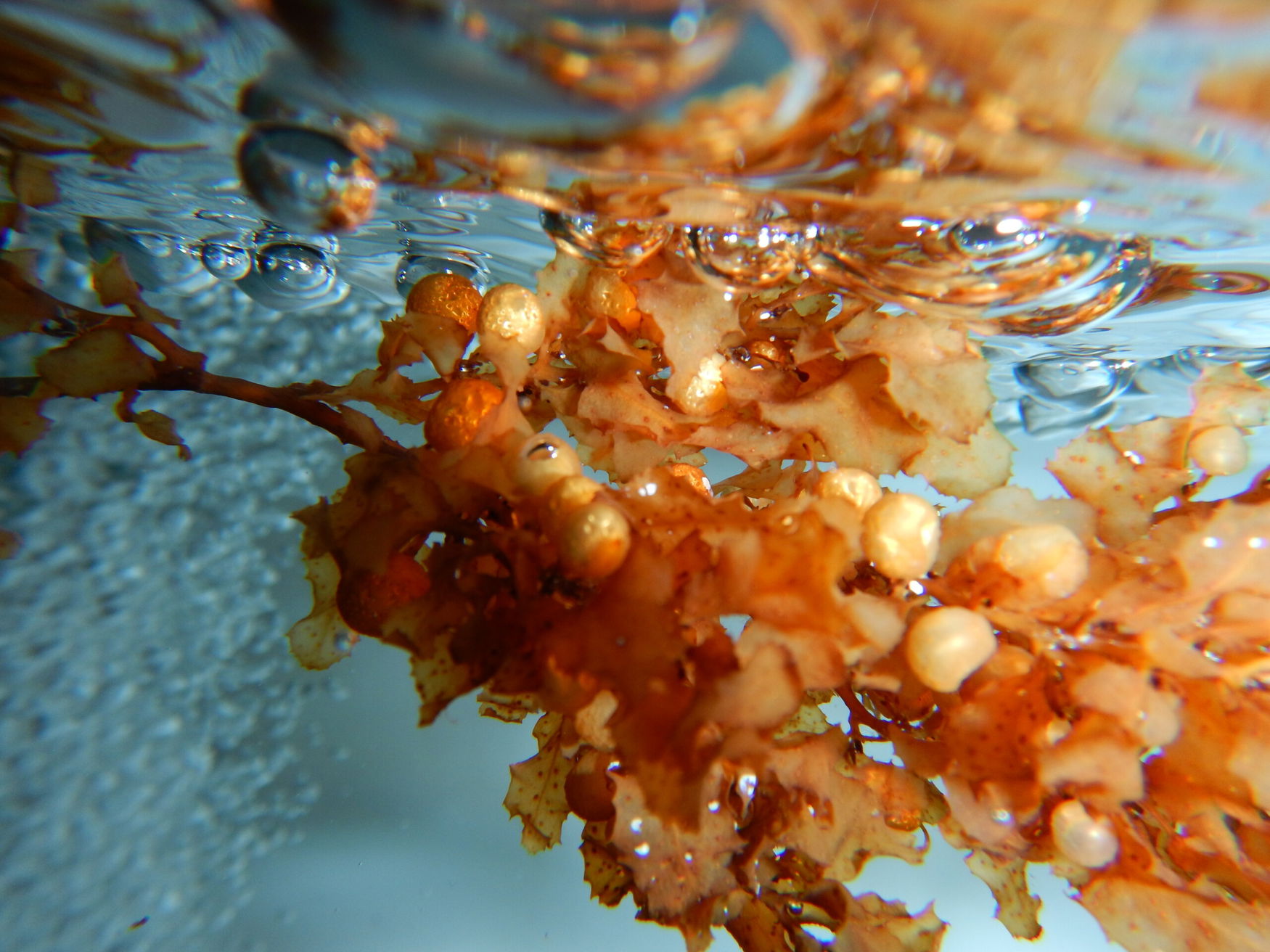
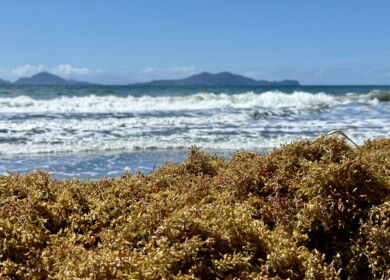
      Caribbean Sea, Anguilla

      The team ruled out earlier hypotheses that Saharan dust or river runoff from the Amazon and Orinoco provided the nutrients driving the blooms. Instead, they concluded that equatorial upwelling—triggered by shifts in sea surface temperatures and wind patterns—supplies the key phosphorus needed for cyanobacterial growth and, consequently, for Sargassum proliferation.

      Toward better forecasting
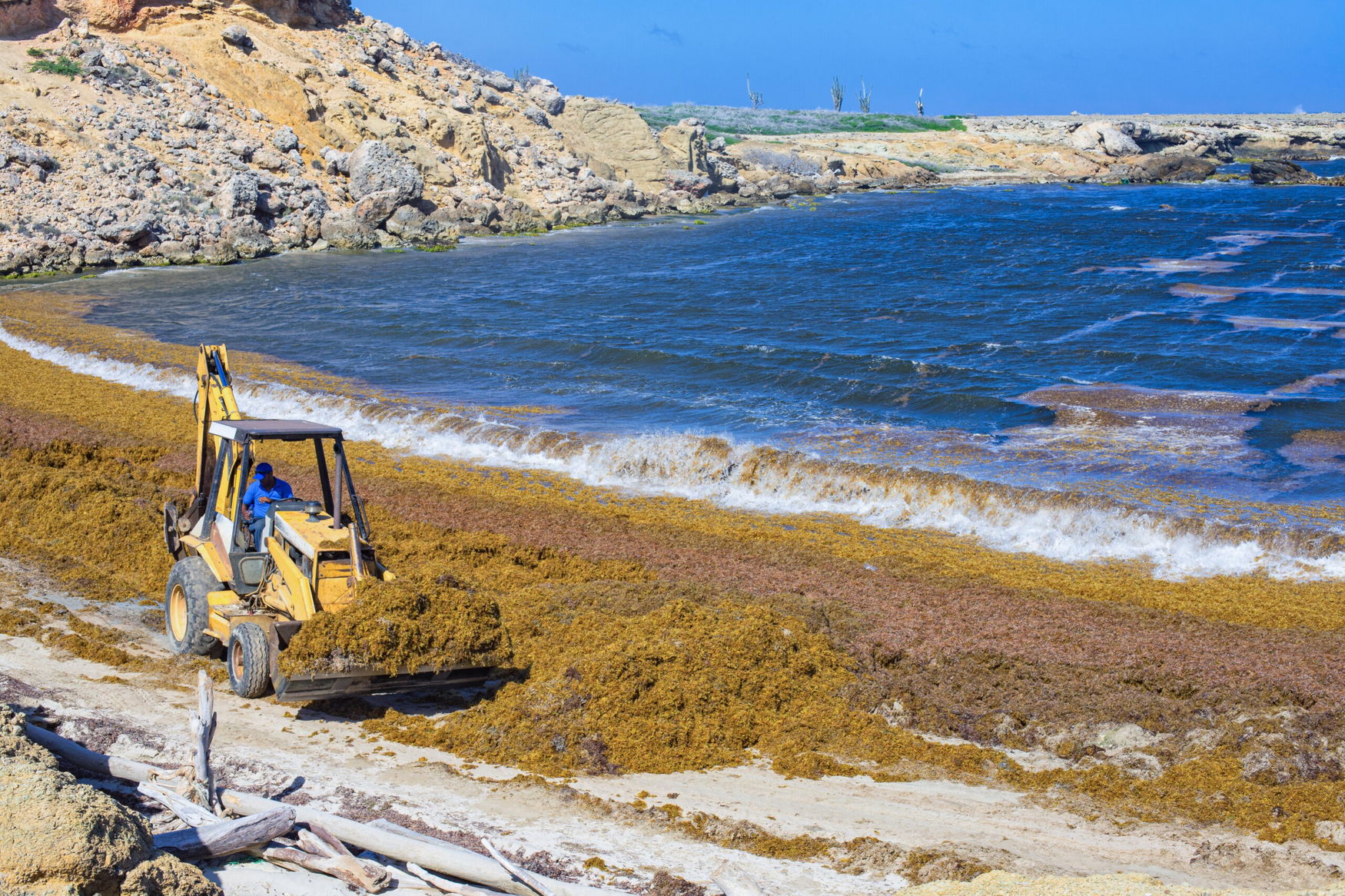
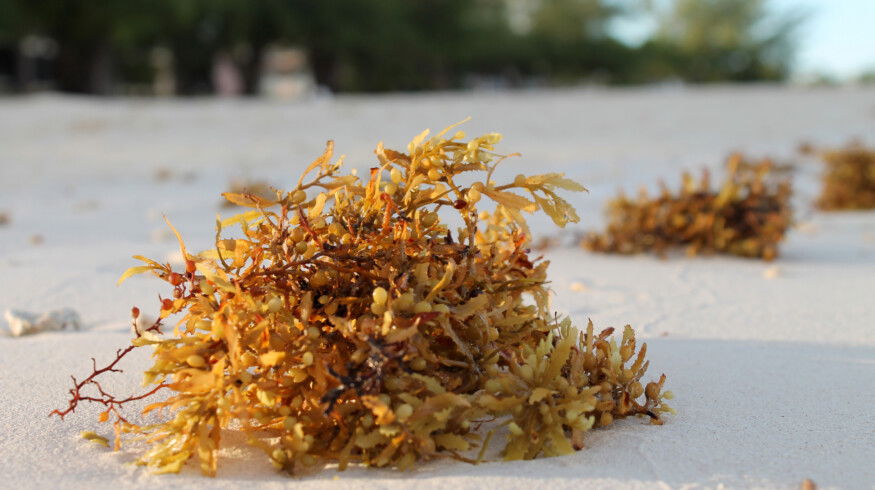
      Kralendijk, Bonaire - 04-03-2018: Sargassum can present challenges for marine life and particularly becomes a problem when it collects along coastlines, mangroves, shallow waters and rocks corals

      By monitoring sea temperature, wind anomalies and upwelling in the tropical Atlantic, scientists believe it will be possible to predict the scale of future blooms.

      “The variability of Sargassum growth can be explained more accurately through this mechanism than by any previous model,” said Alfredo Martínez-García, senior author of the study. “Yet uncertainties remain about how global warming will influence the ocean processes controlling phosphorus supply.”

      Further coral analyses across the Caribbean are planned to refine the understanding of how these climatic and oceanic dynamics affect Sargassum growth. The researchers hope that improved forecasts will help coastal communities and tourism-dependent economies prepare for and mitigate the environmental and economic impacts of massive seaweed influxes.

      Atlantic ocean
      ecological crisis
      ecology
      Environmental damage
      nitrogen-fixing
      sargassum
      seaweed

      Enjoyed this story?

      Every Monday, our subscribers get their hands on a digest of the most trending agriculture news. You can join them too!

      Sign me up
      Check the example

      Discussion0 comments

      Спасибо за комментарий, он будет опубликован на сайте после проверки модератором. Хотите, чтобы ваши комментарии появлялись на сайте мгновенно? Достаточно пройти регистрацию.
      Congratulations, you can be the first to start the conversation.
      Do you have a question or suggestion? Please leave your comment to ignite conversation.
      What’s on your mind?
      Cancel Log in and comment
      Or continue without registration
      Get notified about new comments by email.
      Advertisement
      In focus
      How to get here?
      Stock quotes
      Bayer
      11.52
      4.82
      Bayer Crop Science
      40.21
      0.3
      CF Industries
      123.29
      0.78
      Corteva Agriscience
      80.05
      1.28
      ICL Group
      5.38
      0.94
      Intrepid Potash
      41.94
      0.79
      Mosaic
      28.83
      4.19
      Nutrien
      79.55
      2.26
      Yara International
      28.45
      2.1
      See all
      Most read
      Agromin composts 1.25 million tons of organic waste in 2025
      Agromin composts 1.25 million tons of organic waste in 2025
      U.S. Justice Department opens antitrust probe into fertilizer producers amid price concerns
      U.S. Justice Department opens antitrust probe into fertilizer producers amid price concerns
      Middle East conflict threatens fertilizer supply ahead of U.S. planting season
      Middle East conflict threatens fertilizer supply ahead of U.S. planting season
      DeKalb may launch 30 new corn hybrids for 2026 season
      DeKalb may launch 30 new corn hybrids for 2026 season
      FMC secures first dual-mode herbicide classification for rimisoxafen
      FMC secures first dual-mode herbicide classification for rimisoxafen
      Events
      World Agri-Tech Innovation Summit
      San Francisco (CA), USA
      Mar 17 — 18, 2026
      FSHOW
      Shanghai, China
      Mar 17 — 19, 2026
      Argus Fertilizer Asia
      Bali, Indonesia
      Mar 31 — Apr 2, 2026
      CRU Phosphates
      Paris, France
      Apr 13 — 15, 2026
      CFEX
      Antalya, Turkey
      Apr 15 — 17, 2026
      See all
      Live
      Isabelita Barreiro
      December 11, 2025, 01:54 am
      Excellent management of water resources and effective use of water-soluble fertilizers!
      Argentine nano-fertilizer firm AKO Agro expands to Brazil
      Meripa Corson
      August 4, 2025, 01:18 pm
      Where does the money actually go? As a timber land owner, how do I benefit from the legislation?
      USDA commits $80 million to expand timber markets and improve forest resilience
      Patonkas Luksompulus
      January 21, 2025, 12:36 pm
      Greece meeds biological fertilizers! Great news about De sangosse.
      DE SANGOSSE expands operations with Greek subsidiary
      Pedro Diaz
      November 20, 2024, 08:42 pm
      Is it a Roundup lawsuit or more about bad financials? I think the market reacted only to announced financial results.
      Bayer’s shares are pressed down by ongoing Roundup cancer lawsuit
      Johan Fredin
      August 22, 2024, 07:57 pm
      Europe is falling behind in this field. The concerns 30 years ago was reasonable. Now not so much. We need crops that can survive in a more extreme future climate. Handle droughts and hot weather better. Crops that are less tasty to pests like hogs and deere.
      Gene-edited crops set for groundbreaking European trials
      About
      Sections
      Markets  ·  Business  ·  Politics  ·  Technologies  ·  Interviews  ·  Rankings  ·  Environment
      Support
      About  ·  Team  ·  Advertise  ·  Contacts  ·  Submit a Tip  ·  Privacy Policy  ·  Terms of Service
      Copyright © 2014-2026 DigitalTree LLC. All rights reserved.
      We deliver content lightning-fast thanks to the managed cloud WordPress hosting with CDN.
      16+
      More to read
      Sargassum in the Caribbean: turning seaweed crisis into economic opportunity?
      Sargassum in the Caribbean: turning seaweed crisis into economic opportunity?
      Researchers explore ways to turn Caribbean seaweed crisis into bioproducts and renewable fuels
      Researchers explore ways to turn Caribbean seaweed crisis into bioproducts and renewable fuels
      Grenada explores the ways to turn sargassum seaweed into biofuel, fertilizer and cosmetic
      Grenada explores the ways to turn sargassum seaweed into biofuel, fertilizer and cosmetic
      Advertising that helps us do quality reporting