

Researchers explore ways to turn Caribbean seaweed crisis into bioproducts and renewable fuels

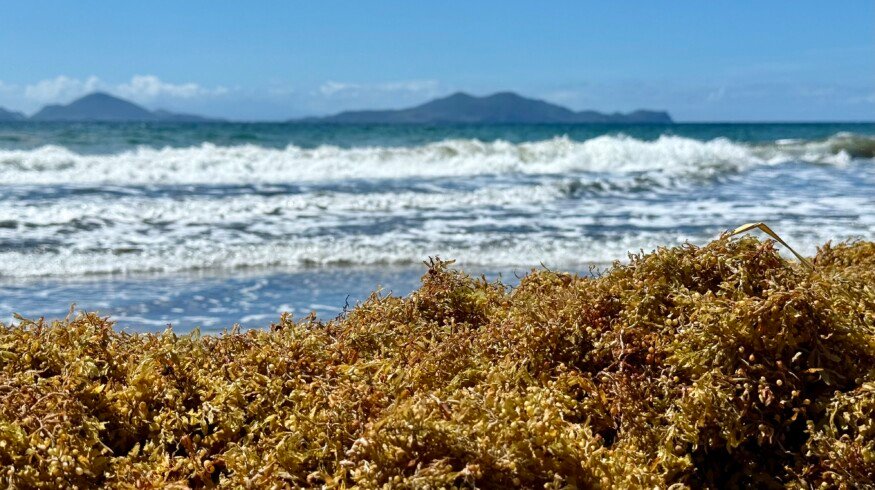

For years, massive blooms of Sargassum seaweed have inundated beaches across the Caribbean and the tropical Atlantic, killing marine life, deterring tourists, and straining coastal economies. Now scientists are attempting to turn the environmental nuisance into an economic resource.
A consortium led by the Marine Biological Laboratory in Woods Hole, Massachusetts, is developing technologies to convert the overabundance of the floating brown algae into biofuels, fertilizers, bioplastics, and other industrial materials. The project, known as the Sargassum Biorefinery (SaBRe), brings together eight research institutions and one company under the Schmidt Sciences Virtual Institute on Feedstocks of the Future initiative.
Sargassum, which naturally grows in the Sargasso Sea, has proliferated over the past decade into what researchers call the Great Atlantic Sargassum Belt—a 5,500-mile stretch from West Africa to the Caribbean. Satellite data show the biomass rising from 9 million tons in 2015 to more than 24 million tons in 2022, with nearly 38 million tons recorded in mid-2025. The increase is linked to nutrient runoff, rising ocean temperatures, and atmospheric dust from the Sahara.
Beached Sargassum releases hydrogen sulfide and ammonia as it decomposes, harming human health and marine ecosystems. Coastal economies, especially in Mexico’s Quintana Roo region and across the eastern Caribbean, report double-digit declines in tourism and fishing income when seaweed accumulates.
The SaBRe team aims to create value from the waste material. Marine biologist Loretta Roberson, who leads fieldwork in Puerto Rico, says researchers are examining how different Sargassum species can serve as feedstocks. Collaborators at Rutgers University and Princeton University are identifying microbes and enzymes capable of breaking the seaweed into chemical building blocks. Others are investigating whether the algae accumulate rare earth elements that could be extracted for industrial use.
A related effort in Barbados has already begun converting Sargassum into biogas. The startup Rum and Sargassum, Inc., founded by engineer Legena Henry, uses the seaweed with rum distillery wastewater to produce renewable fuel. The company plans to expand its pilot system to power a fleet of local taxis.
Although SaBRe does not plan to build a physical refinery, it seeks to establish the technical foundation for future bioprocessing facilities across the Caribbean and West Africa. Researchers are also testing offshore collection methods that could one day feed floating or ship-based biorefineries.
“If we can find a way to turn this environmental problem into a resource,” Roberson says, “we could address both the crisis of today and the opportunity of tomorrow.”

Enjoyed this story?
Every Monday, our subscribers get their hands on a digest of the most trending agriculture news. You can join them too!






Discussion0 comments