Skip to content
  • Professionals
  • Gardeners
 
Search
Log in
EN
RU
  • Markets
  • Business
  • Politics
  • Technologies
  • Interviews
  • Rankings
  • Environment
  • Events
  • Stock Quotes
  • Business Directory
Trending topic:
Featured company:
 
RU
  • Professionals
  • Gardeners
Sections
    Events
    Stock Quotes
    Business Directory
    Trending topic:
    Featured company:
    Follow us...
    Helpful information
    • About
    • Team
    • Advertise
    • Contacts
    • Submit a Tip
    • Privacy Policy
    • Terms of Service
    Sections
      Seasonal tips
      • Spring
      • Summer
      • Autumn
      • Winter
      Trending topics
      • compost
        22
      • garlic
        2
      • lemon
        1
      • potato
        12
      Follow us...
      Helpful information
      • About
      • Team
      • Advertise
      • Contacts
      • Submit a Tip
      • Privacy Policy
      • Terms of Service
      Copyright © 2014-2025 DigitalTree LLC. All rights reserved.
      We deliver content lightning-fast thanks to the managed cloud WordPress hosting with CDN.
      16+

      Home / Technologies

      Corn–toxin blend found to produce more aerodynamic pest moths

      Elena Shalashnik avatar Elena Shalashnik
      December 4, 2025, 2:00 pm
      December 4, 2025, 2:00 pm
      11
      Technologies
      Markets
      Corn–toxin blend found to produce more aerodynamic pest moths
      Save for later
      Share

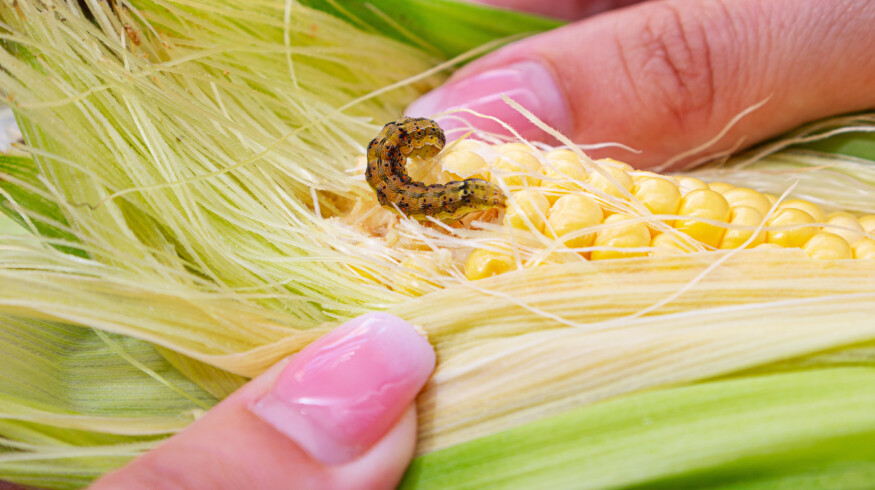
      A new study from North Carolina State University indicates that corn earworm pests can develop more aerodynamic, long-distance-flight wing shapes after feeding on a blend of genetically modified Bt corn and non-Bt corn. The findings raise concerns that seed blends designed to help manage resistance may, in some cases, facilitate the spread of resistance traits across cropping regions.

      Researchers found that caterpillars consuming a mixed diet of toxin-producing and non-toxic corn developed moth wings that were longer, narrower and more tapered—resembling the profile of a fighter aircraft. According to the team, these wing characteristics increased stiffness and improved the insects’ ability to remain airborne in higher wind speeds.

      “Insects eating a blended toxic and non-toxic corn diet were stiffer and more able to travel in higher wind speeds,” said Dominic Reisig, professor and extension specialist of entomology at NC State and co-corresponding author of the study. “These insects are able to get up into the winds and ride them longer distances.”

      The study compared moths raised on four diets: pure non-Bt corn, pure Bt corn with two toxins, pure Bt corn with three toxins, and a seed blend of 80% three-toxin Bt corn and 20% non-Bt corn. Moths raised on the blended diet showed the most aerodynamic wing changes—and did so within a single generation. By contrast, insects raised on any of the three unblended diets developed less aerodynamic, more brittle wings.

      ADVERTISEMENT

      Corn earworm (Helicoverpa zea) is a widespread pest in North America. While corn crop losses are generally manageable, the species also damages soybean, tomato and cotton, making its movement and resistance patterns a significant concern for farmers across multiple sectors. Because earworms emerge in high numbers from cornfields in midsummer, any shift in their flight capability directly affects how rapidly resistance traits can disperse into other crops and regions.

      “It appears that resistance occurs faster when worms eat these blends, creating individual moths that have multiple resistance mutations,” Reisig said. “This is one more piece of evidence that blending Bt and non-toxic corn pollen is really dangerous for resistance.”

      The research, published November 19 in Environmental Entomology, used geometric morphometric analysis and finite element modeling to assess wing structure and performance under simulated wind conditions. The authors report that the blended-diet moths exhibited wing shapes most conducive to long-distance dispersal.

      The study adds to ongoing scientific debate over seed-blend refuge strategies, which mix Bt and non-Bt seed in a single bag. While blends are intended to simplify refuge compliance, some researchers argue that they may accelerate resistance development in certain pest species.

      The work was supported by a Biotechnology Risk Assessment Grant from the US Department of Agriculture’s National Institute of Food and Agriculture and by the University Global Partnership Network.

      Researchers say further work is under way to assess additional biological effects, including mating success, in earworm populations exposed to mixed corn diets.

      Bt corn
      earworm
      entomology
      research
      resistance
      University of North Carolina

      Enjoyed this story?

      Every Monday, our subscribers get their hands on a digest of the most trending agriculture news. You can join them too!


      Sign me up
      Check the example

      Discussion0 comments

      Спасибо за комментарий, он будет опубликован на сайте после проверки модератором. Хотите, чтобы ваши комментарии появлялись на сайте мгновенно? Достаточно пройти регистрацию.
      Congratulations, you can be the first to start the conversation.
      Do you have a question or suggestion? Please leave your comment to ignite conversation.
      What’s on your mind?
      Cancel Log in and comment
      Or continue without registration
      Get notified about new comments by email.
      Advertisement
      In focus
      How to get here?
      Stock quotes
      Bayer
      9.96
      1.43
      Bayer Crop Science
      34.25
      0.29
      CF Industries
      79.29
      0.41
      Corteva Agriscience
      65.3
      0.46
      ICL Group
      5.25
      6.58
      Intrepid Potash
      25.8
      0.86
      Mosaic
      24.21
      0.7
      Nutrien
      60.07
      1.32
      Yara International
      18.83
      1.78
      See all
      Most read
      Bowery Farming’s $70M Georgia vertical farm heads to liquidation as startup’s collapse triggers nationwide sell-offs
      Bowery Farming’s $70M Georgia vertical farm heads to liquidation as startup’s collapse triggers nationwide sell-offs
      Michigan tightens manure-spreading rules for large animal farms
      Michigan tightens manure-spreading rules for large animal farms
      Monarch Tractor may lay off 100 employees or shut down as it struggles to pivot away from manufacturing toward pure software model
      Monarch Tractor may lay off 100 employees or shut down as it struggles to pivot away from manufacturing toward pure software model
      Washington Supreme Court reinstates $185 million verdict against Monsanto over PCB contamination
      Washington Supreme Court reinstates $185 million verdict against Monsanto over PCB contamination
      Russia imposed temporary ban on sulfur exports until the end of 2025
      Russia imposed temporary ban on sulfur exports until the end of 2025
      Events
      Argus Clean Ammonia Europe
      Rotterdam, Netherlands
      Dec 2 — 4, 2025
      Organic Grower Summit
      Monterey (CA), USA
      Dec 3 — 4, 2025
      IFS Conference
      Cambridge, UK
      Dec 10 — 12, 2025
      Fertilizer Latino Americano
      Miami (FL), USA
      Jan 26 — 28, 2026
      Argus Fertilizer Africa
      Dar es Salaam, Tanzania
      Feb 10 — 11, 2026
      See all
      Live
      Meripa Corson
      August 4, 01:18 pm
      Where does the money actually go? As a timber land owner, how do I benefit from the legislation?
      USDA commits $80 million to expand timber markets and improve forest resilience
      Patonkas Luksompulus
      January 21, 12:36 pm
      Greece meeds biological fertilizers! Great news about De sangosse.
      DE SANGOSSE expands operations with Greek subsidiary
      Pedro Diaz
      November 20, 2024, 08:42 pm
      Is it a Roundup lawsuit or more about bad financials? I think the market reacted only to announced financial results.
      Bayer’s shares are pressed down by ongoing Roundup cancer lawsuit
      Johan Fredin
      August 22, 2024, 07:57 pm
      Europe is falling behind in this field. The concerns 30 years ago was reasonable. Now not so much. We need crops that can survive in a more extreme future climate. Handle droughts and hot weather better. Crops that are less tasty to pests like hogs and deere.
      Gene-edited crops set for groundbreaking European trials
      Timothy Kirkwood
      July 23, 2024, 01:39 pm

      Your article about Sargassum shows Kelp, not Sargassum.

      Sargassum in the Caribbean: turning seaweed crisis into economic opportunity?
      About
      Sections
      Markets  ·  Business  ·  Politics  ·  Technologies  ·  Interviews  ·  Rankings  ·  Environment
      Support
      About  ·  Team  ·  Advertise  ·  Contacts  ·  Submit a Tip  ·  Privacy Policy  ·  Terms of Service
      Copyright © 2014-2025 DigitalTree LLC. All rights reserved.
      We deliver content lightning-fast thanks to the managed cloud WordPress hosting with CDN.
      16+
      More to read
      UK farmers face new challenge as glyphosate resistance takes hold
      UK farmers face new challenge as glyphosate resistance takes hold
      Ilagan Corn Complex Will Stimualte Corn Indutry Growth on Philippines
      Ilagan Corn Complex Will Stimualte Corn Indutry Growth on Philippines
      How to grow and care for corn for plentiful harvest
      How to grow and care for corn for plentiful harvest
      Advertising that helps us do quality reporting