

Soil ecoacoustics offers new way to monitor ecosystem health

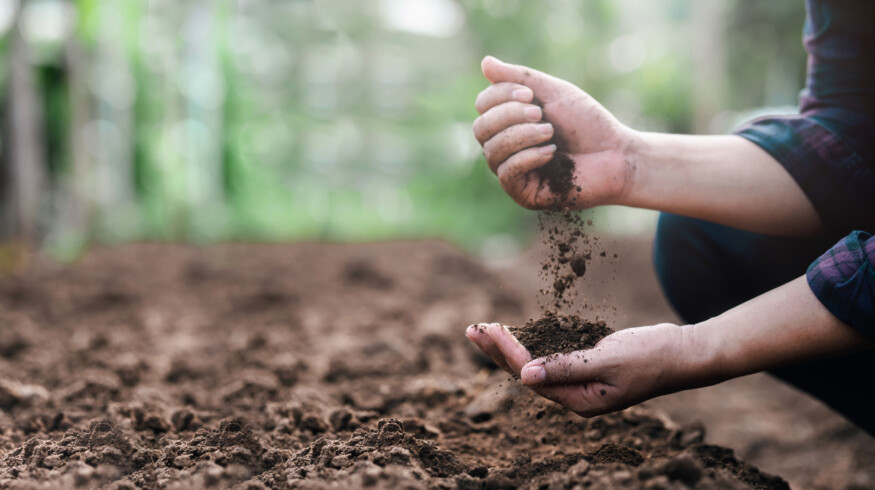
Researchers are calling for a coordinated global effort to develop “soil ecoacoustics,” an emerging field that uses sound and vibration to assess underground ecosystem health, according to a new review published in Trends in Ecology and Evolution.
The study, led by scientists at Australia’s Flinders University, outlines how listening to soil could provide a low-impact way to monitor biodiversity and ecological processes that are otherwise difficult to observe. The approach applies principles from bioacoustics and soil science to capture vibrations generated by organisms such as earthworms, insects, and microbes, as well as by physical processes such as water movement and soil cracking.
The research, which forms part of the National Environmental Science Program’s Resilient Landscapes Hub, argues that sound-based monitoring could significantly improve understanding of soil condition at a time when degradation is widespread.
“Healthy soils underpin food security, carbon storage and climate resilience, yet below-ground biodiversity is notoriously difficult to monitor,” said co-author Jake Robinson of Flinders University. “With up to 75% of the world’s soils already degraded, sound-based monitoring could help land managers and communities track ecosystem change more effectively.”
According to the authors, studies have already demonstrated that soil ecoacoustics can be applied across a range of environments, including tropical forests, agricultural systems, woodlands and arid landscapes. By recording and analyzing “soil soundscapes,” researchers can infer biological activity and ecosystem responses to disturbance or restoration without excavating or damaging the soil.
The review identifies several technical challenges that must be addressed before the method can be widely adopted. These include understanding how sound travels through different soil types, distinguishing biological signals from non-living noise, and building reliable reference datasets.
To address these issues, the authors call for the creation of a global soil ecoacoustics research network and standardized, open-source protocols. Such coordination, they argue, would allow data to be compared across regions and accelerate the development of the field.
“Bridging ecology, soil science and acoustics will be critical,” Robinson said. “A coordinated approach would support biodiversity monitoring and help track ecosystem change using tools that are scalable and minimally invasive.”
The paper concludes that soil ecoacoustics could become an important addition to environmental monitoring efforts, particularly as governments and researchers seek new ways to assess soil health and support restoration and sustainability initiatives.

Enjoyed this story?
Every Monday, our subscribers get their hands on a digest of the most trending agriculture news. You can join them too!



Discussion0 comments