

Apple output falls 50% in Himachal, India as blight, erratic weather hit growers

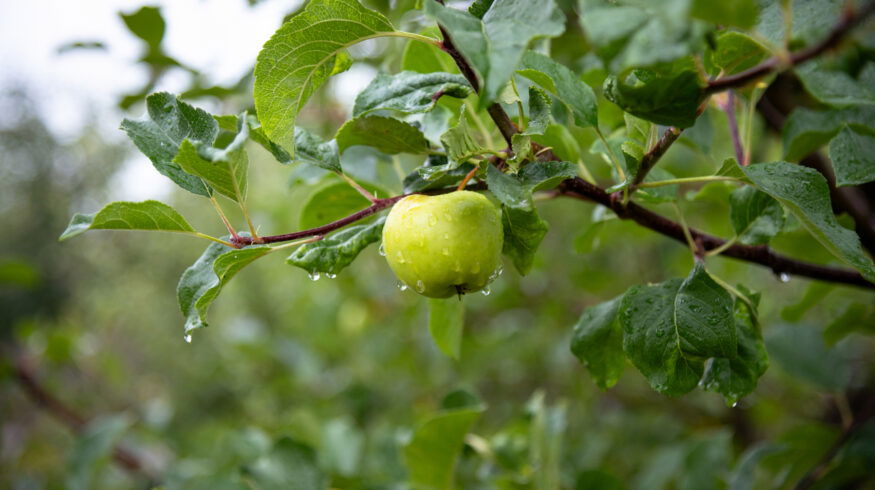
Apple production in the northern Indian state of Himachal Pradesh has declined by at least 50% this season after unfavorable weather conditions triggered widespread fungal infections and disrupted trade, growers and officials said. Torrential monsoon rains damaged key road routes across the Himalayan region, followed by a prolonged dry spell that further stressed orchards and hindered the movement of harvested fruit to markets across India.
Harish Chauhan, convener of the Kisan Samyukt Manch, said around half of the apple trees in orchards were affected by Alternaria leaf spot, a fungal infection that causes premature defoliation and leads to smaller, poorly colored fruit. Market prices fell sharply as quality deteriorated. A standard 22–24 kg box that previously sold for about Rs 2,500 (around USD 30) fetched only Rs 1,000–1,200 (USD 12–14) this year. Roughly 30% of lower-grade apples were procured under the state’s Market Intervention Scheme at Rs 12 per kg (about USD 0.14). State Horticulture Minister Jagat Singh Negi said a record 98,000 metric tons were purchased under the scheme in 2025, though nearly 30,000 metric tons had to be destroyed after damaged roads delayed lifting and the fruit began to rot.
Apple cultivation accounts for nearly 80% of Himachal Pradesh’s total fruit output, with annual production averaging about 550,000 metric tons valued at Rs 4,500 crore (approximately USD 540 million). The sector supports more than 250,000 farmers and generates an estimated 1 million workdays each year. Chief Minister Sukhvinder Singh Sukhu has urged the federal government to classify apples as a “special category” trade item, impose a 100% import duty during the off-season, and restrict imports during the July–November peak harvest window. He also raised concerns over reduced tariffs on imports from New Zealand, citing a 2.5-fold increase in shipments over the past decade.
Sources: The New Indian Express

Enjoyed this story?
Every Monday, our subscribers get their hands on a digest of the most trending agriculture news. You can join them too!






Discussion0 comments