

‘Water Bears’ offer new insight into whether Martian soil could block Earth microbes

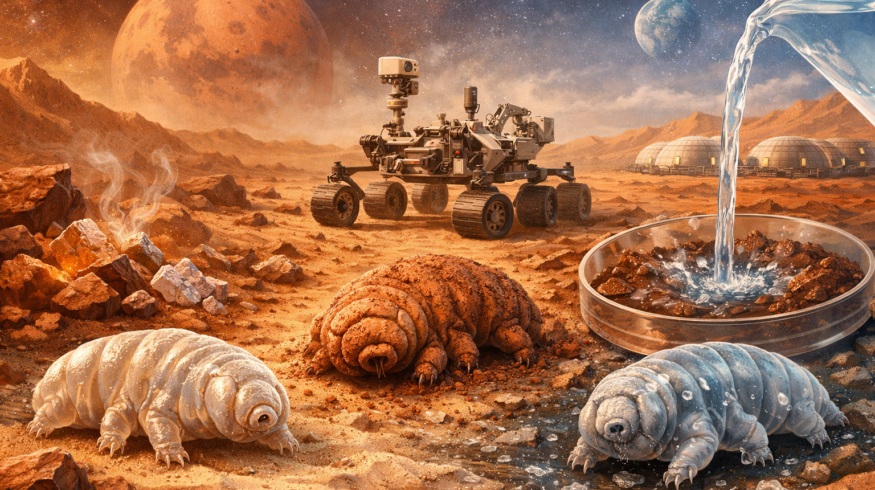
Microscopic animals known as tardigrades—often called water bears—are helping scientists assess a central question for future Mars missions: could Martian soil naturally suppress Earth-based life, and if so, at what cost to human exploration?
A study led by Penn State Altoona microbiologist Corien Bakermans found that tardigrades exposed to simulated Martian regolith showed sharply reduced activity, particularly in one widely used soil analog. The findings, published in the International Journal of Astrobiology, suggest that certain components of Mars-like soil may inhibit biological activity—potentially aiding planetary protection efforts—but could also complicate plans to use local materials to grow food or sustain human habitats.
A test of life in simulated Martian soil
Tardigrades are microscopic animals known for their extreme resilience. In a dehydrated, dormant state, they can survive the vacuum of space, intense radiation, and freezing temperatures. When rehydrated and active, they remain hardy compared with most organisms, though more vulnerable than in dormancy.
Bakermans and colleagues used two Martian regolith simulants—laboratory-produced materials designed to replicate the mineral and chemical composition of soil sampled on Mars. Both simulants are modeled on material collected by NASA’s Curiosity Rover from the Rocknest deposit in Gale Crater.
One simulant, known as MGS-1, was developed as a “global” representation of Martian surface material. The other, OUCM-1, was designed to more closely mimic the specific chemical composition of the Rocknest sampling site.
When active tardigrades were introduced into the two materials and observed under a microscope over several days, the results diverged. In MGS-1, activity dropped sharply within two days, with many specimens becoming inactive. OUCM-1 also reduced activity, but to a lesser degree.
The findings point to differences in chemical composition—not just mineral structure—as critical factors influencing biological survival.
Planetary protection and resource trade-offs
The results intersect with a longstanding principle of space exploration known as planetary protection. International agreements and agencies including NASA aim to prevent contamination of extraterrestrial bodies by Earth life, while also protecting Earth from potential extraterrestrial material.
If Martian regolith contains compounds that naturally inhibit terrestrial organisms, that could reduce the risk that microbes inadvertently transported by astronauts would take hold on Mars. However, such inhibitory properties could also hinder efforts to cultivate crops using local soil or expose astronauts to harmful substances.
The study therefore addresses two related questions: how Mars-like environments affect Earth organisms, and how human activity might alter extraterrestrial environments. Understanding both is essential for long-term missions that rely on in-situ resource utilization—using materials found on Mars rather than transporting everything from Earth.
Washing away the damage
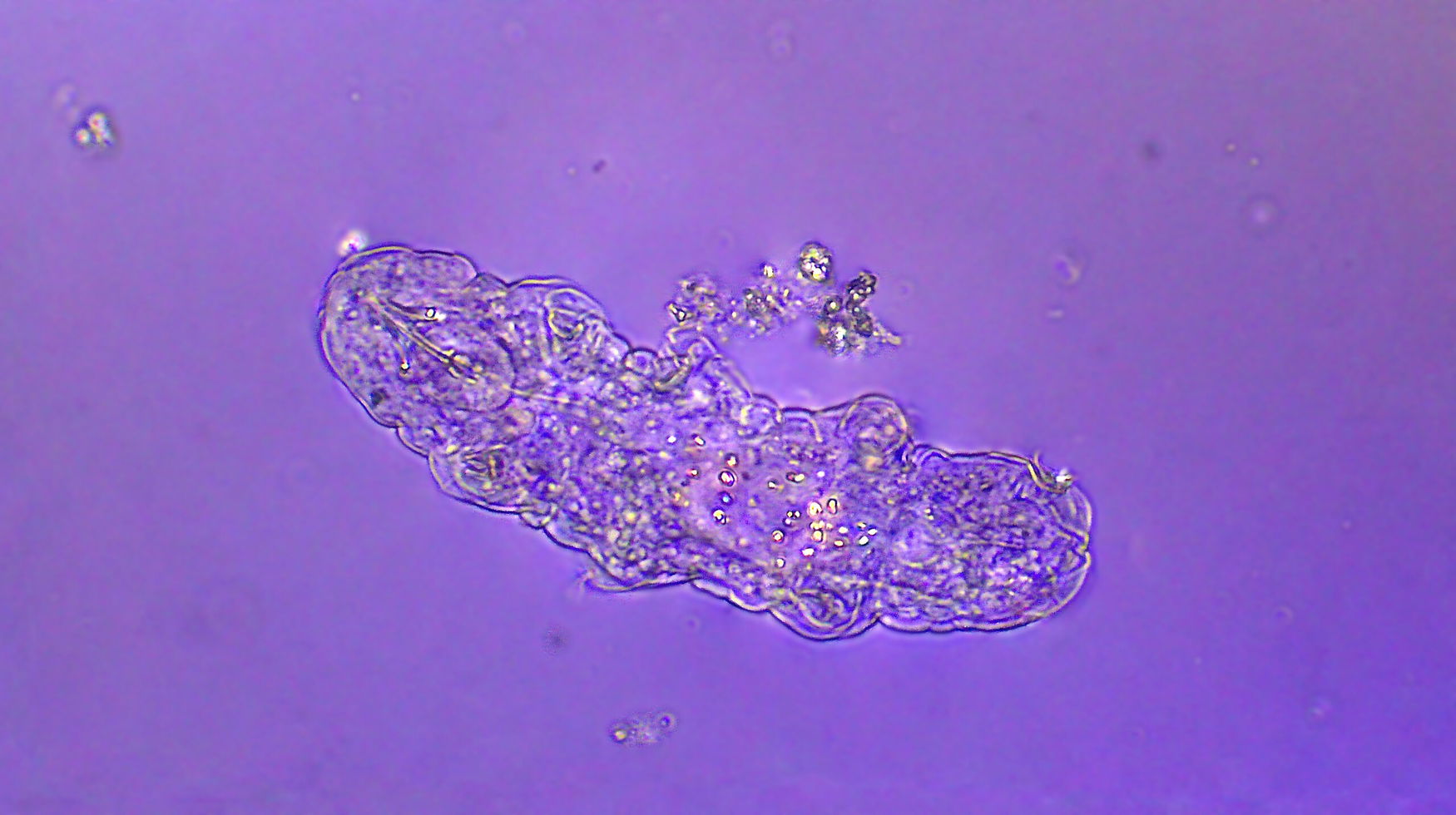
In a follow-up experiment, researchers rinsed the MGS-1 simulant with water before introducing fresh tardigrades. After washing, the previously damaging material had little effect on tardigrade activity.
The outcome suggests that a water-soluble component—potentially salts or other reactive compounds—may be responsible for the inhibitory effect. While further chemical analysis is underway, the discovery has practical implications.
Water is scarce and costly to transport or extract in space, making large-scale soil washing challenging. Yet the fact that harmful effects can be mitigated offers a possible pathway for adapting regolith for agricultural or habitat use. At the same time, the presence of a soluble “defense” component implies that untreated regolith could help limit biological contamination.
Beyond soil chemistry
The researchers emphasize that regolith composition is only one variable in a complex system. Mars’ low atmospheric pressure, extreme temperature swings, and radiation levels also shape habitability and contamination risks.
Future work will examine how specific chemical constituents interact with biological systems, as well as how environmental factors such as pressure and temperature influence survival. While much prior research has focused on bacteria and fungi in simulated Martian soil, relatively little has explored effects on animals—even microscopic ones.
By using tardigrades as a biological model, the team has taken an incremental step toward understanding how terrestrial life might fare in Martian conditions. For planners of future missions, the results underscore a dual reality: the same soil that could help shield Mars from Earth microbes may require careful treatment before it can sustain human life.
Source: Phys.org

Enjoyed this story?
Every Monday, our subscribers get their hands on a digest of the most trending agriculture news. You can join them too!




Discussion0 comments