

Grains Research and Development Corporation backs root-measuring robot developed at University of Queensland

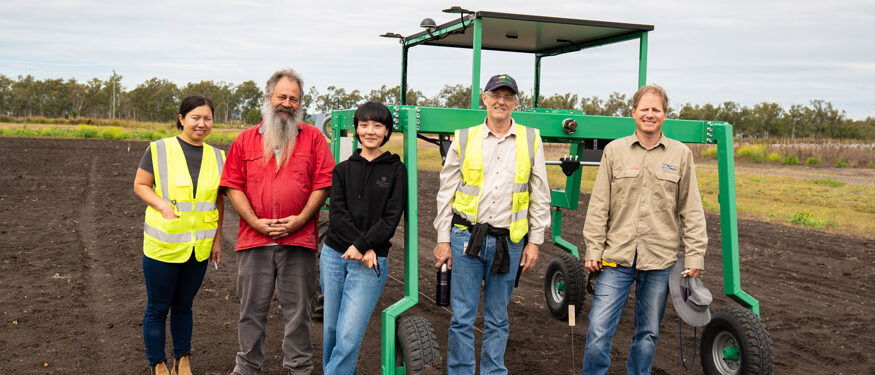
Australia’s Grains Research and Development Corporation (GRDC) is supporting the development of an autonomous field robot designed to measure crop roots alongside canopy and soil traits, addressing a long-standing constraint in cereal breeding programs.
The platform, known as RootBot, was co-designed by the Queensland Alliance for Agriculture and Food Innovation (QAAFI) at the University of Queensland and Germany-based AntRobotics. Construction was completed in September 2025.
The system forms part of the GRDC project focused on root structure and function traits in cereals, aimed at overcoming technical limitations in field-based root phenotyping.
Integrated sensing in a single pass
RootBot combines electromagnetic induction (EMI) sensing with hyperspectral imaging to collect below- and above-ground data without disturbing the crop. An EMI sensor mounted at the rear measures root activity and soil water dynamics, while hyperspectral sensors at the front capture canopy reflectance to assess plant health, nutrient status and stress responses.
With nearly two meters of clearance and adjustable wheel tracks, the robot can move autonomously through crop rows. Operating at speeds of up to 4 km/h, it can phenotype a five-meter plot in approximately eight seconds, enabling the assessment of about 250 field plots per hour.
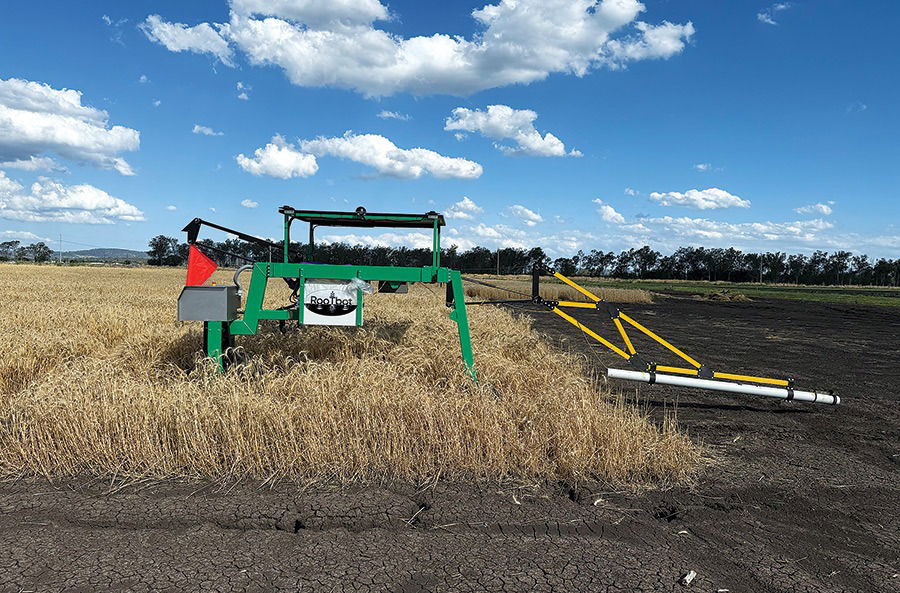
The machine replaces an earlier low-clearance “Root Mobile” used by QAAFI, which carried EMI sensing capability but could not enter crop rows and lacked hyperspectral integration.
The rapid root phenotyping program at QAAFI is led by Dongxue Zhao and supported by an Australian Research Council Early Career Industry Fellowship.
Application in cereals
Sensor components and analytical methods underpinning the platform have been tested in pilot trials in sorghum and wheat. According to the research team, the trials identified genetic variation in root activity between lines and across growth stages, enabling differentiation of genotypes based on below-ground traits.
The system is designed to allow breeders to screen large numbers of genotypes and select for root characteristics associated with water uptake and yield stability. Traits such as deeper or more efficient root systems can contribute to improved access to subsoil moisture.
In addition to breeding applications, the data can be used to link genotype performance with management strategies. Trial work has examined the interaction between row spacing and root development, identifying combinations of plant density and rooting depth suited to different soil profiles and seasonal conditions.

Enjoyed this story?
Every Monday, our subscribers get their hands on a digest of the most trending agriculture news. You can join them too!







Discussion0 comments