

U.S. White House waives shipping rules as fertilizer supply concerns intensify

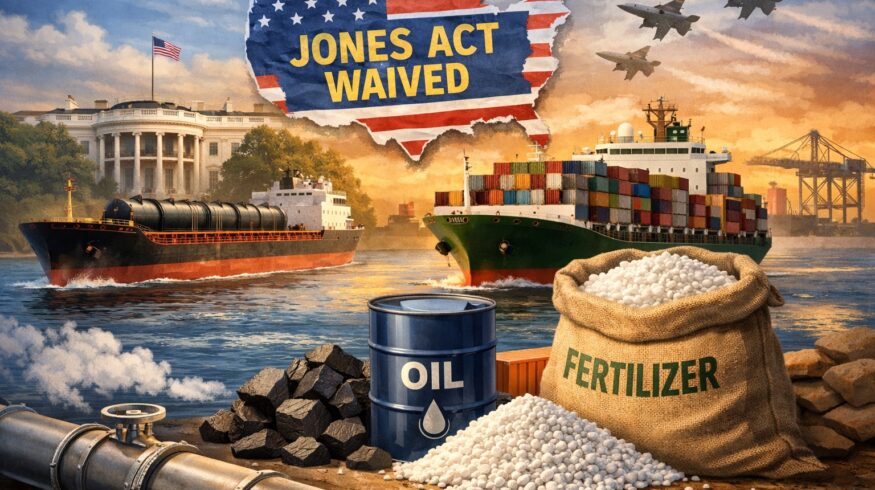
The White House has temporarily waived key provisions of the century-old Jones Act, allowing foreign-flagged vessels to transport commodities—including fertilizer—between U.S. ports for 60 days, as Washington seeks to ease supply disruptions and rising energy prices. The move, confirmed by press secretary Karoline Leavitt, is designed to improve the flow of critical inputs such as oil, natural gas, coal, and fertilizers amid ongoing geopolitical tensions affecting global shipping routes.
The waiver comes as U.S. policymakers face mounting pressure from the agricultural sector over fertilizer availability and costs. Farm groups had recently urged the administration to relax shipping restrictions and ensure smoother logistics, warning that supply chain disruptions—particularly linked to tensions in the Middle East—could drive further price increases. Analysts say easing domestic shipping constraints may provide short-term relief, although the broader impact on fertilizer markets will depend on global supply conditions and trade flows.
The shipping decision follows earlier steps by the U.S. government to facilitate fertilizer imports. In November 2025, Washington lifted tariffs on a wide range of fertilizers, including urea, ammonium nitrate, and phosphate products, after months of elevated prices and declining import volumes. Those tariffs, initially set between 10% and 30%, had curtailed shipments and contributed to tighter domestic supply, particularly for phosphate fertilizers.
Despite these policy adjustments, the U.S. remains structurally dependent on imported nutrients, especially potash and certain phosphate products. Industry data show that fertilizer imports weakened significantly in 2025 following the introduction of tariffs, underscoring the sensitivity of the market to trade restrictions and logistics bottlenecks. The combination of tariff relief and the temporary shipping waiver signals a broader effort by the administration to stabilize fertilizer availability ahead of the 2026 planting season.
Sources: CNN; DTN; Argus Media; GV Wire

Enjoyed this story?
Every Monday, our subscribers get their hands on a digest of the most trending agriculture news. You can join them too!







Discussion0 comments