

China limits fertilizer exports as the country prioritizes domestic market

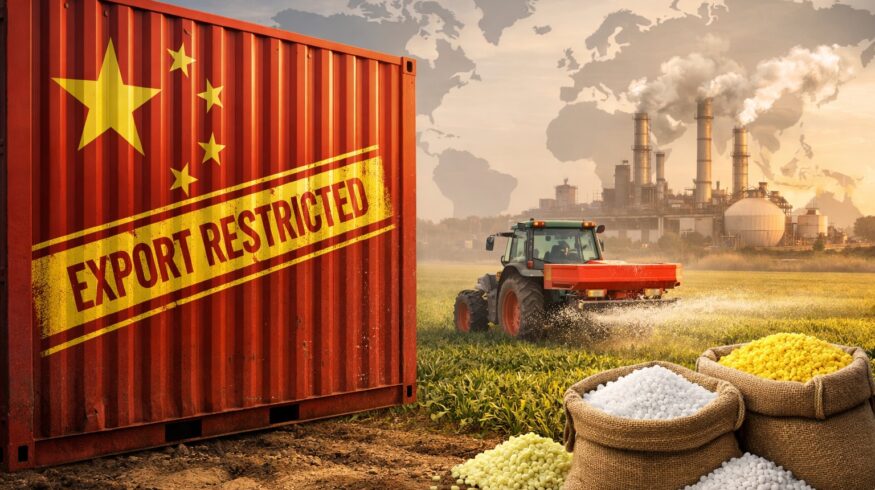

China is becoming less prominent as a major exporter in the global fertilizer market because its government is focusing more on ensuring local farmers have an affordable supply. Tighter export controls and higher production costs are likely to affect fertilizer prices and availability in key importing regions such as Brazil, India, Southeast Asia, and Oceania.
China has been one of the world’s top producers and exporters of fertilizers, especially phosphates and nitrogen-based products, with exports worth over USD 13 billion in 2025. Since mid-March, the government has tightened export controls through the China Entry-Exit Inspection and Quarantine system, limiting shipments of phosphates and most nitrogen fertilizers, including urea. These steps aim to keep enough supply at home during the busy planting season, and the government has also released reserves to help keep local prices steady. Exports, especially of nitrogen products, are expected to slowly pick up again after May.
Higher sulfur costs are making fertilizer production more difficult. Sulfur, which is essential for making phosphate fertilizers, has become more expensive due to supply constraints and political tensions in the Middle East, particularly around the Strait of Hormuz, a key route for sulfur trade. These higher costs have led China to produce less phosphate and to temporarily ban exports until August. At the same time, strong domestic demand means there is less urea available for export, and shipments are unlikely to resume before May. Ongoing disruptions in the Arab Gulf, a major global urea supplier, are further tightening the supply situation.
China will likely remain an important player in the global fertilizer market, especially in Asia-Pacific. However, its exports will be guided more by local needs than by international demand.

Enjoyed this story?
Every Monday, our subscribers get their hands on a digest of the most trending agriculture news. You can join them too!





Discussion0 comments