Skip to content
  • Professionals
  • Gardeners
 
Search
Log in
EN
RU
  • Markets
  • Business
  • Politics
  • Technologies
  • Interviews
  • Rankings
  • Environment
  • Events
  • Stock Quotes
  • Business Directory
Trending topic:
Featured company:
 
RU
  • Professionals
  • Gardeners
Sections
    Events
    Stock Quotes
    Business Directory
    Trending topic:
    Featured company:
    Follow us...
    Helpful information
    • About
    • Team
    • Advertise
    • Contacts
    • Submit a Tip
    • Privacy Policy
    • Terms of Service
    Sections
      Seasonal tips
      • Spring
      • Summer
      • Autumn
      • Winter
      Trending topics
      • compost
        23
      • garlic
        2
      • lemon
        1
      • potato
        12
      Follow us...
      Helpful information
      • About
      • Team
      • Advertise
      • Contacts
      • Submit a Tip
      • Privacy Policy
      • Terms of Service
      Copyright © 2014-2026 DigitalTree LLC. All rights reserved.
      We deliver content lightning-fast thanks to the managed cloud WordPress hosting with CDN.
      16+

      Home / Technologies

      New study examines combination of slow-release nitrogen fertilizers with urea on maize growth

      Timothy Bueno avatar Timothy Bueno
      February 12, 2025, 4:00 pm
      February 12, 2025, 4:00 pm
      [esi post-views ttl=0]
      Technologies
      New study examines combination of slow-release nitrogen fertilizers with urea on maize growth
      Save for later
      Share

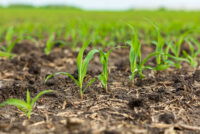
      Recent research highlights that an optimal fertilizer strategy can significantly enhance maize growth and nitrogen efficiency. The study, published in Scientific Reports, focused on the effects of integrating slow-release nitrogen fertilizers with urea on maize yield, nitrogen uptake, and water use efficiency across two different tillage methods. Conducted at the Dongyang Experimental Base of Shanxi Agricultural University over two growing seasons, the research concentrated on how these fertilizer strategies influence crop growth, particularly in combination with distinct tillage practices.

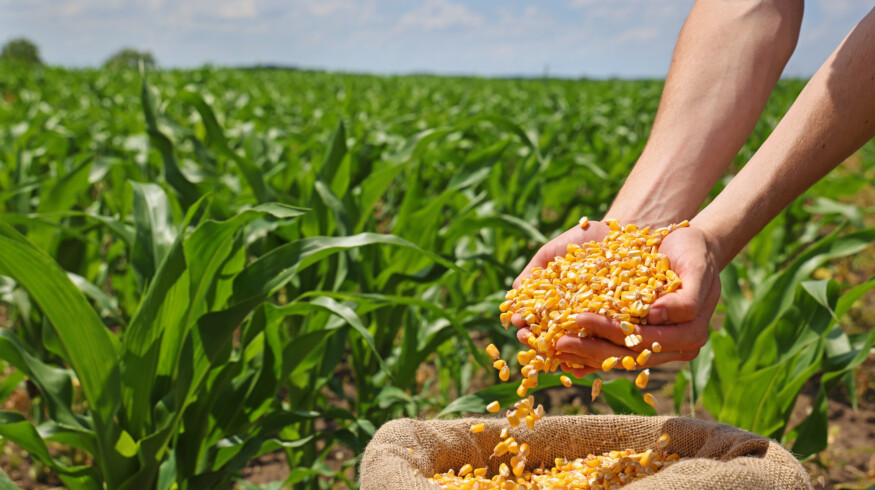
      Maize stands as a critical global food crop, and its yield optimization is crucial. The prevalent use of chemical fertilizers has sparked concerns over diminishing nitrogen use efficiency and environmental impacts. This study addresses these issues by exploring the joint application of slow-release nitrogen fertilizer and urea, aiming to strike a balance between cost-effectiveness and productivity.

      Employing randomized block designs, the research tested various fertilization treatments, including mixtures of slow-release nitrogen fertilizer and urea. Findings revealed notable improvements with the combined strategy, especially when maintaining an optimal ratio of 70% slow-release to 30% urea, referred to as UNS2. This specific formulation was identified as beneficial for enhancing water use efficiency, dry matter accumulation, nitrogen uptake, and overall maize yield.

      During the field trials, different groups were monitored to assess parameters such as water consumption, growth stages, and the dry weight of plants at maturity. Formulations that combined fertilizers consistently outperformed traditional applications of solely urea or slow-release fertilizers. For instance, under the rotary tillage method, UNS2 demonstrated a yield increase of over 56% compared to untreated controls.

      ADVERTISEMENT

      The study suggests that the combination method not only provides sufficient nutrient supply throughout the maize growth cycle but also mitigates losses typically associated with conventional fertilization practices. Specifically, the combined application enhances nutrient absorption and utilization, highlighting the importance of optimized fertilization strategies as agricultural methods evolve.

      Additionally, subsoiling used in conjunction with rotary tillage showed positive effects on soil conditioning, addressing issues like soil compaction and root growth inhibition often observed with traditional rotary methods. The researchers suggest that the benefits of these combined approaches warrant wider adoption across agricultural communities, especially with ongoing research proving their effectiveness.

      In conclusion, the research underlines the potential of integrating slow-release nitrogen fertilizers with urea to meet the dual challenges of boosting crop yields and promoting sustainable agricultural practices. The authors recommend further large-scale trials of the UNS2 strategy to confirm its efficacy in various ecological settings.

      agricultural research
      China
      fertilizer research
      maize
      research
      slow-release fertilizer
      urea

      Enjoyed this story?

      Every Monday, our subscribers get their hands on a digest of the most trending agriculture news. You can join them too!

      Sign me up
      Check the example

      Discussion0 comments

      Спасибо за комментарий, он будет опубликован на сайте после проверки модератором. Хотите, чтобы ваши комментарии появлялись на сайте мгновенно? Достаточно пройти регистрацию.
      Congratulations, you can be the first to start the conversation.
      Do you have a question or suggestion? Please leave your comment to ignite conversation.
      What’s on your mind?
      Cancel Log in and comment
      Or continue without registration
      Get notified about new comments by email.
      Advertisement
      In focus
      How to get here?
      Stock quotes
      Bayer
      13.15
      0.15
      Bayer Crop Science
      44.56
      1.24
      CF Industries
      93.23
      0.85
      Corteva Agriscience
      72.8
      1.41
      ICL Group
      5.35
      2.19
      Intrepid Potash
      32.84
      2.41
      Mosaic
      27.5
      1.93
      Nutrien
      68.89
      3.15
      Yara International
      22.93
      1.08
      See all
      Most read
      China cancels export tax rebates for pesticides including glufosinate
      China cancels export tax rebates for pesticides including glufosinate
      ADAMA and BASF agree to develop new fungicide for European crops
      ADAMA and BASF agree to develop new fungicide for European crops
      Phospholutions advances RhizoSorb approvals and expands leadership team
      Phospholutions advances RhizoSorb approvals and expands leadership team
      European fertilizer market stalled after European Commission signaled it could be changing CBAM rules
      European fertilizer market stalled after European Commission signaled it could be changing CBAM rules
      China’s ECEC to build $2 billion phosphate fertilizer complex in Iraq
      China’s ECEC to build $2 billion phosphate fertilizer complex in Iraq
      Events
      International Crop-Science Conference & Expo
      Dubai, UAE
      Jan 19 — 20, 2026
      Fertilizer Latino Americano
      Miami (FL), USA
      Jan 26 — 28, 2026
      Argus Fertilizer Africa
      Dar es Salaam, Tanzania
      Feb 10 — 11, 2026
      CRU Nitrogen + Syngas
      Barcelona, Spain
      Feb 10 — 12, 2026
      TFI Annual Business Conference
      Orlando (FL), USA
      Feb 16 — 18, 2026
      See all
      Live
      Isabelita Barreiro
      December 11, 2025, 01:54 am
      Excellent management of water resources and effective use of water-soluble fertilizers!
      Argentine nano-fertilizer firm AKO Agro expands to Brazil
      Meripa Corson
      August 4, 2025, 01:18 pm
      Where does the money actually go? As a timber land owner, how do I benefit from the legislation?
      USDA commits $80 million to expand timber markets and improve forest resilience
      Patonkas Luksompulus
      January 21, 2025, 12:36 pm
      Greece meeds biological fertilizers! Great news about De sangosse.
      DE SANGOSSE expands operations with Greek subsidiary
      Pedro Diaz
      November 20, 2024, 08:42 pm
      Is it a Roundup lawsuit or more about bad financials? I think the market reacted only to announced financial results.
      Bayer’s shares are pressed down by ongoing Roundup cancer lawsuit
      Johan Fredin
      August 22, 2024, 07:57 pm
      Europe is falling behind in this field. The concerns 30 years ago was reasonable. Now not so much. We need crops that can survive in a more extreme future climate. Handle droughts and hot weather better. Crops that are less tasty to pests like hogs and deere.
      Gene-edited crops set for groundbreaking European trials
      About
      Sections
      Markets  ·  Business  ·  Politics  ·  Technologies  ·  Interviews  ·  Rankings  ·  Environment
      Support
      About  ·  Team  ·  Advertise  ·  Contacts  ·  Submit a Tip  ·  Privacy Policy  ·  Terms of Service
      Copyright © 2014-2026 DigitalTree LLC. All rights reserved.
      We deliver content lightning-fast thanks to the managed cloud WordPress hosting with CDN.
      16+
      More to read
      Researchers used brewery waste and NPS fertilizer to boost maize yield in Ethiopia
      Researchers used brewery waste and NPS fertilizer to boost maize yield in Ethiopia
      Friday’s Insider: Granular Urea vs. Prilled Urea
      Friday’s Insider: Granular Urea vs. Prilled Urea
      Friday’s Insider: Nano-urea — too far to be perfect
      Friday’s Insider: Nano-urea — too far to be perfect
      Advertising that helps us do quality reporting