

Researchers at Cornell University discovered how plants communicate internal stress

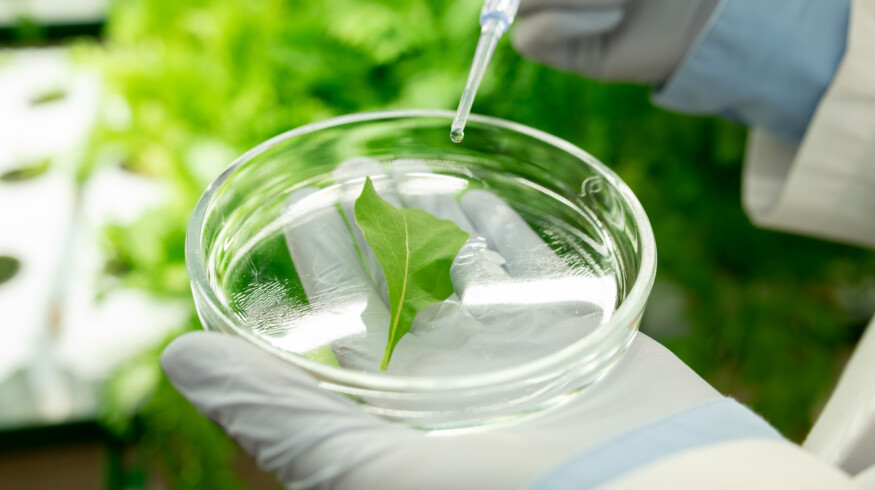
Researchers at Cornell University’s Center for Research on Programmable Plant Systems (CROPPS) have resolved a longstanding scientific question regarding how plants internally signal stress, according to a study published in the Proceedings of the National Academy of Sciences.
The team identified that plants use shifts in negative pressure within their vascular systems to transmit mechanical and chemical signals in response to stress. This discovery could lay the groundwork for technologies enabling plants to communicate directly with farmers or adapt proactively to environmental challenges.
The study’s first author, Vesna Bacheva, a postdoctoral associate at CROPPS and Schmidt Science Fellow, explained that stressors such as drought or physical damage alter a plant’s internal pressure balance. This triggers the movement of fluids carrying mechanical forces and chemical messengers through the plant’s vascular system, prompting defensive or adaptive responses.
“We are trying to build a foundational knowledge of understanding how communication in plants happens,” Bacheva said. “Our framework provides a mechanistic understanding of what drives signals from one place to another and explains how mechanical and chemical signals could propagate.”
The research, conducted under the guidance of Abe Stroock, professor of chemical and biomolecular engineering, and Margaret Frank, associate professor of plant biology, addresses theories that date back more than a century. Early hypotheses speculated that plants either relied on hormones or mechanical signals to transmit information internally. The Cornell team’s work integrates both concepts, proposing a unified model that explains how hydromechanical signaling operates over short and long distances within plants.
When a plant is wounded, such as by an insect bite, localized pressure changes can lead to the movement of water carrying chemical compounds throughout the plant. These compounds might, for instance, trigger the production of defensive substances. Simultaneously, pressure variations can activate mechanosensitive channels, releasing ions like calcium, which can initiate gene expression responses linked to stress defense.
Future applications of this research include the development of reporter plants capable of signaling their status through visible changes, such as color shifts or fluorescence. CROPPS researchers are also exploring the possibility of enabling two-way communication, where growers could send signals to plants to encourage water conservation during anticipated drought periods.
“We’re at a point at CROPPS where we are simultaneously investigating the molecular biology, biophysics, engineering design, and integration toward agronomic reality with brand-new concepts and technologies,” Stroock said.

Enjoyed this story?
Every Monday, our subscribers get their hands on a digest of the most trending agriculture news. You can join them too!




Discussion0 comments