Skip to content
  • Professionals
  • Gardeners
 
Search
Log in
EN
RU
  • Markets
  • Business
  • Politics
  • Technologies
  • Interviews
  • Rankings
  • Environment
  • Events
  • Stock Quotes
  • Business Directory
Trending topic:
Featured company:
 
RU
  • Professionals
  • Gardeners
Sections
    Events
    Stock Quotes
    Business Directory
    Trending topic:
    Featured company:
    Follow us...
    Helpful information
    • About
    • Team
    • Advertise
    • Contacts
    • Submit a Tip
    • Privacy Policy
    • Terms of Service
    • Site Map
    Sections
      Seasonal tips
      • Spring
      • Summer
      • Autumn
      • Winter
      Trending topics
      • compost
        24
      • garlic
        2
      • lemon
        1
      • potato
        14
      Follow us...
      Helpful information
      • About
      • Team
      • Advertise
      • Contacts
      • Submit a Tip
      • Privacy Policy
      • Terms of Service
      • Site Map
      Copyright © 2014-2026 DigitalTree LLC. All rights reserved.
      We deliver content lightning-fast thanks to the managed cloud WordPress hosting with CDN.
      16+

      Home / Environment

      Researchers identified twisted growth trait in plants could modify root systems for rocky, compacted or drought-prone soils

      Timothy Bueno avatar Timothy Bueno
      December 29, 2025, 12:00 pm
      December 29, 2025, 12:00 pm
      [esi post-views ttl=0]
      Environment
      Technologies
      Researchers identified twisted growth trait in plants could modify root systems for rocky, compacted or drought-prone soils
      Save for later
      Share

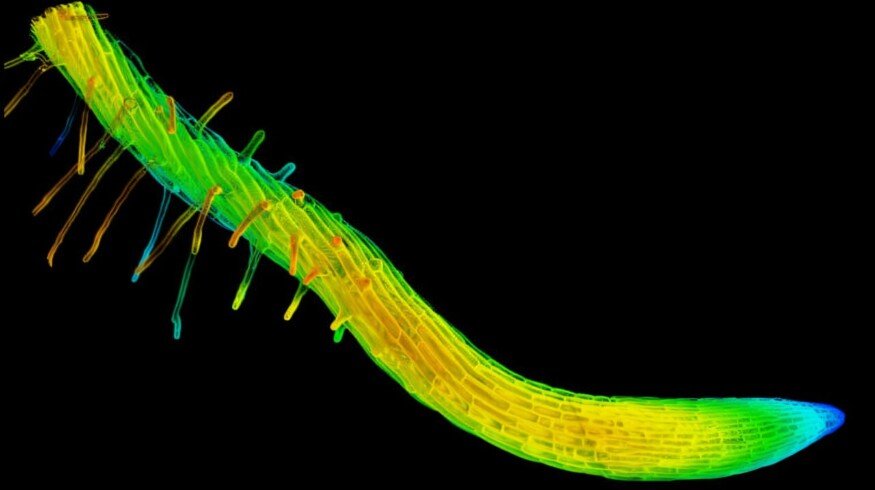
      Researchers have identified how plants control twisted growth in roots and other organs, resolving a long-standing question about a behavior that helps plants navigate obstacles and environmental stress. The findings suggest that subtle changes in gene expression in the plant’s outermost cell layer, rather than the loss of entire genes, can drive twisting growth.

      The study, published in Nature Communications, was led by Ram Dixit, a biology professor at Washington University in St. Louis, together with former doctoral student Natasha Nolan and mechanical engineer Guy Genin. The research combines genetics, cell biology, and mechanical modeling to demonstrate that the epidermis—the outermost cell layer of the plant—dominates the twisting of roots as they grow.

      Twisted growth is common across the plant kingdom, from vines that spiral around supports to roots that skew left or right to avoid rocks. Scientists have previously linked twisting to mutations that affect microtubules, the structural components inside plant cells. Many of those mutations were “null,” meaning the gene was completely disabled, raising questions about how such a seemingly drastic change could underlie a widespread and adaptive growth strategy.
      ADVERTISEMENT

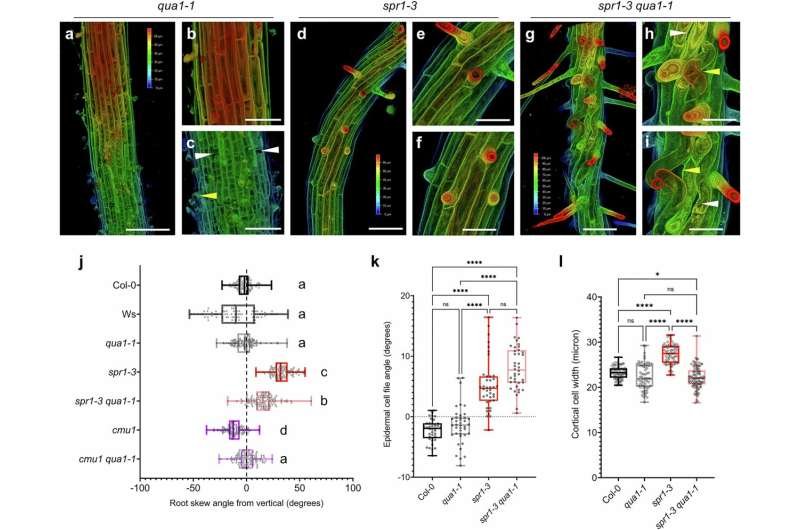
      The new research shows that a full gene knockout is not required. Instead, altering the expression of certain genes specifically in the epidermis is sufficient to control whether roots grow straight or twist.

      “That might explain why this is so widespread,” Dixit said in a statement. “You don’t need null mutations for this growth habit; you just need ways to tweak certain genes in the epidermis alone.”

      To pinpoint where twisting is controlled, the team used a model plant in which roots predictably skew either right or left. Nolan restored a normal version of a key gene in specific cell layers of mutant plants. When the gene was expressed in inner layers of the root, the plants continued to grow in a twisted manner. When the same gene was expressed only in the epidermis, the roots grew straight.

      The result indicated that the epidermis overrides the behavior of inner tissues. Measurements of cellulose microfibril orientation and mechanical modeling helped explain why. Genin’s models showed that in a structure made of concentric layers, the outer layer exerts disproportionate control over twisting—similar to how the walls of a hollow tube largely determine its resistance to torsion.

      “The math was unambiguous,” Genin said. “If you fix just the epidermis, the whole root straightens out. The outer layer rules.”

      The study also found that changes in the epidermis can reshape the behavior of inner cells, effectively coordinating growth across the entire organ. According to the authors, this shows the epidermis is not merely a protective skin but a mechanical regulator of plant development.

      The research emerged from the National Science Foundation’s Center for Engineering Mechanobiology, a multi-institutional effort to understand how physical forces shape living systems. Co-author Charles Anderson of Pennsylvania State University said the findings have implications beyond basic biology.

      “As climate change intensifies droughts and pushes agriculture onto marginal, compacted, or rocky soils, crops with root systems that can navigate difficult conditions are becoming more important,” Anderson said. “If we understand how roots twist and turn past obstacles, we may be able to help crops survive in places they currently cannot.”

      Beyond roots, twisted growth influences how vines climb, how stems resist wind, and how plants anchor themselves against erosion. The researchers say the work provides a mechanical framework for thinking about plant architecture as an engineering problem—one that could inform future crop breeding and biotechnology efforts.

      crop resilience
      drought resistance
      gene editing
      research
      resilient
      root
      study

      Enjoyed this story?

      Every Monday, our subscribers get their hands on a digest of the most trending agriculture news. You can join them too!

      Sign me up
      Check the example

      Discussion0 comments

      Спасибо за комментарий, он будет опубликован на сайте после проверки модератором. Хотите, чтобы ваши комментарии появлялись на сайте мгновенно? Достаточно пройти регистрацию.
      Congratulations, you can be the first to start the conversation.
      Do you have a question or suggestion? Please leave your comment to ignite conversation.
      What’s on your mind?
      Cancel Log in and comment
      Or continue without registration
      Get notified about new comments by email.
      Advertisement
      In focus
      How to get here?
      Stock quotes
      Bayer
      11.09
      0.63
      Bayer Crop Science
      38.05
      4.39
      CF Industries
      122.69
      1.22
      Corteva Agriscience
      80.85
      0.2
      ICL Group
      5.44
      0.91
      Intrepid Potash
      39.72
      0.38
      Mosaic
      23.15
      0.52
      Nutrien
      75.22
      1.03
      Yara International
      29.18
      0.41
      See all
      Most read
      BASF acquires AgBiTech to expand biological insect control portfolio
      BASF acquires AgBiTech to expand biological insect control portfolio
      China limits fertilizer exports as the country prioritizes domestic market
      China limits fertilizer exports as the country prioritizes domestic market
      Mosaic suspends two phosphate facilities in Brazil considering their potential sale
      Mosaic suspends two phosphate facilities in Brazil considering their potential sale
      Russia limits fertilizer exports to 20 million tons through November 2026
      Russia limits fertilizer exports to 20 million tons through November 2026
      EU approves French funding for LAT Nitrogen’s Ottmarsheim hydrogen project
      EU approves French funding for LAT Nitrogen’s Ottmarsheim hydrogen project
      Events
      Argus Clean Ammonia North America
      Houston (TX), USA
      Apr 27 — 29, 2026
      CaspianAgro
      Baku, Azerbaijan
      May 5 — 8, 2026
      Fertilizer Summit
      Chicago (IL), USA
      Jun 1 — 2, 2026
      Argus Clean Ammonia Asia
      Tokyo, Japan
      Jun 2 — 4, 2026
      Wood Mackenzie Hydrogen Hydrogen Conference
      London, UK
      Jun 4, 2026
      See all
      Live
      Estebel
      April 23, 10:26 pm
      Sounds like magic ))
      MIT study: rice seeds germinate faster when exposed to rainfall sounds
      Isabelita Barreiro
      December 11, 2025, 01:54 am
      Excellent management of water resources and effective use of water-soluble fertilizers!
      Argentine nano-fertilizer firm AKO Agro expands to Brazil
      Meripa Corson
      August 4, 2025, 01:18 pm
      Where does the money actually go? As a timber land owner, how do I benefit from the legislation?
      USDA commits $80 million to expand timber markets and improve forest resilience
      Patonkas Luksompulus
      January 21, 2025, 12:36 pm
      Greece meeds biological fertilizers! Great news about De sangosse.
      DE SANGOSSE expands operations with Greek subsidiary
      Pedro Diaz
      November 20, 2024, 08:42 pm
      Is it a Roundup lawsuit or more about bad financials? I think the market reacted only to announced financial results.
      Bayer’s shares are pressed down by ongoing Roundup cancer lawsuit
      About
      Sections
      Markets  ·  Business  ·  Politics  ·  Technologies  ·  Interviews  ·  Rankings  ·  Environment
      Support
      About  ·  Team  ·  Advertise  ·  Contacts  ·  Submit a Tip  ·  Privacy Policy  ·  Terms of Service  ·  Site Map
      Copyright © 2014-2026 DigitalTree LLC. All rights reserved.
      We deliver content lightning-fast thanks to the managed cloud WordPress hosting with CDN.
      16+
      More to read
      Researchers at Cornell University discovered how plants communicate internal stress
      Researchers at Cornell University discovered how plants communicate internal stress
      Cultivating a green frontier: plant growth in space’s unique environment
      Cultivating a green frontier: plant growth in space’s unique environment
      Texas engineers develop hydrophobic sand layer to cut irrigation losses during drought
      Texas engineers develop hydrophobic sand layer to cut irrigation losses during drought
      Advertising that helps us do quality reporting