

New research suggests that rain-induced soil carbon losses are widely underestimated


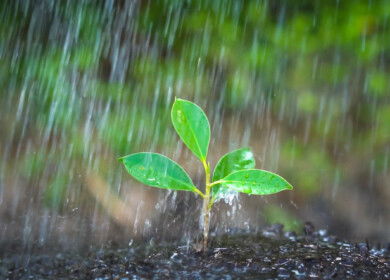
Rainfall-triggered carbon losses from drylands are widely underestimated in current ecosystem models, according to a study published in Nature by Trevor F. Keenan and colleagues. Using a dataset of 1,857 rainfall “pulse events” from 34 dryland sites, the researchers show that these short-term CO₂ emissions contribute about 17% of annual ecosystem respiration and nearly 10% of net ecosystem productivity.
Existing carbon flux partitioning methods, both parametric and machine learning, failed to capture these events, underestimating CO₂ emissions by up to 27%. The study introduces FluxPulse, a new correction method that incorporates rain-induced microbial respiration surges, known as the Birch effect.
The team also found a consistent exponential decay in carbon pulses after rain, influenced by vegetation productivity, aridity, and soil pH. These findings suggest that more intense and less frequent rainfall—projected under climate change—could increase carbon losses from drylands, underscoring the need to revise global carbon models.

Enjoyed this story?
Every Monday, our subscribers get their hands on a digest of the most trending agriculture news. You can join them too!




Discussion0 comments