

Crushed rock dust shows potential to improve soil health


A new study by researchers in the UK and France indicates that applying crushed basalt rock to farmland could serve as a tool for carbon dioxide removal and crop productivity enhancement. However, its effectiveness depends heavily on soil type.
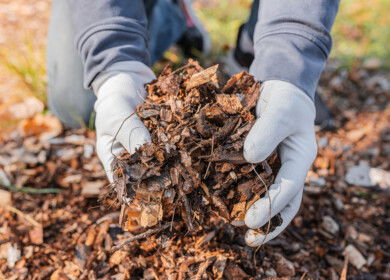
The research, carried out by Rothamsted Research, the French National Research Institute for Agriculture, Food and Environment (INRAE), and the UK’s National Oceanography Centre, examined the effects of basalt dust on two agricultural soil types — sandy and silty clay. The rock dust, a quarrying by-product, was applied in pot trials at rates of 80 and 160 tonnes per hectare.
The process, known as “enhanced weathering,” accelerates the natural chemical breakdown of silicate rocks, drawing CO₂ from the atmosphere and storing it in the soil. The researchers reported that basalt applications raised soil pH by approximately 0.8 units and released nutrients such as potassium, promoting ryegrass growth on sandy soils.
However, the experiments also showed a decline in the availability of phosphorus and some trace metals, particularly in soils already rich in nutrients. This underscores the variability of results depending on local conditions.
“These results show that basalt can be an effective soil amendment, especially on nutrient-poor or slightly acidic soils,” said Stephan Haefele, co-author and soil scientist at Rothamsted. “But there is no universal outcome — local soil characteristics play a crucial role.”
The findings suggest that enhanced weathering may support regenerative agriculture and climate mitigation efforts, but its application requires site-specific assessment. The researchers caution that the approach is not a standalone solution to climate challenges, though it adds to a growing body of work on soil-based carbon removal strategies.

Enjoyed this story?
Every Monday, our subscribers get their hands on a digest of the most trending agriculture news. You can join them too!





Discussion0 comments