

AgriPass’s Liron Yanay: ‘We make the high-tech more accessible to farmers who really need it’

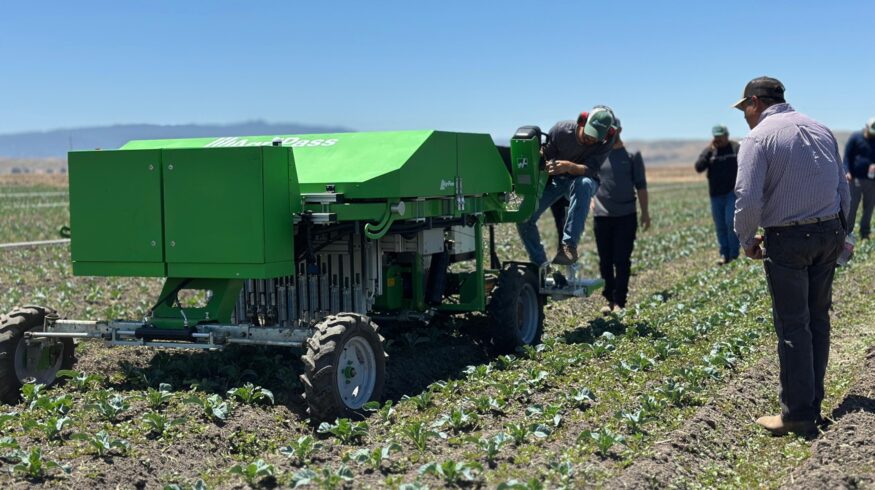
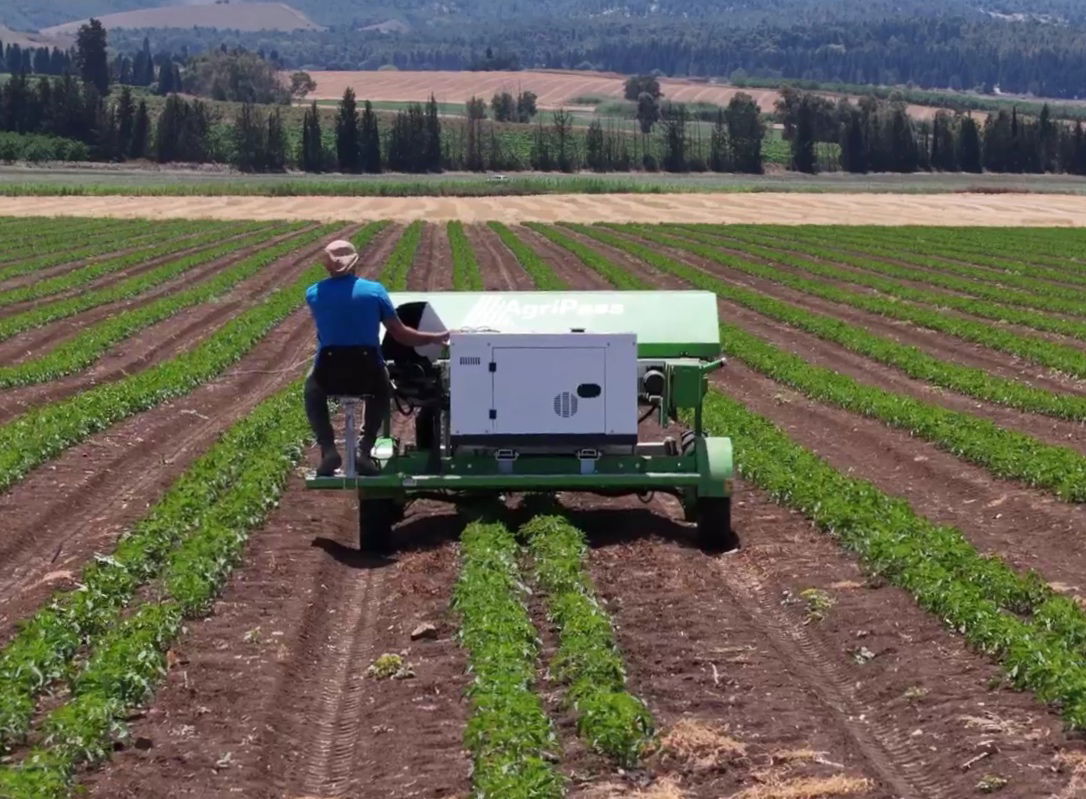
Agriculture faces mounting pressure to reduce chemical use, improve soil health, and maintain productivity. By eliminating herbicides and minimizing soil disturbance, it is possible to achieve more sustainable farming systems while lowering input and labor costs. Traditional farming practices involve heavy use of glyphosate or similar products to control weeds, but maybe there is a more elegant solution?
To discuss this, Fertilizer Daily caught up with Liron Yanay, CEO of AgriPass — the developer of a farming robot that addresses one of agriculture’s most persistent challenges: effective weed control.
 FD: AgriPass has raised $7.5 million in seed funding. What milestones did you need to reach to secure this round, and how will the capital change the company’s growth trajectory over the next 12 to 24 months?
LY: We concluded the seed with a total to date of 7.5 million in funding. To continue with our go-to-market strategy and secure funding, we knew we needed to prove two things: technical viability and commercial traction.
On the technical side, we had to show that our Adaptive Selective Tilling (AST) technology was delivering positive results across various real-world conditions, demonstrating that our weeding solution could reliably distinguish different weed types and selectively eliminate them at speed and scale, without chemical inputs or significant soil disruption. We conducted rigorous field trials across different crop types and conditions. We accomplished this by working directly with farmers across different countries, crops, soil types, and farming practices. These deployments also helped us prove commercial traction.
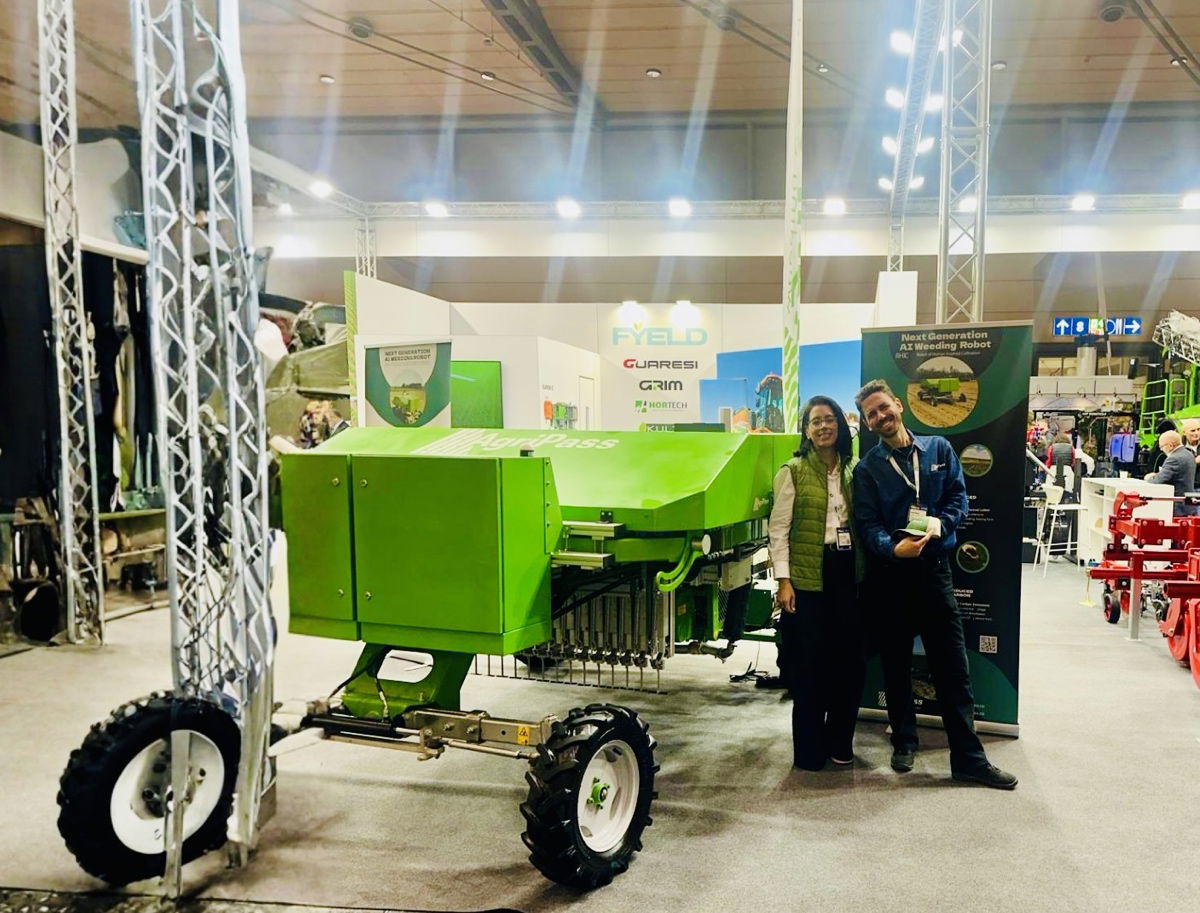
Farmers are always excited to see RHIC at work, and some of our early commercial sales are with farmers who participated in field trials. One of the investors in this seed round is also a farmer who uses RHIC in his fields. Investors were excited to see early validation from farmers themselves. And recognition like winning first place at the Climate Solutions Prize 2025 is important for validation. It signaled to the investment community that our solution sits at the intersection of two of the most urgent priorities in agtech, climate, and food security.
The new funding will be used to continue RHIC’s AI advancement and to scale commercial production in the U.S. and Europe. Everything accelerates as we focus on scaling, particularly in key markets where we see the biggest weeding pains and greater opportunities to empower farmers.
FD: Your RHIC platform is already deployed in the U.S. and Europe. Which geographic markets are currently driving the strongest demand, and where do you see the most significant expansion opportunities in the near term?
LY: We started by supporting small and medium farmers growing high-value crops with multiple growth cycles throughout the year, which require continuous weed control. We’re experiencing exciting momentum globally. Lately, in the Southeast U.S., particularly in Florida and Georgia, farmers are adopting RHIC for their commitment to regenerative and sustainable farming practices, while also addressing labor shortages and achieving strong ROI. Our collaboration with University Extensions has been essential to our efforts in Georgia, providing successful trial results and connections to established farmer networks that drive meaningful adoption in the region.
Policy changes around the world are really beginning to shape and increase demand for alternative weed control options. The new regulations established by the USDA last year have really helped farmers reconsider their unsustainable practices and seek alternatives, such as AgriPass’s RHIC. We have also identified a very promising opportunity in Argentina, collaborating with strategic partners, as a gateway to Latin America.
FD: Who are your primary customers today? Are you mainly targeting small- and mid-sized farms, or are larger-scale operations adopting the technology as well? How does your value proposition differ between these segments?
LY: We initiated our go-to-market strategy to address the weed pains of small to medium-sized high-value crop growers, as they represent the largest number of farms and are the last to receive valuable high-end technology. In 2027, we’re introducing a 3-bed system designed for mid- to large-scale farms that want to extend RHIC across more acreage. Our commitment is to empower all farmers with weed control that is herbicide-free, soil-safe, and as efficient as manual weeding.
FD: Specialty crops are your initial focus. Do you plan to expand into broadacre crops or other farming systems, and what technical or economic adjustments would that require?
LY: We are training RHIC’s systems on new crops every day and will expand into soybeans and cereals. We want to help the market where we can see the most impact. AgriPass was designed to make the high-tech, or AgriTech 2.0 as we like to call it, more accessible to farmers who really need it.
FD: Labor shortages and regulatory pressure on herbicides are often cited as tailwinds for ag-robotics. From your perspective, what are the main structural forces shaping demand for automated, non-chemical weed control?
LY: Input costs are rising, herbicide resistance is increasing, labor shortages are becoming generational problems, while tightening regulations and higher wages are compounding the challenge. AgriPass sits at the intersection of soil-safe, low-tillage practices, zero herbicides, and today’s labor-smart farming.
FD: What were the biggest operational or technological challenges you faced in bringing RHIC from prototype to commercial deployment? Were there regulatory, manufacturing, or farmer adoption hurdles that proved more complex than expected?
LY: A lot of the risks were mitigated by working directly with the farmers along every step of the development process. Making sure there is market fit and that the system is designed using a simple mechanical action reduces many of the hurdles to bringing the product to market.
FD: Looking ahead, what are the key risks to scaling the business — whether related to capital intensity, competition in ag-robotics, or farmer purchasing cycles — and how are you preparing to address them?
LY: Our seed funding included a risk analysis and a mitigation plan. There is no other way than working with farmers in the market to identify needs, differentiate, and establish the right infrastructure to serve the market.

Enjoyed this story?
Every Monday, our subscribers get their hands on a digest of the most trending agriculture news. You can join them too!







Discussion0 comments