

Danforth study points to cost savings and resilience gains in sorghum production

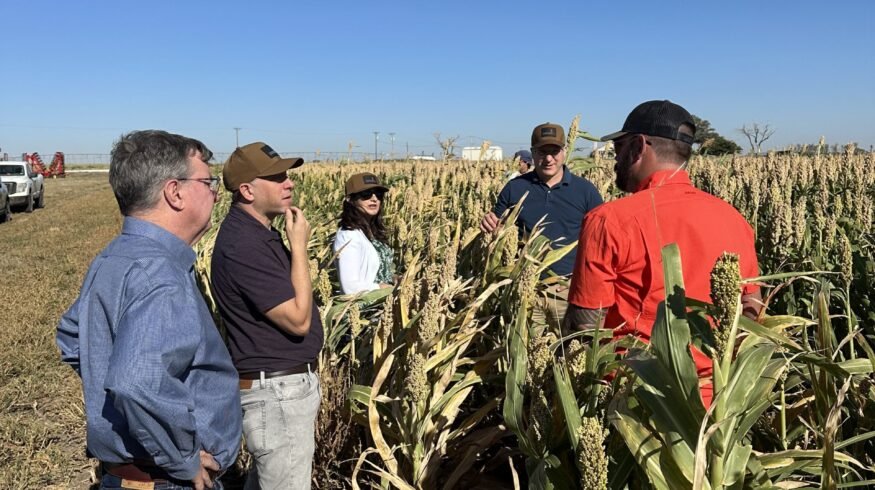

A study by the Donald Danforth Plant Science Center suggests that integrating regenerative farming practices with data analytics could help sorghum producers cut costs and manage production risks more effectively.
The research, published in Frontiers in Plant Science, examines how no-till systems, winter cover crops and precision nitrogen management perform when combined with drone imagery and field data. The approach allows researchers to model grain quality traits while reducing reliance on laboratory testing.
The study, led by Nadia Shakoor, evaluated two commercial sorghum hybrids under different management regimes at a field site in Missouri. Researchers analyzed traits including protein, starch, lysine and crude fat using a combination of physiological measurements and aerial imaging.
The findings indicate that fewer laboratory assays may be needed to estimate grain composition without a significant loss of accuracy. That could lower testing costs in breeding programs and commercial operations, where large sample volumes typically require extensive lab work.
Researchers also found that outcomes varied depending on the hybrid and environmental conditions, pointing to the need for more targeted management strategies. The data-driven approach is intended to help growers and breeders assess which combinations of genetics and practices deliver the best economic and agronomic results.
“This research shows what’s possible when conservation practices are combined with data science,” said Giles Oldroyd, president of the Danforth Center.
Amy France, chair of the National Sorghum Producers, said the findings provide growers with more concrete data to evaluate conservation practices alongside profitability.
The work is part of a multi-year sorghum research effort supported by the National Sorghum Producers, aimed at improving efficiency in both breeding and production systems.

Enjoyed this story?
Every Monday, our subscribers get their hands on a digest of the most trending agriculture news. You can join them too!




Discussion0 comments