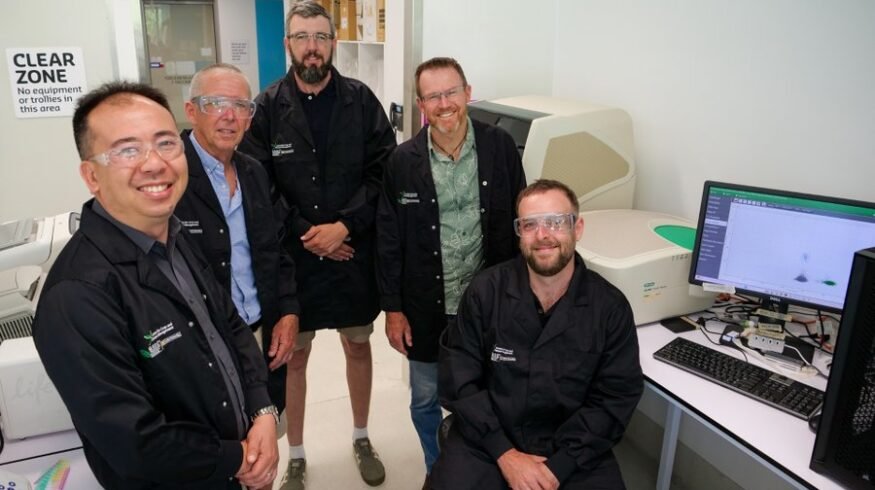
Infection sequence reshapes wheat disease risk, study finds

Researchers in Australia have found that the order in which two common fungal diseases infect wheat can significantly alter disease severity, a dynamic that could affect how growers manage crops and how breeders assess varietal resistance.
The study, led by the Centre for Crop Disease Management in partnership with the Western Australian Department of Primary Industries and Regional Development and Australian Grain Technologies, focused on septoria nodorum blotch and yellow leaf spot—two diseases that frequently occur together in wheat-growing regions.
Using a digital Polymerase Chain Reaction (PCR) method to measure pathogen DNA, researchers found that when yellow leaf spot infects first, it weakens the plant’s defenses and allows septoria nodorum blotch to establish more aggressively, increasing overall disease burden. When the sequence is reversed, septoria nodorum blotch suppresses the development of yellow leaf spot.
“Plants infected first by the yellow spot pathogen had a significantly higher disease load compared to single disease infections,” said Leon Lenzo, a researcher involved in the study, noting the effect was particularly evident in widely grown cultivars.
Field samples collected from Western Australia during the 2022 growing season showed co-infection to be common, with most symptomatic leaves carrying both pathogens. Researchers said the findings reflect field conditions, where yellow leaf spot often appears earlier in the season due to its greater environmental resilience.
The results suggest that infection timing—rather than the presence of a single disease—can shape disease outcomes, with implications for fungicide timing, varietal selection and resistance rankings. Current assessments typically evaluate pathogens independently, which may not reflect field performance where multiple infections occur.
“This work explains how these pathogens interact and how infection order influences disease expression and resistance response,” said Geoff Thomas, a plant pathologist at DPIRD. “It has implications for how we rate varieties in regions where both diseases are present.”
The study also highlights the role of improved diagnostics. The use of digital PCR allowed researchers to distinguish between pathogens within the same leaf sample and quantify their relative presence, offering a more precise alternative to visual assessment.
Researchers said the findings could inform breeding programs aimed at improving multi-disease resistance, as well as integrated management approaches that combine genetics and agronomic practices.
The paper was published in the journal Plant Disease.

Enjoyed this story?
Every Monday, our subscribers get their hands on a digest of the most trending agriculture news. You can join them too!


Discussion0 comments